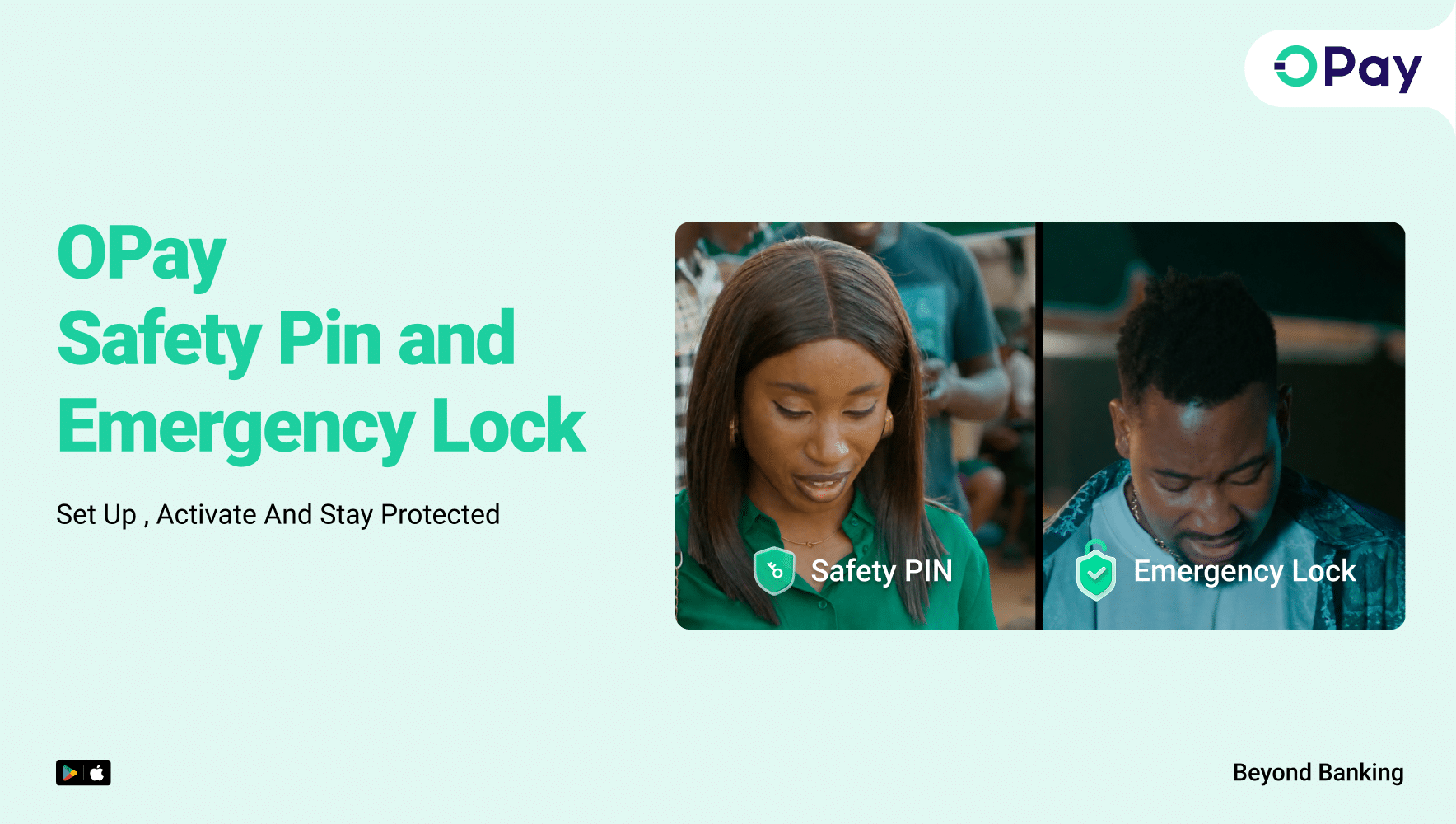
OPay Bolsters Security with New Protective Features
OPay, a prominent fintech player in Nigeria, has announced the rollout of two significant security enhancements: an Emergency Lock feature and a Safety PIN. These additions are designed to empower users with greater control over their accounts and provide a crucial layer of defense against potential fraud and unauthorized access. In a market where digital financial services are rapidly growing, ensuring user trust and security is paramount. OPay's move directly addresses these concerns, offering tangible tools for users to protect their funds and personal information.
The introduction of these features comes at a time when digital transactions are becoming increasingly common across Nigeria. As more individuals and businesses adopt fintech solutions for their daily financial needs, the risk of cyber threats and fraudulent activities also escalates. OPay's proactive approach aims to mitigate these risks by providing users with immediate and effective measures to secure their accounts when they feel compromised or suspect suspicious activity.
Understanding the Emergency Lock Feature
The Emergency Lock feature is a critical tool for users who believe their OPay account may be compromised. Upon activation, this feature immediately locks the user's account, preventing any further transactions or access. This is particularly useful in situations where a user loses their phone, suspects their account credentials have been stolen, or notices unusual activity that suggests unauthorized access. The immediate lockout effect acts as a digital circuit breaker, halting any potentially fraudulent operations before they can occur.
Activating the Emergency Lock is designed to be a straightforward process, ensuring that users can respond quickly in a high-stress situation. While the exact activation method is not detailed in the announcement, the intention is clear: to provide an instant response mechanism. Once locked, the account remains inaccessible until the user can verify their identity and resolve the security concern, typically by contacting OPay's customer support. This feature provides a vital safety net, giving users peace of mind that their funds are protected even if their device or login details fall into the wrong hands.
The Role of the Safety PIN
Complementing the Emergency Lock is the Safety PIN. This feature adds a mandatory layer of authentication for specific sensitive transactions. Users can set a unique PIN that must be entered before certain high-risk operations can be completed. This could include initiating transfers, making payments, or modifying account details. By requiring a PIN, OPay introduces an additional authentication factor that is known only to the user, making it significantly harder for fraudsters to operate even if they gain access to a user's account credentials.
The Safety PIN functions as a personal key, ensuring that only the rightful owner can authorize significant financial actions. This is akin to requiring a physical signature on a check or a two-factor authentication code for online banking. The ability to customize this PIN allows users to choose a code that is easy for them to remember but difficult for others to guess. This dual approach – an immediate lockout for emergencies and a persistent PIN for routine security – creates a robust defense system.
Broader Implications for Digital Security in Nigeria
The introduction of these features by OPay is more than just a product update; it reflects a growing trend in the African fintech landscape towards prioritizing user security. As digital financial services mature, companies must invest in sophisticated security measures to build and maintain user confidence. For Nigerian users, these tools offer a tangible sense of control and protection in an increasingly digital financial world.
The challenge for many fintech platforms is balancing ease of use with robust security. Overly complex security measures can deter users, while insufficient protection leaves them vulnerable. OPay's approach, offering both an immediate emergency response and an ongoing PIN-based security layer, appears to strike a thoughtful balance. It empowers users to take direct action when they feel threatened, while also embedding security into the regular usage of the app.
What remains to be seen is how effectively these features are communicated and adopted by OPay's diverse user base. Ensuring that users understand the purpose and activation of the Emergency Lock, and the importance of a strong, memorable Safety PIN, will be crucial for their success. User education will be key to turning these technological safeguards into effective real-world protections against financial fraud.
Ultimately, OPay's investment in these security features signals a commitment to its users' financial well-being. By providing tools that enable users to actively protect themselves, the company is not only enhancing its service but also contributing to a safer digital financial ecosystem in Nigeria. This proactive stance is essential for fostering continued growth and trust in the fintech sector.