Minimalist Architecture for a Productized Service
The goal was to validate a productized service concept rapidly. The constraint: a public-facing page, a functional checkout, and immediate order confirmation, all live before any marketing outreach. This led to an architecture that eschews common web development complexities like frontend frameworks, databases, and authentication systems.
The resulting stack is remarkably lean:
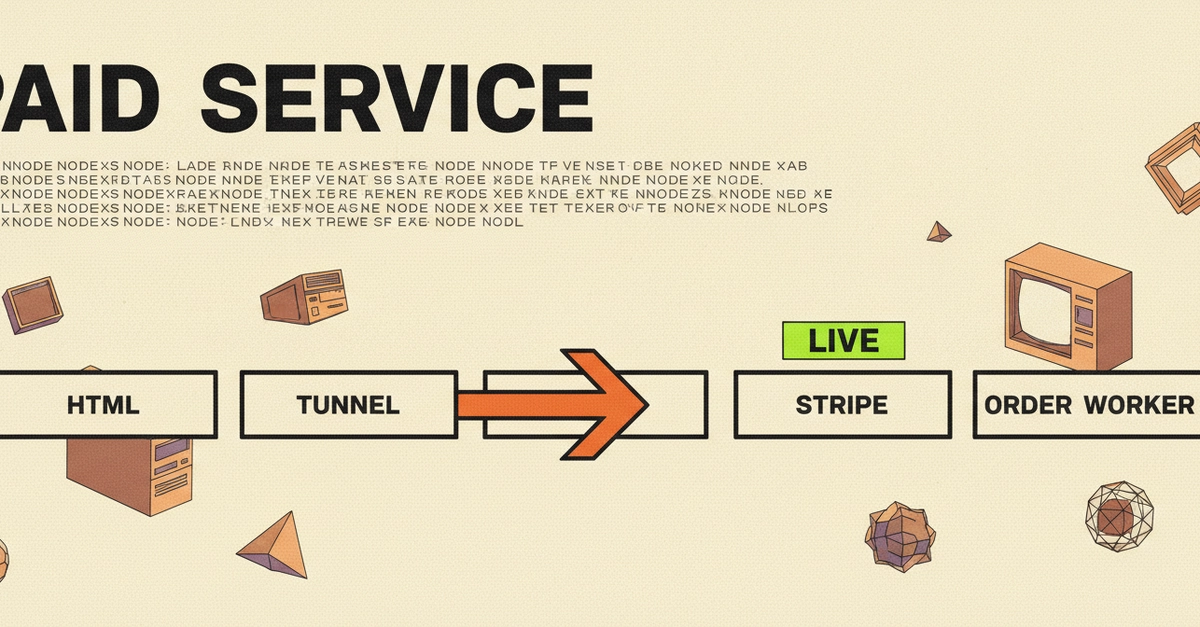
- A single static HTML file serves as the entire frontend.
- A compact Node.js HTTP server handles backend logic.
- Stripe Payment Links manage the checkout process.
- A stable public tunnel exposes the local server to the internet.
- A polling worker processes paid orders and sends acknowledgements.
This approach strips away layers of abstraction, focusing solely on delivering the core value proposition. It’s a testament to how existing tools can be combined creatively to bypass lengthy development cycles for initial validation.
The Core Components and Their Roles
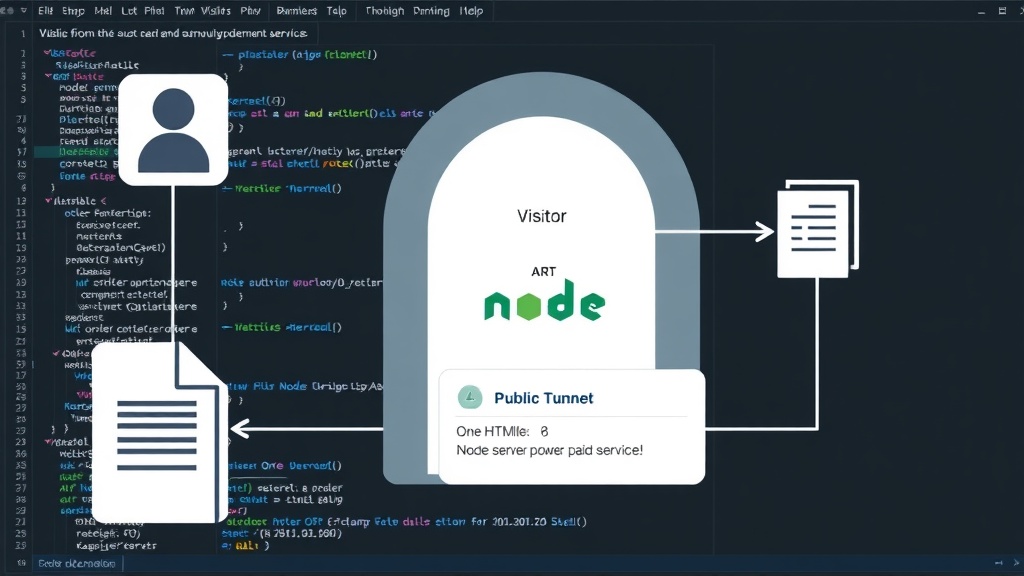
The visitor interacts with the service through a public tunnel hostname. This tunnel routes traffic to a local Node.js HTTP server. This server is responsible for serving the single static HTML file, which contains all the user interface elements. Crucially, this HTML file also embeds or links to the Stripe Payment Link. When a user decides to purchase, they are directed to Stripe’s secure checkout flow. After a successful payment, Stripe’s Checkout Session API is invoked. This API communicates the transaction details. The critical piece for acknowledging the order without a persistent database connection is a polling worker. This worker periodically checks for new paid orders. Upon detecting a successful payment, it triggers an order acknowledgement, likely sending an email or displaying a confirmation message to the user, completing the loop.
Why This Minimalist Approach Works
The success of this minimalist strategy hinges on several factors. Firstly, Stripe Payment Links abstract away the complexities of creating and managing individual checkout pages for each product. They provide a direct, secure, and familiar payment experience for the customer. Secondly, using a public tunnel (like ngrok or Cloudflare Tunnel) eliminates the need for complex deployment pipelines, server provisioning, or domain configuration for initial testing. The Node.js server, being only 45 lines, is easily maintainable and understandable, focusing purely on serving the HTML and initiating the Stripe link. The polling worker, while seemingly an extra step, circumvents the need for real-time webhooks and a persistent database to track order status. It checks for completed payments at intervals. This is sufficient for a service where immediate, real-time status updates might not be the absolute priority for initial validation, or where a slight delay in acknowledgement is acceptable. Think of it less like a traditional SaaS application and more like a well-oiled vending machine: insert payment, receive product confirmation instantly. The value isn't in the complex infrastructure, but in the direct, friction-free transaction.
The Trade-offs and Limitations
While this approach is excellent for rapid validation, it's not a long-term solution for most businesses. The absence of a database means no historical order data, no user accounts, and no persistent state. If a customer needs to re-download a file or access past purchases, this architecture cannot support it. The polling worker, while functional, is inefficient compared to webhook notifications. It can introduce delays in order processing and acknowledgement, and it consumes resources even when no orders are being placed. Furthermore, the public tunnel introduces a single point of failure and potential latency. Relying on external services like Stripe and a tunneling service means the entire operation is dependent on their uptime and stability. Security, while handled by Stripe for payments, would need careful consideration for any data passed between the server and the client beyond the payment initiation. This setup is ideal for a one-off digital product or a service where the transaction is the primary focus, not ongoing customer engagement or complex data management.
Broader Implications for Early-Stage Validation
This methodology offers a compelling blueprint for founders and developers looking to test product ideas with minimal upfront investment. It challenges the conventional wisdom that a Minimum Viable Product (MVP) requires a robust backend, a sophisticated frontend, and a scalable database from day one. By leveraging existing, powerful services like Stripe and simple deployment tactics like public tunnels, developers can achieve a fully functional, paid service with a handful of lines of code. The key is identifying the absolute core function of the product and finding tools that can deliver that function without unnecessary complexity. This lean approach allows for faster iteration based on real customer feedback and payment data, rather than investing weeks or months building features that might never be used. It democratizes the ability to launch a paid offering, lowering the barrier to entry for solo founders and small teams.
What’s Next for Such Services?
The immediate next step for a service built this way is clear: gather feedback and analyze sales data. If the concept proves viable, the logical progression involves migrating to a more robust architecture. This would typically involve replacing the static HTML with a frontend framework for a better user experience, integrating a proper backend with a database for state management and order history, and implementing webhook listeners for real-time order processing instead of polling. However, the lessons learned from this minimalist approach—understanding core value, leveraging external services, and prioritizing rapid deployment—remain invaluable. It’s a powerful reminder that sometimes, less is indeed more, especially in the critical early stages of product development.