OMEGA 0.51.0: Unified Deployment for Diverse Applications
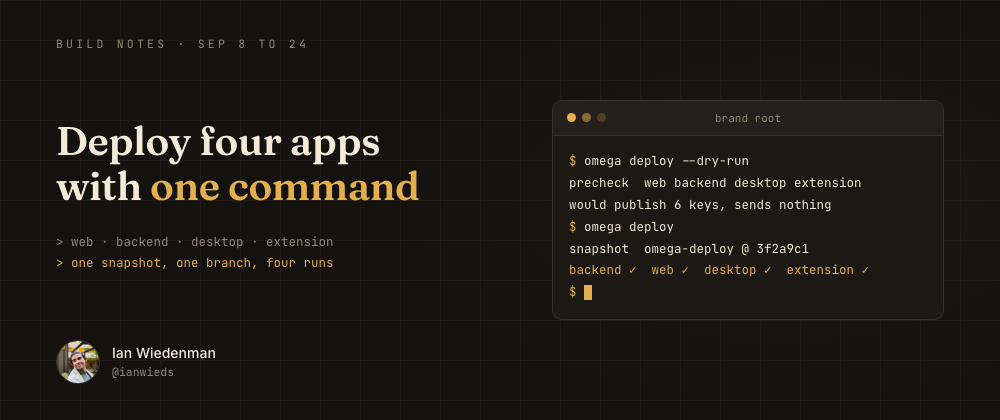
The OMEGA framework has taken a significant step towards streamlining development workflows with its latest release, version 0.51.0, shipping on September 15. This update introduces a unified deploy lane, enabling developers to scaffold and deploy web, backend, desktop, and extension applications with a single command. This move aims to eliminate manual steps and consolidate the deployment process for complex, multi-target projects.
OMEGA, a framework built for ambitious projects, now makes its seven core packages—client, backend, mcp-router, extension, desktop, and web, along with a manager—publicly available on npm. A fresh install now resolves from the official registry, replacing the previous requirement for linked checkouts. This enhances accessibility and simplifies the initial setup for new users and projects.
The Core Innovation: A Universal Deploy Lane
The headline feature of OMEGA 0.51.0 is the consolidated omega deploy command. Previously, deploying different application types often involved distinct commands, manual configurations, or separate build pipelines. OMEGA's new approach allows a developer to initiate the deployment of all selected targets from a single root directory. The command scaffolds each target in-process, packages any linked framework into a tarball, and snapshots the brand folder to a dedicated branch, currently named omega-deploy. This automation significantly reduces the cognitive load and potential for error associated with managing multiple deployment strategies.
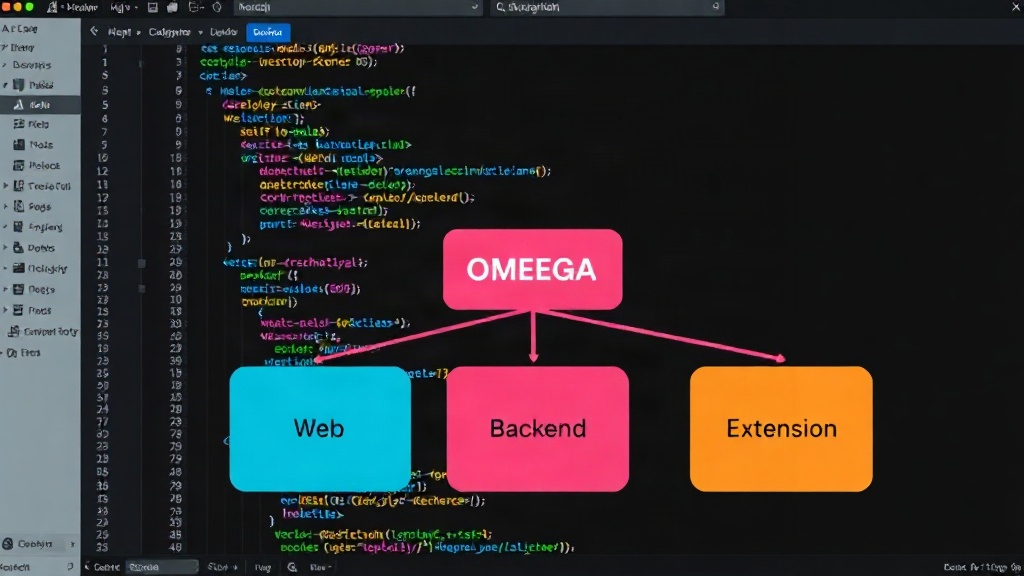
This unified lane is particularly beneficial for projects that require a cohesive ecosystem. For instance, a web application might need to communicate with a backend service, while also supporting a desktop client and browser extensions. Orchestrating these deployments independently can be cumbersome. OMEGA's new command streamlines this by treating them as components of a single deployable unit. The framework handles the intricacies of packaging and versioning across these diverse targets, ensuring consistency.
Beyond Deployment: Workflow Kit and Engine Releases
While the unified deploy lane is the most prominent feature, the OMEGA development team also focused on refining the underlying tooling. Over a two-and-a-half-week period from September 8 to 24, the team shipped eight point releases of the workflow kit. These updates incrementally improve the developer experience by automating previously manual tasks. The theme across these releases is clear: every step that previously required manual intervention now has a dedicated command or verb within the OMEGA framework.
Additionally, the release includes two engine updates that are still internal to the development team. While not yet public, these engine improvements suggest ongoing efforts to enhance OMEGA's core performance and capabilities. The mention of these internal releases hints at a forward-looking development strategy, where core components are continually iterated upon even as user-facing features are rolled out.
Developer Experience and Ecosystem Implications
The impact of OMEGA 0.51.0 on developer experience cannot be overstated. By abstracting away the complexities of multi-target deployment, OMEGA allows developers to focus on building features rather than managing infrastructure. This is especially relevant in today's landscape where applications often span multiple platforms and environments. Developers working on projects that include web frontends, APIs, desktop applications (e.g., Electron-based), and browser extensions will find this feature particularly valuable.
The availability of all seven packages on npm also lowers the barrier to entry. Teams can now integrate OMEGA into their projects more easily, leveraging its unified approach to development and deployment. The framework's emphasis on turning manual steps into automated commands aligns with the industry's broader push towards DevOps and CI/CD best practices. OMEGA appears to be building a comprehensive ecosystem that supports the entire application lifecycle, from initial scaffolding to ongoing deployment and maintenance.
What's Next for OMEGA?
The release of OMEGA 0.51.0 marks a significant milestone, consolidating diverse deployment needs into a single, powerful command. The team's commitment to automating manual processes and making core components publicly accessible sets a strong foundation for future development. As OMEGA continues to mature, the focus will likely remain on enhancing its capabilities in managing complex, multi-platform applications and further refining the developer experience. The internal engine releases suggest that performance and scalability improvements are on the horizon, which will be critical as OMEGA aims to support increasingly ambitious projects.
The broader implications for the development community lie in the potential for OMEGA to become a go-to framework for projects requiring a unified approach across web, desktop, and extensions. By simplifying the deployment process, OMEGA empowers developers to build and ship more sophisticated applications with greater efficiency.