What is C#? The Core Definition
Before diving into the intricacies of syntax, tutorials, or even the ubiquitous "Hello, World!" program, it is essential to grasp the fundamental nature of C#. Drawing from Microsoft Learn and supplementary resources, a concise definition emerges: C# is a cross-platform, general-purpose programming language within the .NET platform.
This definition, while brief, is packed with meaning. The terms programming language, cross-platform, general-purpose, and .NET platform each unlock a deeper understanding of C#'s capabilities, its design philosophy, and its place in the modern software development landscape. Let's break down each component.
Understanding "Programming Language"
At its most basic, a programming language is a formal system of instructions, symbols, and rules designed to enable humans to communicate with computers. It acts as a bridge, translating human-readable commands into machine code that a processor can execute. Think of it like a specialized grammar and vocabulary that allows you to tell a computer exactly what to do, step by step.
Programming languages vary widely in their abstraction level, syntax, and purpose. Some are low-level, offering direct hardware control but demanding intricate knowledge (like Assembly), while others are high-level, prioritizing developer productivity and readability. C#, as we will explore, falls into the latter category, aiming for a balance of power and ease of use.
The Significance of "Cross-Platform"
The term cross-platform is a critical differentiator for C#. It means that code written in C# is not confined to a single operating system or hardware architecture. Thanks to the .NET platform (specifically .NET Core and its successors), C# applications can run on Windows, macOS, and Linux without requiring significant modifications. This was a substantial shift from earlier versions of .NET, which were primarily Windows-centric.
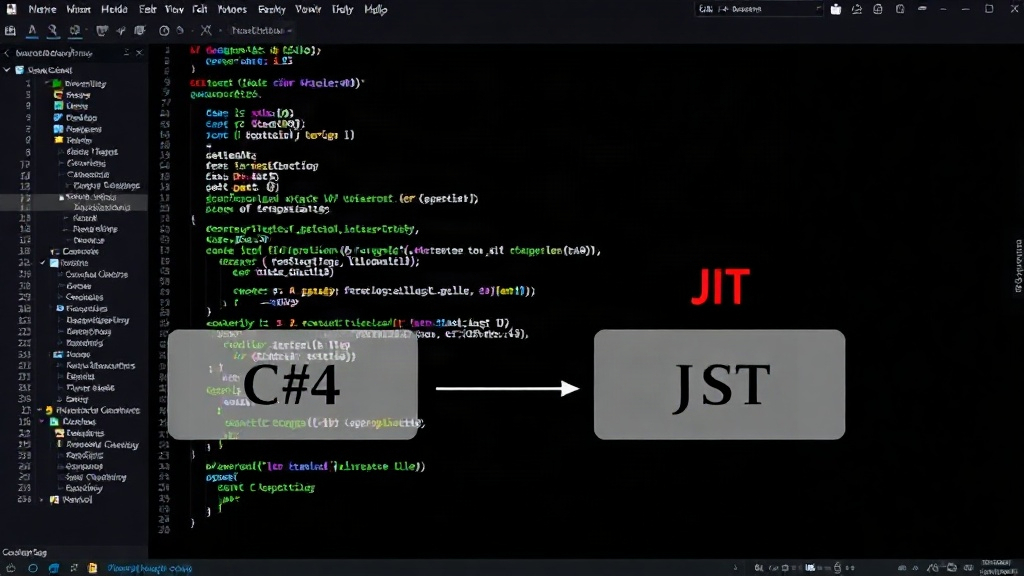
This universality is achieved through an abstraction layer. When you compile C# code, it is typically transformed into an intermediate language (IL). This IL is then Just-In-Time (JIT) compiled into native machine code by the .NET runtime on the target platform. This runtime environment handles the platform-specific details, allowing the developer to focus on writing the application logic.
The implications of being cross-platform are immense for developers and businesses alike. It allows for the development of applications that can reach a wider audience, reduces the need for maintaining separate codebases for different operating systems, and fosters a more unified development experience.
Defining "General-Purpose"
A general-purpose programming language is designed to be versatile, capable of being used for a wide array of applications across different domains. Unlike domain-specific languages (DSLs) that are tailored for particular tasks (e.g., SQL for database querying, HTML for web structure), a general-purpose language can be applied to web development, desktop applications, mobile apps, game development, cloud services, artificial intelligence, and much more.
C#'s general-purpose nature is a testament to its rich feature set and the extensive libraries and frameworks available within the .NET ecosystem. Its object-oriented paradigm, robust type system, memory management features (like garbage collection), and support for modern programming constructs like asynchronous programming and LINQ (Language Integrated Query) empower developers to tackle complex problems across diverse fields. Whether you're building a high-performance web API, a data-intensive analytics tool, or an immersive game, C# provides the tools and flexibility required.
The Role of the ".NET Platform"
Understanding C# is incomplete without understanding the .NET platform. .NET is an open-source, cross-platform framework developed by Microsoft for building a wide variety of applications. It provides a comprehensive set of tools, libraries, and runtime environments necessary for developing and running software.
C# is the flagship language of the .NET platform. While .NET supports other languages (like F# and Visual Basic), C# is the most widely used and benefits from the tightest integration and the most extensive feature development. The .NET platform handles crucial aspects like memory management, security, and interoperability, allowing C# developers to focus on application logic rather than low-level system details.
The evolution of .NET from the Windows-centric .NET Framework to the open-source, cross-platform .NET (formerly .NET Core) has been instrumental in C#'s resurgence and widespread adoption across diverse development scenarios. This platform provides the foundation upon which C# applications are built, executed, and deployed, offering a consistent and powerful environment for developers.
C# in Practice: Beyond the Definition
The definition – cross-platform, general-purpose, .NET – sets the stage. But what does this mean for the practical developer? It means access to a vast ecosystem. The .NET platform offers a plethora of libraries and frameworks, such as ASP.NET Core for web development, MAUI for cross-platform mobile and desktop apps, Entity Framework Core for data access, and ML.NET for machine learning.
Furthermore, C# is a statically-typed language, meaning variable types are checked at compile time. This helps catch errors early in the development cycle, leading to more robust and maintainable code. Its modern syntax, influenced by C++ and Java but with significant advancements, makes it relatively easy to learn for developers with prior object-oriented programming experience.
The surprising detail here is not the language's versatility but the sheer breadth of its application. From intricate enterprise backend systems to lightweight IoT devices, C# and .NET are increasingly capable of handling a spectrum of computing challenges. This adaptability is what makes it a compelling choice for modern software engineering teams.
The Future of C#
As technology evolves, so does C#. Microsoft and the .NET community are continually innovating, introducing new features and performance improvements with each release. This commitment ensures that C# remains a relevant and powerful tool for developers navigating the complexities of contemporary software development. If you are a developer looking for a language that offers power, flexibility, and a strong ecosystem, understanding C# as a cross-platform, general-purpose language within .NET is your essential starting point.