The End of the Separation of Concerns
For decades, data professionals have operated under a strict dichotomy: Online Transaction Processing (OLTP) systems for real-time operational tasks and Online Analytical Processing (OLAP) systems for complex reporting and analysis. This separation was born from necessity. Running intensive analytical queries directly against a live transactional database was a cardinal sin in data architecture. A single, poorly optimized reporting query could consume vast amounts of system resources, starving the core application database and leading to performance degradation or outright crashes. This fundamental division created complex ETL pipelines, data warehousing infrastructure, and significant latency between operational data and analytical insights.
The ideal, often described as the data engineering holy grail, is to achieve the best of both worlds: the ability to run demanding analytical queries without compromising the performance and availability of operational transactional databases, ideally on the same infrastructure. This has been an elusive goal, forcing architects to make difficult trade-offs. The complexity of managing separate systems, synchronizing data, and ensuring consistency across OLTP and OLAP environments has been a constant challenge, leading to increased costs, operational overhead, and slower decision-making cycles.
However, recent architectural innovations are beginning to challenge this long-standing paradigm. The lines between OLAP and OLTP are becoming increasingly blurred, driven by the need for more agile data analysis and the evolution of data infrastructure. This shift is not merely an incremental improvement; it represents a fundamental re-thinking of how we store, process, and analyze data, aiming to unify operational and analytical workloads more effectively.
Decoupling Storage and Compute: The Key Innovation
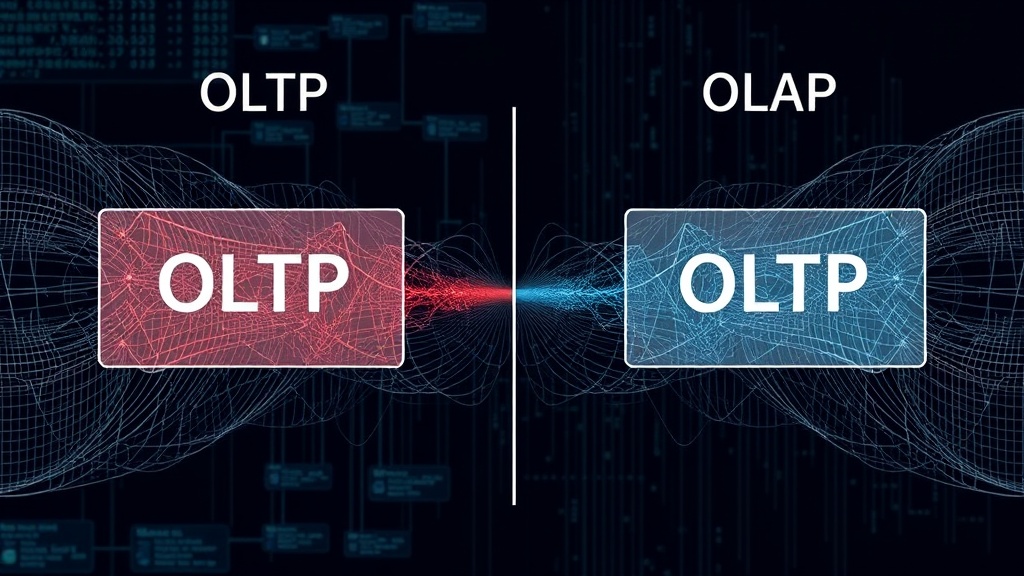
The breakthrough enabling this convergence lies in the decoupling of storage and compute layers. Historically, OLTP databases tightly coupled these two. When analytical queries were run, they directly accessed the same disk and memory resources as transactional operations. This direct contention was the root cause of performance issues. Modern approaches, exemplified by extensions like pg_lake, tackle this by fundamentally altering the architecture.
These solutions typically involve redirecting the storage plane away from the transactional database and into more scalable, cost-effective cloud data lakes. Technologies like Apache Iceberg play a crucial role here, providing a robust table format for data lakes that offers transactional guarantees, schema evolution, and performance optimizations essential for analytical workloads. By treating the data lake as the source of truth for analytical data, the transactional database is freed from the burden of serving complex read queries.
The execution path for OLAP queries is then offloaded to an isolated, dedicated process. This is where engines like DuckDB shine. DuckDB is a vectorized in-process analytical data management system. When integrated into an architecture like this, it can run directly within an application or service, accessing data from the data lake. By running DuckDB as a separate, background process, any resource demands from analytical queries are contained, preventing them from impacting the primary OLTP database. This isolation ensures that core business operations remain unaffected, even under heavy analytical load.
Understanding the Execution Flow
The end-to-end execution flow in these new architectures involves several key stages. First, operational data is written to the OLTP database. Periodically, or in near real-time, this data is then streamed or batched to the data lake, often transformed into an optimized format like Parquet or ORC, and managed by a table format like Iceberg. When an analytical query is initiated, it is directed not to the OLTP database, but to the isolated OLAP execution engine (e.g., DuckDB). This engine reads the relevant data directly from the data lake. The engine's vectorized processing capabilities allow it to efficiently scan, filter, and aggregate large datasets, providing analytical results much faster than traditional OLTP systems could ever manage for such tasks.
Resource safety boundaries are critical. In this decoupled model, the OLTP database operates within its defined resource limits, ensuring stability. The OLAP engine, running in its own isolated environment, has its own allocated resources. This prevents a runaway analytical query from crashing the entire system. Scheduling differences are also important. OLTP operations require low latency and high throughput for individual transactions, demanding immediate processing. OLAP queries, while potentially resource-intensive, can often tolerate slightly higher latency and can be scheduled during off-peak hours or managed via resource quotas to ensure they don't interfere with critical transactional workloads. This flexibility is a direct benefit of the separation of execution environments.
This approach allows for a scenario where a single host machine, or a tightly integrated cluster, can serve both immediate transactional needs and complex analytical demands without one starving the other. It’s akin to having a high-performance race car (OLTP) that can also tow a heavy load (OLAP) without breaking a sweat, because the towing mechanism is a separate, specialized system that doesn't drain the engine's primary power.
The Broader Implications
The blurring of OLAP and OLTP lines signifies a significant evolution in data management. It promises simplified architectures, reduced operational complexity, and faster access to insights. For developers, this means building applications that can leverage real-time operational data for immediate analytics without needing to manage separate data warehouses or complex ETL processes. Founders can benefit from more agile decision-making, as the gap between transactional data capture and actionable business intelligence narrows.
Security professionals will need to consider the new attack surfaces introduced by data lake integrations and the security posture of the isolated OLAP engines. Data scientists and analysts gain direct access to more up-to-date data, enabling more responsive data exploration and model building. The historical anti-pattern is being systematically dismantled by clever engineering, paving the way for a more unified and efficient data landscape.