Bridging the API Divide for Legacy Systems
Modern software development often assumes a RESTful world. Webhooks, JSON payloads, and HTTP APIs are the norm for integrating new services, particularly those leveraging AI for tasks like email processing. However, a significant portion of existing infrastructure remains stubbornly rooted in older protocols. Ticketing systems that ingest emails via IMAP, custom backup scripts written years ago, monitoring tools that only support SMTP, and compliance archivers that poll mailboxes at fixed intervals are common examples. These systems are unlikely to be rewritten to call a modern HTTP API, creating a barrier to integrating with newer AI-powered email platforms. Nylas's Agent Account offers a pragmatic solution by providing a bridge between these legacy tools and modern email APIs.
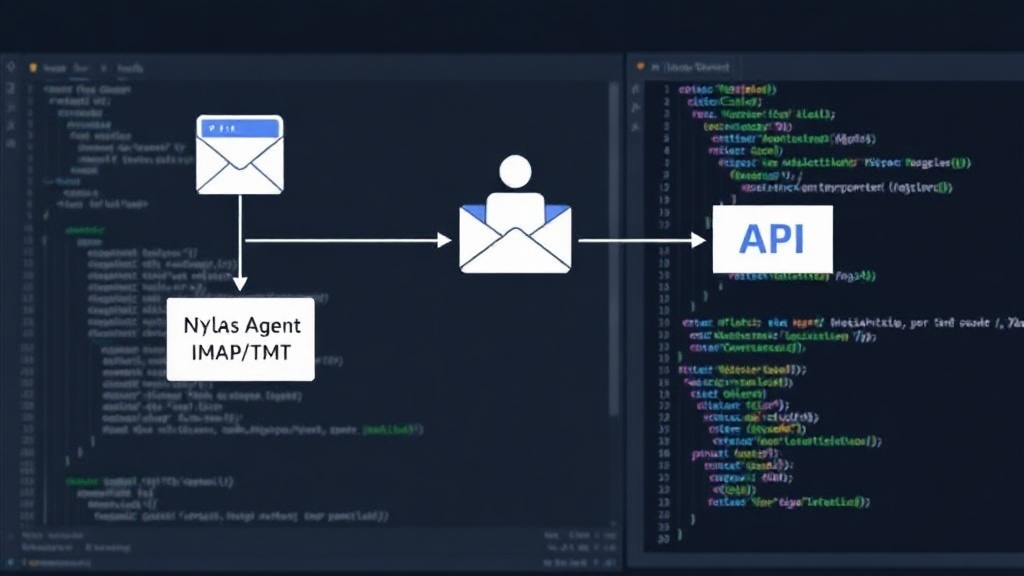
The core innovation lies in Nylas's ability to expose the same mailbox not only through its modern v3 API but also via traditional IMAP and SMTP submission protocols. This dual approach means that legacy applications can interact with the mailbox as they always have, using standard email client configurations. By providing the host, port, and credentials, administrators can connect older systems to a Nylas Agent Account, enabling them to read incoming messages and send outgoing ones without requiring any modifications to the legacy software itself. This is crucial for environments where the cost or complexity of updating legacy systems is prohibitive.
How Nylas Agent Accounts Enable Dual Connectivity
A Nylas Agent Account functions as a dedicated mailbox that can be accessed through multiple interfaces simultaneously. For modern applications, this means leveraging Nylas's robust v3 API. Developers can programmatically manage emails, schedule messages, process incoming mail, and integrate with AI models for tasks like sentiment analysis, categorization, or automated responses. The API provides structured access to email data, enabling sophisticated automation and integration workflows.
Concurrently, the same mailbox associated with the Agent Account is accessible via IMAP and SMTP. This allows traditional email clients or scripts to connect to the account as if it were any standard email server. IMAP (Internet Message Access Protocol) enables clients to retrieve and manage emails stored on the server, allowing legacy ticketing systems or archiving tools to poll for new messages, read their content, and update their status. SMTP (Simple Mail Transfer Protocol) submission allows these systems to send emails. When a legacy tool sends an email through the configured SMTP server, Nylas routes it through the Agent Account, making it appear as if it originated from that mailbox. This seamless integration ensures that even the most antiquated systems can participate in modern communication workflows.
Use Cases for IMAP/SMTP Integration
The practical applications of this dual connectivity are extensive. Consider a customer support team using an older ticketing system that relies on IMAP to pull new support requests from a dedicated inbox. With a Nylas Agent Account, these tickets can be automatically ingested by the ticketing system without any changes to its configuration. Simultaneously, an AI model, driven by the Nylas v3 API, can analyze incoming emails for urgency or sentiment, flag high-priority issues, or even draft initial responses that a human agent can then review and send via the same system.
Another common scenario involves compliance and archiving. Many organizations have systems designed to poll specific mailboxes for emails that need to be archived according to regulatory requirements. These systems typically use IMAP. By pointing such an archiver to a Nylas Agent Account, all emails processed through that account, whether sent or received via API or traditional mail clients, can be reliably captured and stored. Similarly, older monitoring or alerting tools that can only send notifications via SMTP can be configured to send alerts to a specific address managed by the Agent Account, which can then be processed further by an API-driven workflow.
For developers building new applications that need to interact with diverse systems, this capability simplifies integration. Instead of building separate connectors for each type of system, they can rely on the Nylas Agent Account to act as a universal gateway. A single mailbox can serve as the central hub, accessible by both modern RESTful services and legacy IMAP/SMTP clients. This significantly reduces development time and complexity, especially in enterprise environments with long-standing, critical legacy systems.
The Nylas Advantage: Beyond a Simple Mailbox
While other services might offer IMAP/SMTP access, Nylas distinguishes itself by providing this alongside a powerful, modern API for the same mailbox. This isn't just about providing access; it's about enabling a unified workflow where both old and new systems operate on the same data stream. The Agent Account acts as an intelligent intermediary. It can receive an email via IMAP, trigger an API-based AI analysis, and then use the API to send a processed response, which a legacy tool might then pick up via IMAP again.
This capability is particularly valuable for companies undergoing digital transformation. They can gradually modernize their workflows by layering AI and automation on top of existing processes without a disruptive