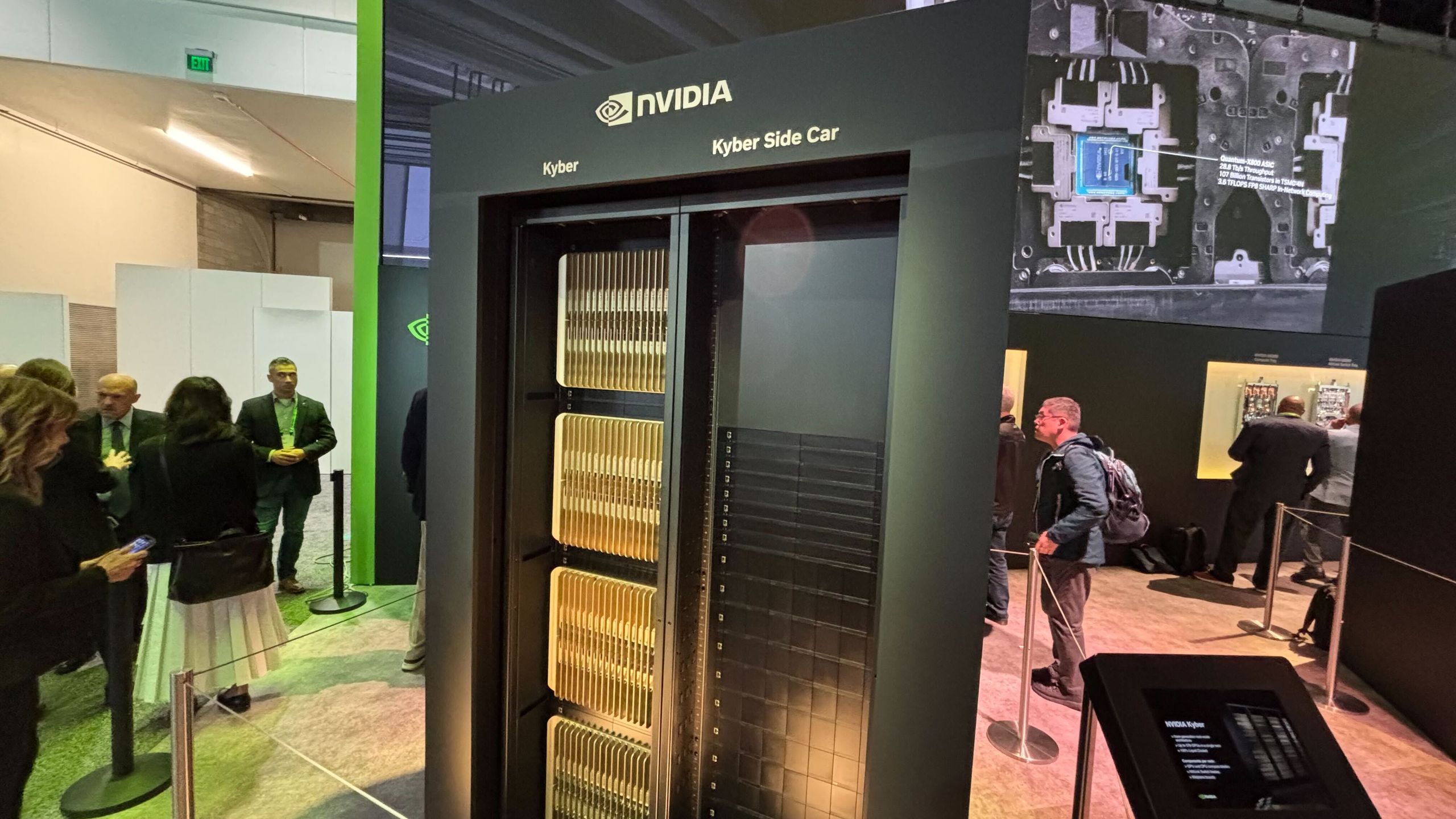
Kyber Rack Slips Past 2027 Launch Target
Nvidia's ambitious Kyber NVL144 rack, designed to house its upcoming Rubin Ultra GPUs, is reportedly facing a substantial delay, pushing its availability to 2028. This represents a slip of over 12 months from its previously anticipated launch window. The primary culprit, according to analyst firm SemiAnalysis, appears to be persistent problems with the Printed Circuit Board (PCB) midplane design. These issues have proven more intractable than initially forecast, forcing Nvidia to reassess its timeline for this critical piece of AI infrastructure.
The Kyber rack is intended to be Nvidia's next-generation high-density compute solution, enabling the deployment of multiple Rubin Ultra GPUs in a single, power-efficient chassis. This is crucial for the insatiable demand for AI training and inference compute, particularly as model sizes continue to explode. The delay means that the market will have to wait longer for this advanced hardware, potentially impacting the deployment schedules of major cloud providers and hyperscalers who were banking on this architecture for their next wave of AI accelerators.
Stopgap Solution Axed Amidst Customer Pushback
Adding to the challenges, Nvidia has reportedly scrapped plans for a stopgap solution that was intended to bridge the gap until Kyber's full production. This interim measure, details of which remain scarce, was apparently designed to offer some of the density benefits of Kyber but with less complexity. However, customer feedback played a significant role in its demise. Sources suggest that potential buyers expressed concerns about the proposed stopgap's cost, performance, or perhaps its integration complexity, leading Nvidia to abandon the effort rather than proceed with a solution that wouldn't meet market needs.
This decision underscores the delicate balance Nvidia must strike between delivering cutting-edge technology and ensuring that technology is practically deployable and economically viable for its largest customers. The pushback indicates that even a temporary solution needs to meet stringent requirements, especially when dealing with multi-billion dollar infrastructure investments. The axing of the stopgap means that customers relying on Nvidia's compute density will have to endure the full duration of the Kyber delay without an intermediate upgrade path from Nvidia itself.
PCB Midplane Problems: The Technical Root Cause
The core technical challenge identified by SemiAnalysis centers on the PCB midplane. In a high-density rack like Kyber, the midplane serves as the central nervous system, connecting numerous components, including GPUs, CPUs, and high-speed networking interfaces. The sheer number of connections and the data rates involved in an AI-focused rack of this scale make the midplane design exceptionally complex. Issues could range from signal integrity problems at extreme speeds, thermal management challenges due to the concentration of power-hungry components, to manufacturing tolerances that affect reliability and performance across a large number of units.
Think of the midplane less like a simple circuit board and more like a super-complex highway interchange for data. If the on-ramps, off-ramps, or the connecting lanes aren't perfectly engineered for the volume and speed of traffic, you get congestion, errors, and ultimately, system failure. For a system designed to house dozens of high-performance GPUs, even minor imperfections in signal integrity or power delivery across hundreds of connections can cascade into significant performance degradations or outright instability. Achieving the required reliability and performance for this critical component, especially at scale, is a formidable engineering feat.
Market Implications and the Road Ahead
The delay in Kyber's availability has significant implications for the AI hardware market. Nvidia has long held a dominant position, largely due to its ability to consistently deliver next-generation compute at scale. Competitors, while still trailing, are working to close the gap. This delay, however extended, could provide a window for rivals to gain market share or for alternative architectures to gain traction. Customers who have already planned their AI roadmaps around the original Kyber timeline will now need to re-evaluate their strategies. This might involve extending the life of existing hardware, exploring solutions from other vendors, or accepting a slower pace of AI infrastructure expansion.
Nvidia's ability to overcome these PCB midplane challenges and bring the Kyber rack to market successfully in 2028 will be a key determinant of its continued dominance in the AI compute space. The company's engineering prowess is being tested, and its communication with customers throughout this period will be critical to maintaining confidence. The market is hungry for advanced AI hardware, and any significant disruption to supply, especially for flagship products, creates ripples throughout the entire ecosystem.
What remains unaddressed is the potential impact on Nvidia's own internal development timelines for software and AI frameworks that are being optimized for the Rubin Ultra architecture and the Kyber platform. While the hardware is delayed, the software teams likely continued development based on the original schedule. This could lead to a scenario where software is ready before the hardware, or conversely, requires last-minute adjustments once the final hardware specifications are locked down post-production.