
RTX 50 Super GPUs Face Production Bottleneck
Reports indicate that Nvidia's highly anticipated RTX 50 Super series graphics cards are complete and ready for mass production. However, these powerful GPUs are currently languishing in a state of limbo, held back by an unexpected and significant obstacle: the exorbitant cost of GDDR7 memory modules. This pricing issue is so severe that it threatens to push the retail price of these new cards far beyond Nvidia's intended MSRP, potentially impacting their market reception.
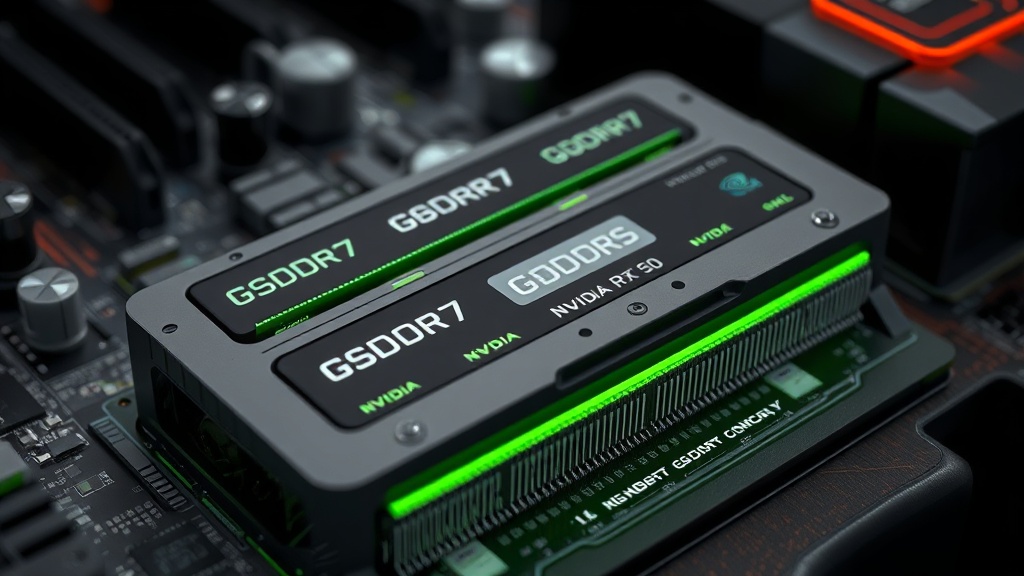
The core of the problem lies in the pricing disparity between the GDDR7 memory chips slated for the Super variants and the GDDR7 chips used in the standard RTX 50-series lineup. Sources suggest that the 3GB GDDR7 modules required for the Super cards are commanding prices that are two to three times higher than the 2GB GDDR7 modules found in their non-Super counterparts. This dramatic cost increase for a critical component is directly impacting the bill of materials for these new GPUs, making it financially challenging for Nvidia to meet its target pricing strategies.
Nvidia, like other GPU manufacturers, operates on thin margins, especially in the high-end segment. The cost of memory is a substantial portion of a graphics card's total manufacturing cost. When a single memory module, like the 3GB GDDR7 chip, costs nearly triple that of a comparable 2GB chip, it creates a ripple effect throughout the entire supply chain and pricing structure. This isn't merely a minor cost overrun; it's a fundamental challenge to the economic viability of launching the RTX 50 Super series at a competitive price point.
The GDDR7 Memory Market Dynamics
The current situation highlights the volatile nature of the high-end semiconductor memory market. GDDR7, the latest generation of graphics memory, offers significant improvements in bandwidth and efficiency over GDDR6 and GDDR6X. These advancements are crucial for pushing the performance boundaries of next-generation GPUs, enabling higher resolutions, faster frame rates, and more complex visual effects in games and professional applications. However, the early stages of any new memory technology are often characterized by high production costs and limited supply, as manufacturers scale up their fabrication processes and refine yields.
Micron, Samsung, and SK Hynix are the primary players in the GDDR7 market. The reported pricing issues could stem from a combination of factors: initial low manufacturing yields for the higher-capacity 3GB modules, strong demand from multiple GPU vendors (not just Nvidia), and potentially strategic pricing by memory manufacturers themselves to capitalize on the early-mover advantage of GDDR7 technology. For Nvidia, securing a stable and cost-effective supply of these advanced memory chips is paramount. If the cost per gigabyte remains exceptionally high, it forces a difficult decision: absorb the loss, significantly increase prices, or delay the launch until memory costs stabilize or more cost-effective solutions become available.
The discrepancy between 2GB and 3GB module pricing is particularly noteworthy. It suggests that the higher-capacity chips might be more complex to manufacture, leading to lower yields or requiring more sophisticated fabrication techniques. This could mean that for a given memory bus width, using 3GB modules instead of 2GB modules to achieve the same total memory capacity would incur a disproportionately higher cost. For example, a card requiring 16GB of memory might use eight 2GB modules or roughly five or six 3GB modules. The latter configuration, while potentially offering slightly different performance characteristics, would be significantly more expensive due to the per-module cost.
Strategic Implications for Nvidia and the Market
This production bottleneck places Nvidia in a precarious position. The RTX 50 Super series is intended to refresh Nvidia's GPU lineup, offering enhanced performance over the base RTX 50 series and potentially competing with AMD's latest offerings. A delay or a significantly higher price point could cede valuable market share to competitors. Consumers, already grappling with high GPU prices, may be hesitant to invest in a new generation of cards if the value proposition is diminished by excessive costs.
The situation also raises questions about Nvidia's supply chain management and its ability to forecast and secure critical components for its flagship products. While Nvidia has a strong track record, the rapid evolution of memory technology and its associated market dynamics present ongoing challenges. The company must weigh the strategic imperative of releasing new products against the financial realities of component costs. It’s possible that Nvidia might explore alternative memory configurations or even delay the launch of specific SKUs within the Super lineup if the GDDR7 pricing remains prohibitive.
What remains unaddressed is how this pricing issue might influence the broader adoption of GDDR7 technology across the industry. If the cost remains this high, it could slow down the transition from GDDR6/6X, forcing manufacturers to stick with older, cheaper memory standards for longer, or limit the deployment of GDDR7 to only the absolute highest-end, halo products where cost is less of a concern.
Ultimately, the fate of the RTX 50 Super GPUs hinges on the GDDR7 memory market. If prices fall or Nvidia finds a way to mitigate the increased costs, consumers could see these new cards hit the market as planned. If not, gamers and creative professionals might have to wait longer for the performance boost these GPUs promise, or face a significantly steeper price of admission.