
NVIDIA's Strategic Shift: The AI Infrastructure Buildout
In the first quarter of 2026, NVIDIA unveiled a strategic initiative that positions the company as the foundational provider for a new era of AI infrastructure. This move, which NVIDIA terms an "AI infrastructure buildout," actively invites cloud providers, network operators, and other technology builders to participate in scaling compute resources. The stated goal is to democratize access to large-scale AI compute, thereby accelerating the AI economy. However, this open invitation to partner and build on NVIDIA’s foundation carries a significant, often overlooked, implication: the potential commoditization of the very market NVIDIA currently dominates.
The narrative surrounding NVIDIA's market position has largely focused on its technological moats—the proprietary architectures, advanced manufacturing processes, and deep software ecosystem that have cemented its lead. Yet, this new strategy suggests a shift from a purely product-centric dominance to a platform-centric one. By enabling and encouraging a broader ecosystem of players to build and manage AI infrastructure, NVIDIA is effectively creating a larger pie, but also altering the dynamics of how slices are distributed and valued. This move is less about a competitor challenging NVIDIA's core technology and more about a fundamental change in how compute is consumed and priced at scale.
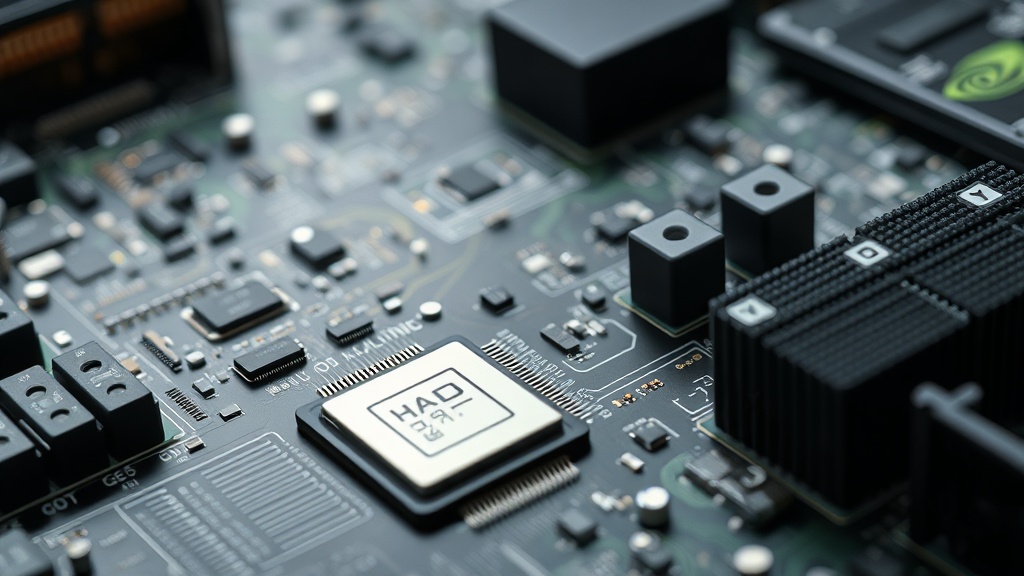
Understanding the AI Infrastructure Buildout
At its core, NVIDIA's AI infrastructure buildout initiative is a call to action for its partners. It's an acknowledgment that the insatiable demand for AI compute cannot be met by NVIDIA alone. The company is providing the essential components—its leading GPUs, networking solutions (like InfiniBand), and software stacks (like CUDA and AI Enterprise)—and inviting others to assemble, manage, and offer these resources. This distributed model allows for greater flexibility and scalability, catering to the diverse needs of enterprises and researchers worldwide. Cloud providers can enhance their AI offerings, operators can deploy specialized AI services, and startups can build innovative AI solutions without the prohibitive upfront hardware costs.
The strategy hinges on creating a robust ecosystem where NVIDIA's hardware and software form the bedrock, but the operational layer and service delivery are handled by a network of specialized partners. This approach is akin to how foundational technology companies have historically operated: providing the essential platform upon which a vast ecosystem of applications and services can flourish. Think of it less like a closed garden and more like a standardized operating system for AI compute, where third parties can build custom hardware configurations, optimized software stacks, and tailored service packages.
The Commoditization Effect
The critical insight here is how this buildout strategy inherently drives commoditization. When NVIDIA empowers a wide array of partners to deploy and manage its technology, it increases the overall supply of AI compute. As supply grows and becomes more accessible through various channels—direct from NVIDIA’s cloud partners, from specialized AI service providers, or even from telco infrastructure—the price per unit of compute is likely to decrease. This is a natural market progression: increased competition and broader availability tend to drive down margins and make the underlying resource more of a commodity.
For NVIDIA, this isn't necessarily a negative outcome. A commoditized market for AI compute means that more businesses can afford to adopt and scale AI, thereby increasing the demand for NVIDIA's core hardware and software technologies. It shifts NVIDIA's role from being solely a hardware vendor to becoming an indispensable platform provider and ecosystem enabler. However, it does mean that the premium margins NVIDIA has enjoyed on its specialized AI hardware may face pressure as more players enter the market, offering similar capabilities, potentially with slight variations or bundled services that differentiate them.
What This Means for the AI Economy
The implications for the broader AI economy are profound. Firstly, it accelerates the adoption of AI across industries. With more accessible and potentially more affordable compute, companies that were previously hesitant due to cost or complexity can now embark on significant AI projects. This could lead to an explosion of new AI applications and services, driving innovation in areas ranging from drug discovery and climate modeling to personalized education and advanced robotics.
Secondly, it diversifies the AI infrastructure landscape. While NVIDIA remains central, the operational and service aspects will be distributed. This reduces the risk associated with a single point of failure and fosters a more resilient and adaptable AI ecosystem. Partners will differentiate themselves not just on hardware, but on their ability to offer specialized software optimizations, vertical-specific AI solutions, advanced security features, and superior customer support.
The surprising detail here is not the scale of NVIDIA's ambition, but the explicit invitation to partners to build the infrastructure. Historically, NVIDIA has maintained a tight grip on its technology stack. This move signals a maturation of the AI market, where collaboration and ecosystem play are as crucial as technological superiority. It acknowledges that the future of AI compute is not a single monolithic entity but a distributed, interconnected network, with NVIDIA as its indispensable architect.
The Unanswered Question: Long-Term Value Capture
What nobody has adequately addressed yet is how NVIDIA plans to capture long-term value in a market it is actively working to commoditize. While increased hardware sales are a certainty, the company's strategy implies a shift towards a more platform-oriented revenue model. Will NVIDIA introduce new licensing tiers for its software, offer premium support packages for partner-built infrastructure, or develop new managed services that complement the partner ecosystem? The success of this buildout hinges not just on the availability of compute, but on NVIDIA's ability to maintain its strategic advantage and profitability as its core offerings become more ubiquitous. The next few years will reveal whether NVIDIA can successfully transition from being the sole supplier of AI's engine to being the indispensable orchestrator of its entire transportation network.