
Nuxt 4.5 Delivers Significant Performance Gains with SSR Streaming
Nuxt 4.5, launched last month, introduces a suite of improvements, but its experimental Server-Side Rendering (SSR) streaming stands out as a potentially game-changing feature for web performance. Early adopters, like developer ErikCH, have reported dramatic improvements, with LCP times dropping by over two seconds. This isn't just a minor tweak; it fundamentally alters how Nuxt handles initial page loads, enabling browsers to render content much sooner.
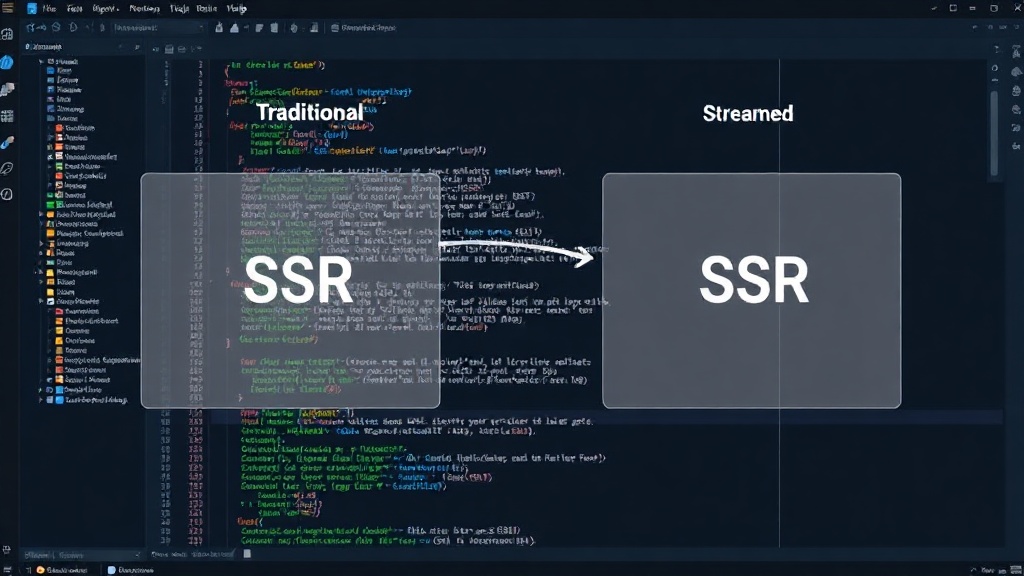
Traditionally, SSR applications render the entire HTML on the server before sending it to the client. This process can be time-consuming, especially for complex applications. While the server is busy rendering, the user sees a blank page or a loading spinner. The browser cannot begin parsing or rendering any part of the page until the full HTML document arrives. This delay directly impacts the Largest Contentful Paint (LCP) metric, a key indicator of perceived loading speed. A high LCP can lead to user frustration and negatively affect SEO rankings.
Nuxt 4.5's SSR streaming tackles this head-on. Instead of waiting for the entire page to render, the server can now stream chunks of HTML to the browser as they become available. This means critical content can be displayed to the user much faster, even while the rest of the page is still being generated on the server. ErikCH's experience highlights this: a reduction in the server's first byte arrival time to a mere 16 milliseconds, compared to a previous 2.5-second rendering wait, is a testament to the power of this new approach. This allows the browser to start displaying content almost immediately, significantly improving the user's loading experience.
Enabling SSR Streaming in Nuxt 4.5
Implementing this performance boost is remarkably simple. For developers using Nuxt 4.5.2, enabling experimental SSR streaming requires a minimal change in the Nuxt configuration file. By adding a specific configuration option, developers can unlock these significant performance benefits without a complex refactor. The exact configuration detail involves setting a flag within the Nuxt configuration object. This ease of adoption is crucial for widespread uptake, as it lowers the barrier to entry for harnessing advanced performance features.
The implications for applications that rely heavily on dynamic content or complex data fetching are profound. Previously, the trade-off for rich, dynamic experiences often meant slower initial load times. With SSR streaming, developers can build more interactive and data-intensive applications without the inherent performance penalty associated with waiting for full server-side rendering. This could lead to more sophisticated single-page applications that still deliver a fast, responsive feel from the very first interaction.
Beyond Streaming: useLayout() and Named Views
While SSR streaming is the headline feature, Nuxt 4.5 also introduces other notable enhancements. The useLayout() composable provides a more intuitive way to manage and switch between different page layouts within an application. This offers greater flexibility in designing complex user interfaces and allows for more dynamic application structures. Developers can now programmatically control which layout is applied to a specific route or even conditionally switch layouts based on user interaction or data, without the boilerplate of previous methods.
Named views, another feature refined in this release, further enhance routing capabilities. This allows developers to render multiple named views within the same route, enabling more complex UI patterns such as nested dashboards or multi-column layouts where different sections of the page can be managed independently. This is particularly useful for applications that require sophisticated content organization and presentation, moving beyond the typical single-view-per-route paradigm.
The combination of these features—SSR streaming for performance, useLayout() for structural flexibility, and named views for complex UIs—positions Nuxt 4.5 as a significant update for developers building modern web applications. The focus on developer experience and tangible performance improvements suggests a strong commitment to keeping Nuxt at the forefront of the JavaScript framework landscape.
The Future of Nuxt Performance
The introduction of experimental SSR streaming in Nuxt 4.5 signals a broader trend in web development: the pursuit of perceived performance. As user expectations for speed increase, frameworks must provide tools that enable developers to deliver lightning-fast experiences. Streaming SSR is not just about reducing LCP; it's about fundamentally rethinking the server-to-browser rendering pipeline to be more efficient and user-centric. What remains to be seen is how this experimental feature will evolve and what further optimizations Nuxt will introduce in future releases to make these advanced performance techniques even more accessible and robust.