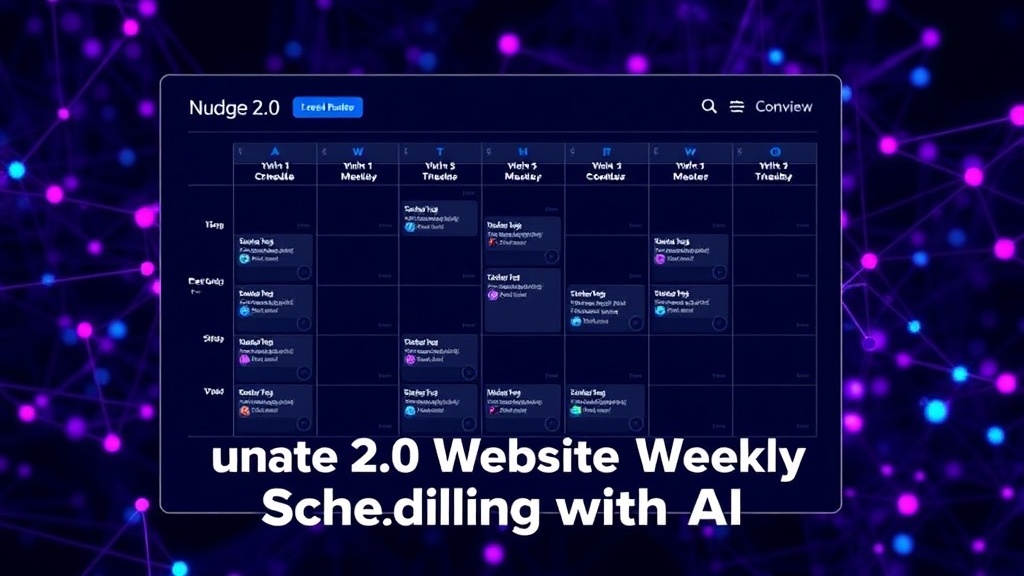
AI-Powered Weekly Scheduling
Nudge 2.0 introduces a novel approach to personal and professional productivity by employing artificial intelligence to manage an entire week's schedule. The core promise of the platform is to take the burden of planning and scheduling off the user, allowing them to focus on execution. Instead of manually blocking out time for tasks, meetings, and personal commitments, users can delegate this complex logistical puzzle to Nudge 2.0's AI.
The system is designed to understand user priorities, deadlines, and available time slots. It then constructs an optimized schedule that aims to maximize efficiency and ensure that critical actions are taken. This is particularly relevant in today's work environment where individuals often juggle multiple projects, remote teams, and a constant influx of communication. The challenge of effectively allocating time becomes a significant bottleneck for many, hindering deep work and leading to burnout.
Nudge 2.0 positions itself as a solution to this pervasive problem. By automating the scheduling process, it aims to provide a clear, actionable roadmap for each day of the week. This could potentially free up cognitive load, reduce decision fatigue associated with constant re-prioritization, and ensure that important tasks don't fall through the cracks.
How Nudge 2.0 Works
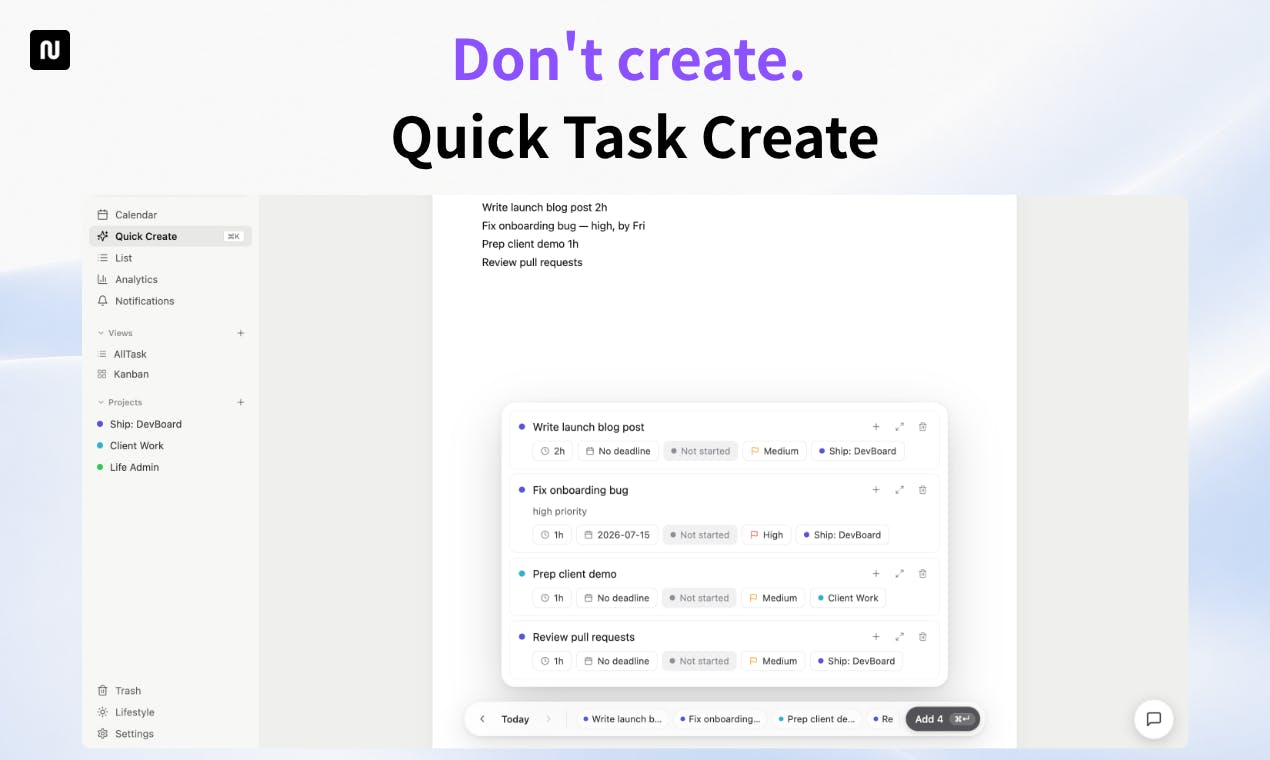
While the precise algorithms and machine learning models powering Nudge 2.0 are proprietary, the user experience likely involves inputting key information such as tasks, projects, meetings, personal appointments, and preferences. This could include desired work hours, preferred times for deep work, buffer times between meetings, and deadlines. The AI then processes this data, cross-referencing it with available calendar slots (potentially integrating with existing calendar applications like Google Calendar or Outlook) to build a coherent and actionable weekly plan.
The system likely employs techniques in constraint satisfaction and optimization to find the best arrangement of activities. For example, if a user has a critical report due on Friday and a recurring team meeting every Tuesday, the AI would need to allocate sufficient time for report writing throughout the week, ensuring it doesn't conflict with the meeting or other high-priority events. It might also consider factors like energy levels, suggesting less demanding tasks for times when the user is typically less focused.
The output is a structured schedule, presented in a clear and digestible format. Users can then review this schedule, make minor adjustments if necessary, and proceed with their week. The goal is to reduce the time spent on administrative planning from hours to minutes, or even seconds, once the initial setup is complete.
The Productivity Landscape and AI Schedulers
The rise of AI-powered productivity tools is a significant trend. From AI assistants that draft emails to tools that automate code generation, artificial intelligence is increasingly being integrated into the daily workflows of professionals. AI schedulers like Nudge 2.0 fit into this broader ecosystem by addressing a fundamental human challenge: time management. Traditional calendar applications provide a framework, but they require active input and management from the user. Project management tools help organize tasks, but they don't necessarily dictate when those tasks should be performed within the context of a busy, dynamic week.
Nudge 2.0 aims to bridge this gap by offering a proactive and intelligent scheduling solution. It moves beyond a passive calendar to an active assistant that orchestrates the user's week. This has the potential to be a powerful tool for individuals struggling with information overload and competing demands. The surprising detail here is not the existence of AI scheduling tools, but the increasing sophistication and ambition of these tools to manage not just individual appointments, but an entire week's complex, interconnected activities.
The success of such a tool hinges on its ability to accurately interpret user needs and constraints, and to generate schedules that are not only logically sound but also realistic and adaptable. Users are unlikely to adopt a system that creates an overly rigid or unachievable plan. Therefore, the AI's ability to learn and adapt to individual working styles and preferences will be critical.
Potential Impact and Future Considerations
If Nudge 2.0 delivers on its promise, it could significantly enhance individual productivity and reduce stress. For founders and startup teams, where time is often the most scarce resource, an effective AI scheduler could mean the difference between hitting critical milestones and falling behind. Security professionals, data scientists, and developers often face intense periods of focused work interspersed with urgent requests; an AI that can intelligently interleave these demands could prove invaluable.
However, the adoption of such tools also raises questions about user autonomy and the potential for over-reliance. What happens when the AI's schedule conflicts with an unforeseen personal need or an urgent, unpredicted work crisis? The system needs to be flexible enough to accommodate exceptions and allow for user override without becoming cumbersome. Furthermore, the privacy implications of granting an AI access to one's entire weekly schedule and potentially sensitive task information need careful consideration.
The broader implications for how we conceptualize work and productivity are also worth exploring. As AI takes on more of the logistical and planning aspects of our professional lives, it may free up human capital for more creative, strategic, and interpersonal tasks. Nudge 2.0 is a step in this direction, automating the cognitive load of weekly planning and enabling users to focus on doing, rather than just organizing.