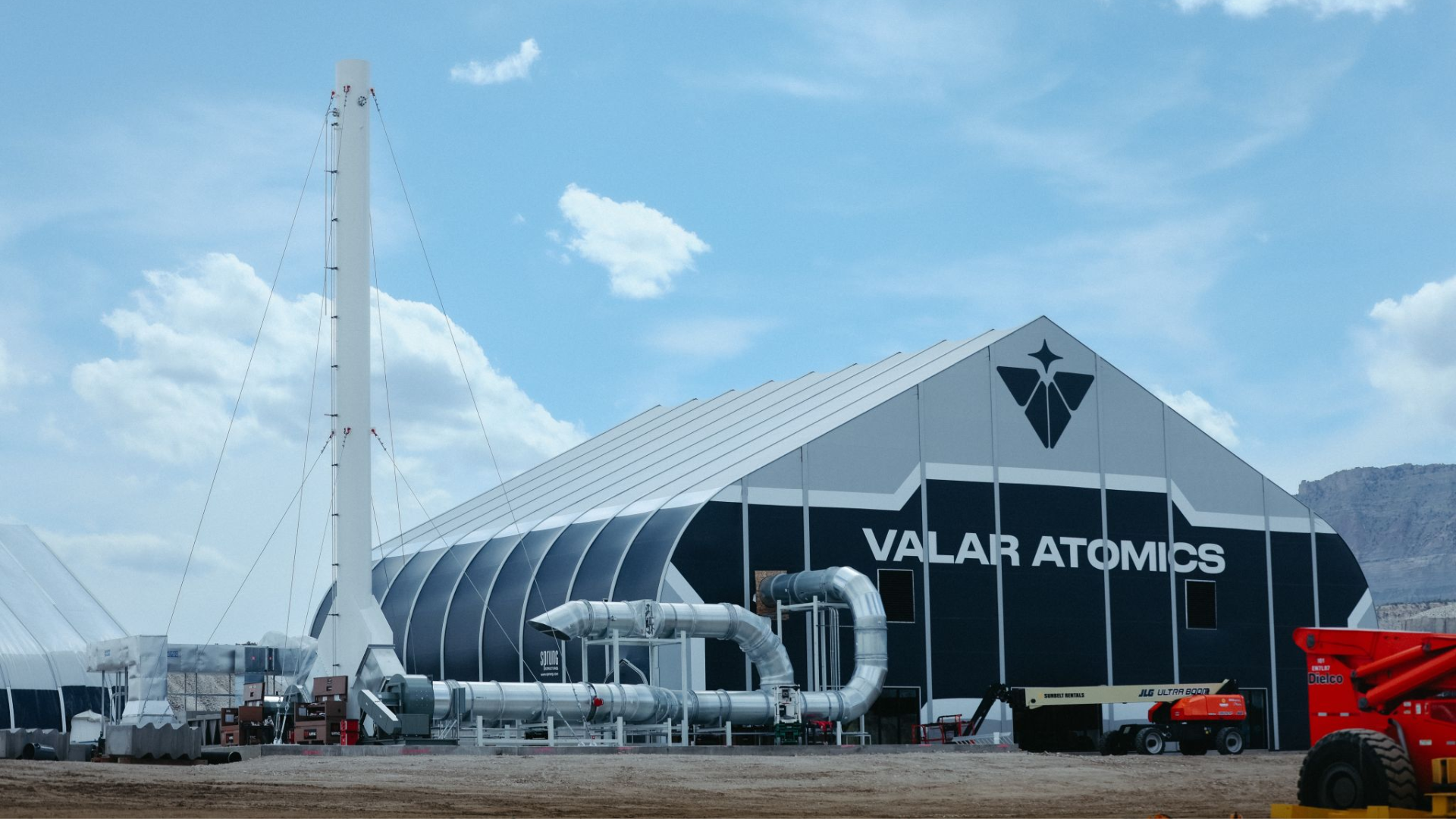
Nuclear Power for AI: A Live Demonstration
Valar Atomics has achieved a significant milestone, becoming the first startup to publicly demonstrate nuclear power generation for a commercial application. The company activated its Ward 250 microreactor live on stage, using its output to power an Nvidia RTX Spark desktop PC. This demonstration, a bold move for any tech event, underscores the company's ambition to disrupt traditional energy paradigms for high-demand computing loads, particularly within the burgeoning field of artificial intelligence.
The Ward 250 microreactor, a compact fission system, is designed for safe and reliable operation. Its successful activation and sustained power delivery to the demanding RTX Spark PC represent a critical proof-of-concept for Valar Atomics. This event is not merely a technical showcase; it’s a declaration of intent to provide a potent, localized, and potentially emissions-free power source for the insatiable energy needs of modern computing. The implications for data centers, remote operations, and even defense applications are substantial.

Partnership with Nvidia: The 30MW AI Factory Vision
Beyond the immediate demonstration, Valar Atomics announced a strategic partnership with Nvidia. The collaboration aims to develop a 30-megawatt (MW) closed-loop AI data center. This facility is envisioned as a significant step towards scalable, sustainable power for large-scale AI operations. A key feature of this proposed data center is its design to operate without drawing water from local communities. This addresses a growing concern in regions facing water scarcity, where the immense water requirements of traditional cooling systems for high-performance computing are becoming unsustainable.
The 30MW capacity signifies a substantial power output, capable of supporting a considerable number of high-performance AI training and inference clusters. By integrating Valar Atomics' nuclear microreactor technology with Nvidia's cutting-edge AI hardware, the partnership seeks to create a powerful synergy. This could enable the deployment of AI infrastructure in locations previously constrained by power availability or water resources. The closed-loop system implies a highly efficient thermal management strategy, likely involving advanced heat exchangers and possibly on-site power conversion, minimizing environmental impact and maximizing operational autonomy.
The decision to pursue nuclear power for AI data centers is a direct response to the escalating energy demands of large language models and complex AI simulations. Traditional power grids, often reliant on fossil fuels, struggle to keep pace with the rapid growth of AI compute, leading to increased carbon footprints and potential grid instability. Nuclear microreactors offer a high-density, low-carbon energy alternative that can be deployed closer to the point of demand, reducing transmission losses and increasing resilience.
Addressing the Water Conundrum
The commitment to a water-independent AI factory is particularly noteworthy. Data centers are notorious for their high water consumption, primarily for cooling. Evaporative cooling towers, while effective, can deplete local water sources significantly, especially in arid or drought-prone areas. Valar Atomics' approach, in conjunction with Nvidia's hardware, suggests a design that either reuses coolant indefinitely within a sealed system or employs advanced dry-cooling technologies that minimize or eliminate water usage. This focus on water conservation is becoming a critical differentiator and a necessity for the long-term sustainability of the data center industry.
This approach to power and cooling is not merely about efficiency; it's about enabling AI development in a responsible and scalable manner. As AI workloads continue to expand, the environmental footprint of powering these systems becomes an increasingly important consideration for both technology providers and their customers. Valar Atomics and Nvidia are positioning themselves at the forefront of a potential shift towards more self-sufficient and environmentally conscious AI infrastructure.
The Future of AI Power
The live demonstration and partnership announcement by Valar Atomics and Nvidia signal a potential inflection point for AI infrastructure. The convergence of advanced nuclear technology and leading-edge AI hardware offers a compelling solution to the power and sustainability challenges facing the industry. While regulatory hurdles and public perception surrounding nuclear technology remain, successful demonstrations like this pave the way for broader adoption. The prospect of localized, high-output, water-independent power sources could unlock new possibilities for AI deployment globally, accelerating innovation across countless sectors.
What remains to be seen is the timeline for the deployment of the 30MW AI factory and the scalability of the Ward 250 microreactor technology for widespread data center use. The economics, safety certifications, and integration complexities will all play crucial roles in determining the pace of adoption. However, the message is clear: the energy landscape for AI is evolving rapidly, and nuclear microreactors are emerging as a serious contender.