
Notion Enters Software Development with Ship OS
Notion, a company known for its versatile workspace and productivity tools, has announced the launch of Ship OS. This new platform positions itself as an "agent-native" way to ship software, suggesting a significant pivot into the developer tooling space. While details are still emerging, the announcement on Product Hunt indicates a strategic move to capture a segment of the software development lifecycle.
The core promise of Ship OS appears to be simplifying the complex process of taking software from concept to deployment. The term "agent-native" implies an integration of AI-powered agents that can assist or automate various stages of development. This could range from code generation and testing to deployment and monitoring, all orchestrated through a unified interface.
The software development landscape is increasingly crowded with tools aimed at improving developer productivity. From integrated development environments (IDEs) and CI/CD pipelines to project management and collaboration platforms, developers have a plethora of options. Notion's entry with Ship OS suggests they believe there's a gap in how these tools are integrated, particularly with the rise of AI agents capable of performing sophisticated tasks.
What Does "Agent-Native" Mean for Development?
The concept of "agent-native" software development is still nascent, but it points towards a future where AI agents are not just add-ons but fundamental components of the development workflow. For Ship OS, this could translate into:
- Automated Code Generation: Agents that can write boilerplate code, generate tests, or even suggest entire functions based on natural language prompts or existing codebases.
- Intelligent Testing and Debugging: AI agents that can identify potential bugs, suggest fixes, and automate the execution of comprehensive test suites.
- Streamlined Deployment: Agents that manage CI/CD pipelines, optimize deployment strategies, and monitor application performance post-launch.
- Project Management Assistance: Agents that can help break down tasks, estimate timelines, and flag potential roadblocks based on project progress.
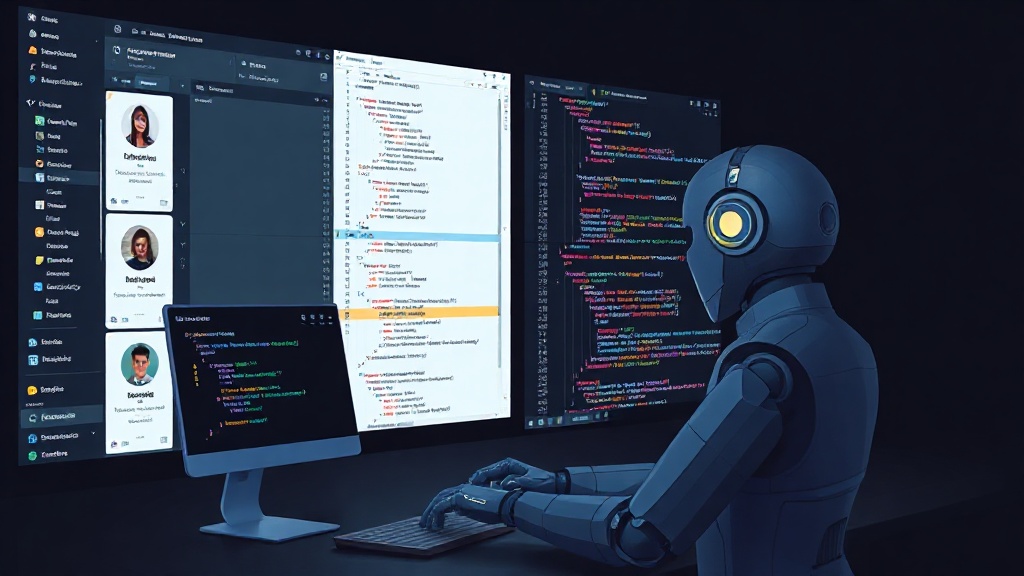
Think of Ship OS less like a traditional IDE and more like a highly intelligent project manager and co-pilot rolled into one. It aims to reduce the cognitive load on developers by handling repetitive or complex tasks, allowing them to focus on the creative and strategic aspects of software engineering.
Potential Impact and Market Positioning
Notion's existing user base, which spans individuals, startups, and large enterprises, provides a significant potential audience for Ship OS. Many of these users already rely on Notion for project management, documentation, and internal knowledge bases. Integrating software development tooling directly into this ecosystem could offer a seamless experience for teams already invested in Notion's productivity suite.
The competitive landscape for developer tools is fierce. Companies like GitHub (with Copilot and Actions), GitLab, Atlassian (Jira, Confluence), and a host of specialized AI coding assistants are already vying for developer mindshare. Ship OS will need to demonstrate clear advantages, likely centered around its agent-native capabilities and integration within the Notion ecosystem, to carve out its niche.
The surprising detail here is not that Notion is entering the developer tool market, but the specific angle of "agent-native." This suggests a bet on the future of AI in software creation, aiming to be at the forefront of this paradigm shift rather than simply offering incremental improvements to existing workflows. If successful, Ship OS could redefine how software is built, making development more accessible and efficient.
The Unanswered Questions
While the launch of Ship OS is exciting, several critical questions remain. What are the specific technical underpinnings of these AI agents? How robust are they in handling complex, real-world development challenges? What is the pricing model, and how does it compare to existing developer platforms? Most importantly, what is the integration depth with Notion's existing products? Will it be a standalone offering, or will it deeply weave into Notion databases and wikis?
The success of Ship OS will likely hinge on its ability to deliver tangible productivity gains and a genuinely streamlined experience. Developers are notoriously resistant to tools that add friction or complexity without clear benefits. Notion has a reputation for building user-friendly products, and if Ship OS can maintain that standard while pushing the boundaries of AI-assisted development, it could become a significant player in the developer tooling market.
For now, Ship OS represents Notion's boldest step yet into the professional developer toolchain. It signals a commitment to leveraging AI to fundamentally change how software is created, deployed, and managed.