MCP Sampling: Inverting the Interaction Model
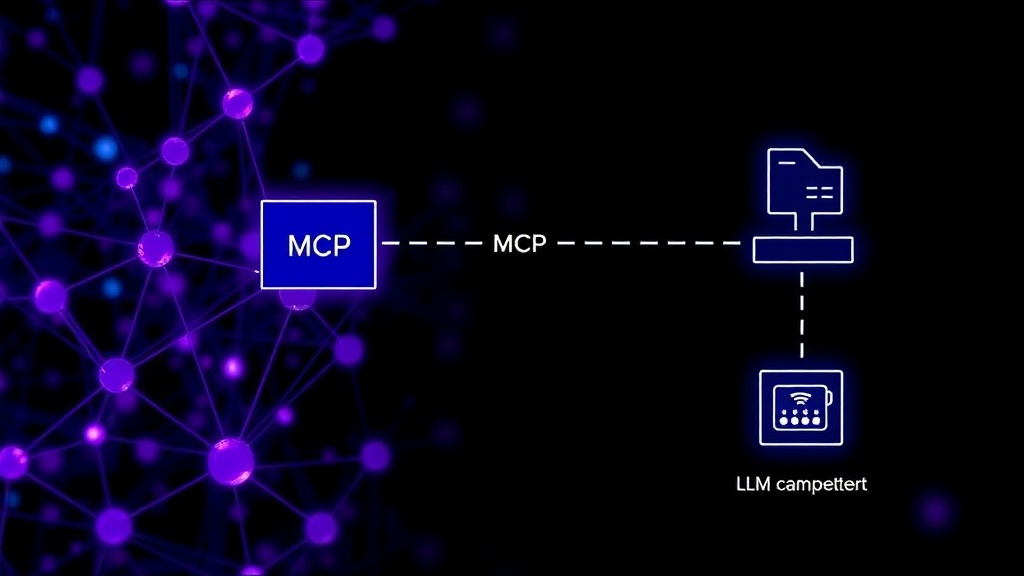
NodeLLM 1.17 delivers a significant shift in its Meta Communication Protocol (MCP) with the introduction of server-side sampling. Previously, MCP allowed clients to request tool executions from a NodeLLM server. Now, Phase 3 of MCP development flips this dynamic: servers can request LLM completions from the client. This capability, facilitated by the new createLLMSamplingHandler function, empowers MCP servers to leverage LLM functionalities like summarization, classification, and content generation without needing their own API keys or direct integrations with LLM providers. The server essentially delegates LLM tasks back to the NodeLLM client, closing the loop in the MCP interaction model.
This inversion means that applications acting as MCP servers can now offer advanced AI features that were previously confined to the client-side NodeLLM instance. Imagine an internal documentation server that can instantly summarize lengthy technical articles or classify user-submitted feedback, all driven by the LLM capabilities exposed by the connecting NodeLLM client. This architecture simplifies integration for servers, abstracting away the complexities of LLM provider management. The server simply makes a request, and the NodeLLM client handles the rest, returning the generated text. This approach is particularly beneficial for environments where deploying separate LLM inference infrastructure for each service is impractical or cost-prohibitive.
Concurrent Tool Execution and ORM Control
Beyond MCP sampling, NodeLLM 1.17 introduces robust improvements to tool execution management. The update provides precise, consistent control over how tool calls are executed, now unified across both the core NodeLLM engine and its ORM (Object-Relational Mapping) persistence layer. This enhancement is crucial for developers building complex applications that rely on multiple tool integrations.
Previously, managing the execution of multiple tools, especially when they had dependencies or needed to run in parallel, could be a point of friction. NodeLLM 1.17 addresses this by enabling concurrent tool execution. Developers can now orchestrate multiple tool calls to run simultaneously, significantly speeding up workflows that involve fetching data from various sources, performing independent analyses, or triggering parallel actions. This is particularly impactful for agents that need to gather information from diverse APIs or execute a suite of predefined tasks in a time-sensitive manner.
The ORM persistence layer also benefits from this enhanced control. When NodeLLM interacts with databases or other data stores via its ORM, developers can now more effectively manage the sequence and concurrency of these operations. This means better control over data fetching, updates, and deletions, ensuring data integrity and improving application responsiveness. For instance, an application might need to update several related records in a database. With the new controls, these updates can be managed more efficiently, potentially running in parallel where dependencies allow, or in a carefully defined sequence to prevent race conditions.
The consistency of this control across the core engine and the ORM is a notable achievement. It simplifies the developer experience, as the patterns and APIs for managing tool execution remain the same regardless of whether the tools are interacting directly with external services or with the application's data layer. This uniformity reduces cognitive load and accelerates development, allowing teams to focus on application logic rather than the intricacies of execution management.
What This Means for NodeLLM Users
The dual focus of NodeLLM 1.17—enabling servers to leverage LLMs via MCP and refining tool execution control—positions the library as an increasingly powerful framework for building sophisticated AI-powered applications. The MCP sampling feature abstracts away LLM provider complexities, making it easier for server-side applications to integrate AI capabilities. This could democratize the use of LLMs within existing infrastructure, allowing teams to add intelligent features without extensive re-architecting or new infrastructure investments.
For developers working with complex agentic systems or applications requiring efficient data handling, the advancements in concurrent tool execution and ORM control are substantial. The ability to run tools in parallel and manage ORM operations with greater precision directly translates to faster execution times, improved resource utilization, and more robust application behavior. This update appears to be a strategic move to enhance NodeLLM’s utility in scenarios demanding high performance and intricate interaction patterns between LLMs, tools, and data stores.
The team behind NodeLLM, led by E. Shaiju, continues to iterate on the library’s core strengths. This release demonstrates a commitment to both expanding the architectural possibilities of LLM integrations (with MCP sampling) and refining the practical aspects of application development (with enhanced tool execution). The consistency between core and ORM features suggests a mature design philosophy aimed at providing developers with predictable and powerful tools.