The Critical Need for Environment-Scoped DNS Zone Assertions
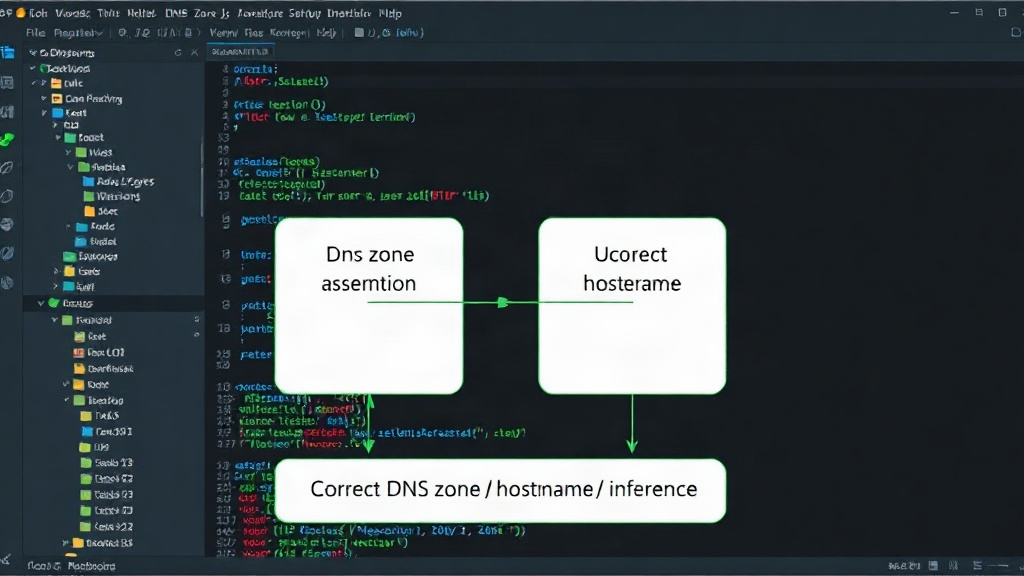
Node.js applications, particularly those handling multi-tenancy, face a critical vulnerability: mismanaging environment-scoped DNS zone identifiers. A common failure mode involves treating DNS zone information as something to be inferred from hostnames. This approach is brittle and dangerous. The correct pattern, established in the Node.js 2026 Runbook, dictates that tenant zone records must be created *before* application startup. Furthermore, the application must refuse to boot if the configured environment, zone identifier, or parent domain does not align with an explicit allowlist. The core principle is stark: treat an environment-scoped DNS zone identifier as startup configuration, not as a value to infer from a hostname.
Consider a media platform provisioning tenant.example.net for each newsroom. Without strict assertions, a staging process accidentally pointed at production DNS can appear functional. This is a silent killer. It can lead to verification emails, password resets, and DMARC reports being sent to entirely the wrong recipients—the wrong tenants. The cascade of incidents often begins with a single, misplaced `.env` variable and can escalate to data corruption or replay attacks across disparate tenant datasets. The true signal of a healthy startup is not merely a successful DNS API query returning a 200 OK status. It is definitive proof that the DNS response originated from the intended zone and contains the precisely expected record.
Implementing Strict Startup Assertions in Node.js
To enforce this security posture, Node.js applications must implement robust startup assertions. The process begins with pre-boot validation. Before the application process even reaches its main execution path, it must query its configured DNS zone identifier. This identifier, typically derived from environment variables or a configuration file, should be treated as immutable startup configuration. The application then compares this configured identifier against a hardcoded or securely loaded allowlist of known, valid zones for the current environment (e.g., production, staging, development). If the configured zone identifier does not match an entry in the allowlist, or if the query itself fails in a way that suggests an incorrect zone, the application must halt startup immediately. This is not a soft warning; it is a hard stop.
The allowlist serves as the gatekeeper. It ensures that even if an attacker or misconfiguration causes a hostname to resolve to an unexpected IP address, the application will not proceed. The critical check is not just that a DNS record exists, but that it exists in the *correct* zone, belonging to the *correct* tenant, within the *correct* environment. This pattern prevents the scenario where a staging environment accidentally resolves tenant-specific subdomains to production infrastructure, leading to data leakage or spoofing.
Technical Implementation Details
Implementing these assertions requires careful consideration of the Node.js runtime and its ecosystem. Libraries like dns, available natively in Node.js, can be used for DNS lookups. However, relying solely on basic lookups is insufficient. The assertion must go deeper. It needs to verify the authoritative name server for the queried zone. Tools like whois or specialized DNS libraries can help determine the authoritative servers for a given domain. The application should ideally query these authoritative servers directly, or at least verify that the response received from a general resolver indicates the correct zone authority.
Consider the `tenant.example.net` scenario. The application starts, reads its configuration: `NODE_ENV=production`, `TENANT_ZONE_ID=newsroom-a.example.com`. It performs a DNS lookup for `newsroom-a.example.com`. The lookup returns an IP address. The assertion layer then queries the authoritative name servers for `example.com` to confirm they indeed delegate `newsroom-a` to the expected zone. If the response indicates delegation to a different set of name servers, or if the DNS query for the record itself returns data inconsistent with what’s expected for `newsroom-a`, the application must fail. This layered verification is crucial.
The configuration itself must be secured. Storing `TENANT_ZONE_ID` in environment variables is common, but care must be taken to ensure these variables are correctly set and not accidentally copied from one environment to another. For highly sensitive applications, consider using a secrets management system that injects these values securely at runtime, with distinct secrets for each environment.
Mitigation Strategies for Existing Systems
For existing Node.js applications already deployed, retrofitting these assertions requires a phased approach. The immediate step is to add logging around DNS resolution and environment variable consumption during startup. This provides visibility into potential misconfigurations. Next, introduce a non-blocking validation check that logs warnings if the inferred hostname does not align with expected zone patterns. This allows for monitoring without immediate disruption.
The critical phase involves introducing a blocking startup assertion. This is best done behind a feature flag or during a scheduled maintenance window. The flag allows for rapid rollback if unforeseen issues arise. Deploying this feature requires ensuring that all target DNS zones are correctly provisioned and that the corresponding configuration variables are accurately set across all environments. A thorough testing regimen, including simulating various DNS resolution scenarios (e.g., temporary DNS outages, incorrect zone delegation), is paramount before enabling the blocking assertion in production.
The final step is to remove the non-blocking checks and rely solely on the hard-fail assertion. This ensures the system operates under the intended security model. If the application must support dynamic zone provisioning or inference for specific use cases, these must be explicitly handled outside the core startup assertion logic, with their own distinct validation mechanisms.
Broader Implications and Future Considerations
The Node.js 2026 Runbook for Environment-Scoped DNS Zone Startup Assertions highlights a broader trend in application security and reliability. As systems become more distributed and dynamic, relying on implicit configurations or inferred values becomes increasingly risky. The principle of explicit configuration and verification at the earliest possible stage—startup—is essential. This pattern is not unique to Node.js; similar principles should be applied across all languages and platforms managing multi-tenant infrastructure or sensitive data.
What remains to be seen is how effectively cloud-native tooling and orchestration systems will integrate these deep validation checks. Will Kubernetes admission controllers be able to inspect application startup logic for DNS assertion compliance? Will CI/CD pipelines automatically flag deployments that lack these critical startup checks? The current landscape often leaves this responsibility solely to application developers. Standardizing these types of assertions, perhaps through a common Node.js module or framework integration, could significantly raise the baseline for secure application bootstrapping across the ecosystem.
Ultimately, treating DNS zone identifiers as foundational startup configuration, rather than a runtime inference problem, is a fundamental shift. It moves security left, embedding critical validation checks at the application's earliest moments. This proactive stance is the only way to prevent the cascading failures that stem from subtle, yet catastrophic, environment misconfigurations.