The Limitations of RGB and the Rise of Multi-Primary Displays
For decades, the standard for digital color display has been Red, Green, and Blue (RGB). This additive color model, while foundational, inherently struggles to reproduce the full spectrum of colors visible to the human eye. The result is often a compromise: displays can either prioritize brightness, saturation, or accuracy, but rarely all three simultaneously. This limitation is particularly apparent in professional fields like graphic design, photography, and film production, where precise color reproduction is paramount. The quest for displays that can truly mimic reality has led to the emergence of multi-primary color display technology, a significant leap beyond the traditional three-color approach.
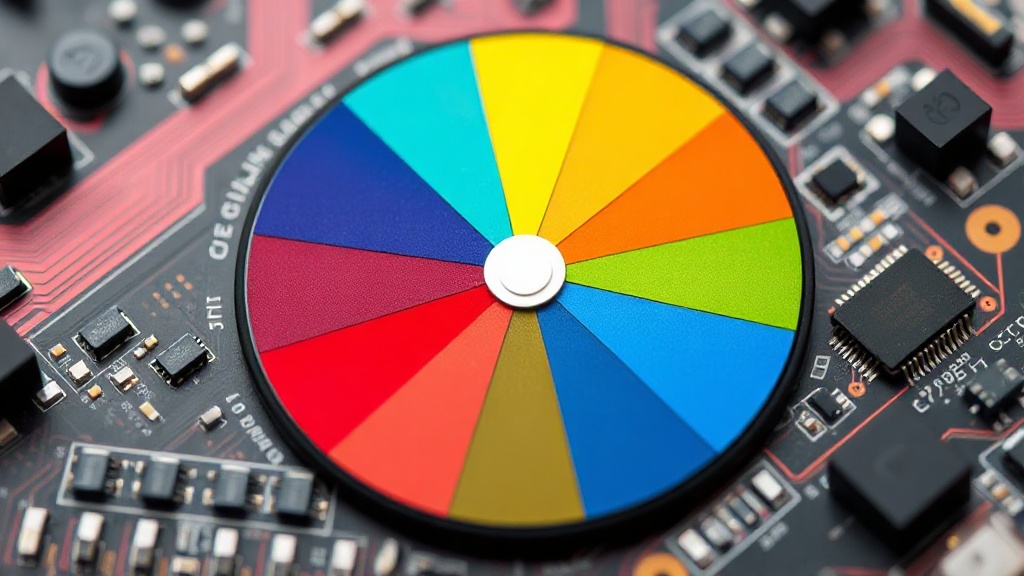
Multi-primary displays expand the color gamut by incorporating additional primary colors beyond red, green, and blue. These can include colors like yellow, cyan, magenta, orange, or even specialized hues tailored for specific applications. By adding these extra color channels, displays can achieve unprecedented color accuracy, saturation, and brightness, all without sacrificing one for the others. This technology promises to render images with a depth and realism that current displays simply cannot match, moving closer to the true vibrancy of the real world.
How Multi-Primary Displays Achieve Superior Color Reproduction
The core innovation lies in the expanded color mixing capabilities. Traditional RGB displays mix light from red, green, and blue subpixels to create a vast range of colors. However, the range of colors that can be accurately generated is confined by the specific wavelengths of these three primaries. Think of it like trying to paint a sunset with only three tubes of paint – you can get close, but you'll miss the subtle oranges, purples, and deep reds. Multi-primary systems, by introducing additional colors like yellow, orange, or cyan, provide more control over the light spectrum emitted by the display. This allows for a more precise and nuanced combination of light, enabling the display to reproduce a far wider range of colors with greater accuracy.
For instance, reproducing a vibrant yellow often requires a specific yellow primary rather than a blend of red and green, which can sometimes appear muddy or desaturated on an RGB display. Similarly, deep oranges and rich magentas can be rendered more faithfully with dedicated primaries. This enhanced color mixing directly translates to a wider color gamut, meaning the display can show more distinct colors. Furthermore, it improves color volume, which refers to the display's ability to maintain saturation and brightness across that expanded gamut. This is crucial for capturing the subtle gradations and realistic textures found in high-dynamic-range content.
Key Technological Advancements and Challenges
The development of multi-primary color displays is not a single monolithic breakthrough but rather an evolution of display technologies, including advancements in quantum dots, microLEDs, and OLEDs. Quantum dots, for example, can be engineered to emit light at very specific wavelengths, making them ideal candidates for creating precise additional primary colors. MicroLED and OLED technologies offer inherent advantages in terms of contrast ratios and pixel-level control, which are essential for maximizing the benefits of a multi-primary approach.
However, several challenges remain. The complexity of driving more than three color channels per pixel increases the technical hurdles for display manufacturers. This requires more sophisticated control circuitry, advanced signal processing, and potentially higher power consumption. Content creation also needs to adapt; current video and image standards are largely built around RGB. For multi-primary displays to reach their full potential, content creators will need tools and workflows that can leverage the expanded color capabilities. The standardization of color spaces and metadata for these new displays is an ongoing process.
Applications and Future Outlook
The immediate beneficiaries of multi-primary color displays are industries where color fidelity is non-negotiable. Professional photography and videography will see a dramatic improvement in how images are captured and displayed, allowing for more faithful post-production work. The medical field, particularly in diagnostics and pathology, could benefit from enhanced color accuracy for identifying subtle anomalies in scans and tissue samples. The automotive industry might leverage this for more accurate color matching in paint and design, and for advanced heads-up displays. For consumers, this technology promises more immersive and realistic viewing experiences in entertainment, from gaming to movies.
While widespread consumer adoption may take time due to the cost and complexity of implementation, the trajectory is clear. As the technology matures and content ecosystems adapt, multi-primary displays are poised to become the new standard for color reproduction. The shift from RGB, once a revolutionary concept itself, is now being superseded by a more nuanced and capable approach that will redefine our visual perception of digital content.