Unified Execution Architecture
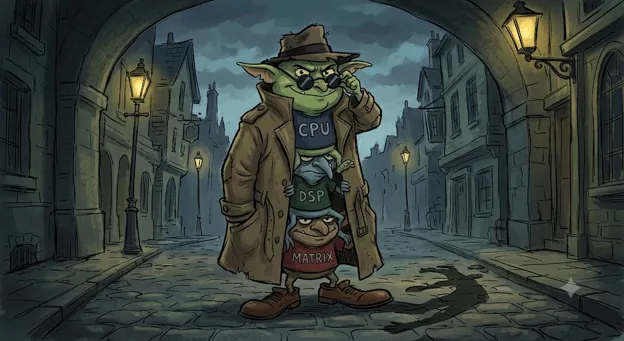
A new processor design has emerged, aiming to simplify complex computational workloads by unifying matrix, vector, and scalar operations within a single execution pipeline. This approach, dubbed 'One Processor, One Toolchain,' seeks to eliminate the overhead and complexity associated with managing separate execution units for different data types and operations common in modern AI, machine learning, and high-performance computing. The core innovation lies in a software-controlled core that dynamically handles these diverse instruction types without context switching or data movement penalties between specialized hardware blocks.
Traditionally, processors relied on distinct units: scalar units for general-purpose computations, vector units for parallel processing of similar data elements, and matrix units for the large-scale multiplications fundamental to neural networks. This specialization, while effective, often leads to inefficiencies. Data must be moved between these units, and compilers must manage intricate scheduling to optimize their usage. This new architecture proposes a singular, flexible pipeline capable of executing all these operation types, managed by sophisticated software control. This aims to reduce latency, improve power efficiency, and simplify the development toolchain.
Implications for AI and Data Processing
The impact of such a unified architecture on AI and data processing workloads could be substantial. Neural network training and inference, which are heavily reliant on matrix multiplication, would benefit from direct, efficient execution. Similarly, data analytics tasks that frequently involve vector operations and scalar aggregations would see performance gains. The elimination of specialized hardware blocks also suggests a potential reduction in chip design complexity and manufacturing costs, although the complexity shifts to the software and control logic.
Consider the process of training a large language model. It involves billions of matrix multiplications. With a traditional CPU or even a GPU, these operations are handled by dedicated matrix units, but the surrounding data preparation, activation functions (often scalar), and intermediate calculations might involve different units. A unified pipeline could theoretically handle the entire sequence more fluidly. This is less like having a toolbox with separate hammers, screwdrivers, and wrenches, and more like a single, highly adaptable tool that can reconfigure itself on the fly for each specific task. The efficiency gains come from avoiding the time spent putting one tool down and picking up another, and the potential for errors in selecting the wrong tool or using it incorrectly.
The Toolchain Advantage
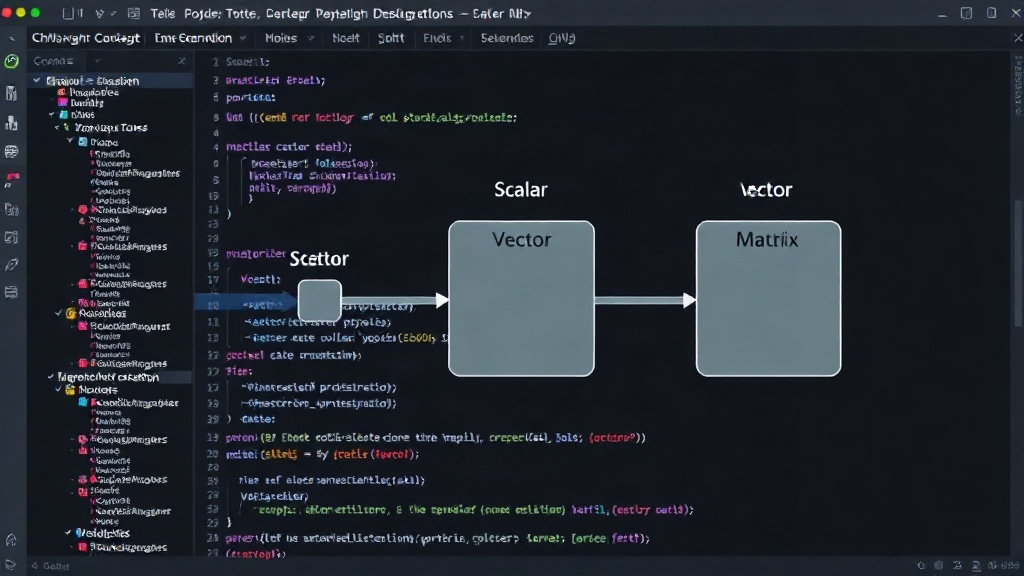
The 'One Toolchain' aspect of this initiative is as critical as the processor architecture itself. A unified hardware design necessitates a unified software development environment. This means a single compiler, debugger, and runtime environment capable of targeting all operation types seamlessly. Developers would no longer need to grapple with multiple programming models or specialized libraries for different hardware units. Instead, they could focus on expressing their algorithms, with the toolchain responsible for optimizing their execution on the unified pipeline. This simplification could significantly accelerate development cycles, particularly for AI and data science teams who often juggle complex software stacks.
This unified toolchain would likely abstract away the intricacies of the underlying hardware. A programmer might write code that looks like standard C++ or Python, but the compiler would intelligently map matrix operations to the processor's matrix capabilities, vector operations to its vector capabilities, and scalar operations to its scalar capabilities, all within the same instruction stream. This reduces the cognitive load on developers and minimizes the risk of performance pitfalls arising from mismanaging hardware resources. It’s akin to a modern IDE that automates many tedious coding tasks, allowing the developer to focus on the core logic rather than the minutiae of low-level optimization.
Challenges and Future Directions
Despite the potential benefits, significant challenges remain. The primary hurdle is the complexity of the control logic and the compiler. Creating a compiler that can optimally schedule and manage scalar, vector, and matrix operations within a single pipeline, across a wide range of applications, is a monumental task. The performance of such a unified core must also rival or exceed that of highly specialized, mature architectures like GPUs for demanding AI workloads. Power efficiency, especially at high performance levels, will also be a critical factor.
Furthermore, the ecosystem around this new architecture needs to be built. This includes developing robust libraries, frameworks, and developer support. Without widespread adoption and a rich software ecosystem, even the most innovative hardware will struggle to gain traction. The transition for existing developers and companies invested in current architectures will also require careful planning and migration strategies. What remains to be seen is whether this unified approach can truly deliver on its promise of superior performance and simplicity across the board, or if it will find a niche in specific applications where its particular strengths are most pronounced.
The success of 'One Processor, One Toolchain' will hinge on its ability to prove its mettle in real-world benchmarks against established players. Companies and researchers will be watching closely to see if this unified paradigm can unlock new levels of efficiency and performance in an increasingly computationally demanding landscape.