
The Problem with Spent Batteries
Rechargeable batteries, the ubiquitous power sources for everything from smartphones to electric vehicles, have a finite lifespan. Over time, repeated charging and discharging cycles lead to a buildup of passivation layers on the electrodes. This layer, often referred to as the Solid Electrolyte Interphase (SEI) in lithium-ion batteries, is crucial for initial battery performance and safety. However, its uncontrolled growth and accumulation during normal operation act as an electrical insulator, increasing internal resistance and dramatically reducing the battery's capacity and power output. Eventually, the battery becomes economically unviable or functionally useless, destined for recycling or landfill. Current recycling methods often involve complex and energy-intensive processes to recover valuable materials, but the fundamental components of the battery electrodes are not typically restored to a reusable state.
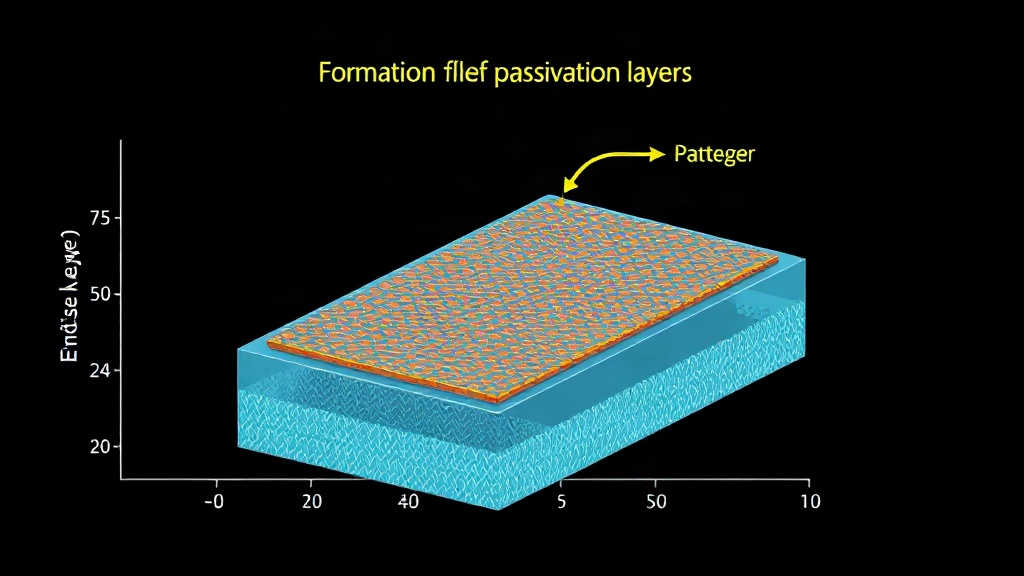
Dissolving the Barrier: A Novel Regeneration Approach
A team of researchers has introduced a groundbreaking method that directly addresses this passivation layer problem. Instead of focusing on material recovery, their technique aims to regenerate the electrodes themselves by selectively dissolving this unwanted interphase. The core of their innovation lies in identifying specific electrolyte compositions that can break down the passivation layer without damaging the underlying electrode material. This approach is akin to carefully cleaning a corroded metal object without eroding the metal itself.
The process involves treating the spent battery's electrodes with a specially formulated electrolyte solution. This solution is designed to target and dissolve the resistive passivation film that has formed. Once the barrier is removed, the electrodes regain their pristine electrochemical activity, allowing the battery to be recharged and used again with performance levels approaching those of a new battery. This direct regeneration bypasses the need for extensive material extraction and remanufacturing, potentially offering a more sustainable and cost-effective pathway for extending battery lifecycles.
Mechanism and Potential Applications
While the specific chemical formulations and detailed mechanisms are proprietary and subject to ongoing research, the principle is straightforward: create an electrolyte that can selectively etch away the insulating interphase. This is a delicate chemical balance. Too aggressive a solvent would degrade the active electrode material, rendering it useless. Too mild a solvent would fail to remove the passivation layer effectively. The researchers have apparently found a sweet spot, enabling the dissolution of the SEI layer in systems like lithium-ion batteries.
The implications of this research are far-reaching. If scalable, this technology could significantly reduce the environmental impact of battery waste. It offers a potential solution for extending the useful life of batteries in applications where performance degradation is the primary limiting factor, such as grid-scale energy storage or even certain types of electric vehicle batteries. Imagine a future where instead of replacing a large battery pack, it could be periodically 'refurbished' by dissolving the accumulated resistive layers, returning it to near-original performance. This would drastically cut down on the demand for raw materials like lithium, cobalt, and nickel, which are often sourced through environmentally damaging mining practices.
Challenges and Future Directions
Despite the promising nature of this research, several challenges remain before it can be widely adopted. Scalability is a primary concern. Demonstrating this process effectively on a laboratory scale is one thing; applying it to millions of large-format batteries in a cost-effective and efficient manner is another. The long-term stability of regenerated electrodes also needs thorough investigation. While the initial performance may be restored, how many regeneration cycles can an electrode withstand before irreversible degradation occurs? Furthermore, the safety aspects of using these specialized electrolyte solutions on a large scale will require rigorous testing and validation.
The researchers are likely exploring different electrolyte formulations for various battery chemistries beyond lithium-ion, as passivation layer formation is a common issue across many battery types. Understanding the precise chemical interactions at the electrode-electrolyte interphase for each chemistry will be critical. The Hacker News comments also highlight questions about the economic viability compared to new battery production and the potential for this to be a niche solution rather than a universal one. What remains to be seen is whether this method can truly compete with the rapidly falling costs of new battery manufacturing, or if it will find its place in specialized applications where refurbishment offers a clear advantage.
Broader Impact on the Circular Economy
This electrode–electrolyte interphase dissolution technique represents a significant step towards a more circular economy for batteries. By enabling direct regeneration of electrode components, it shifts the paradigm from linear