The Problem with Existing Job Boards
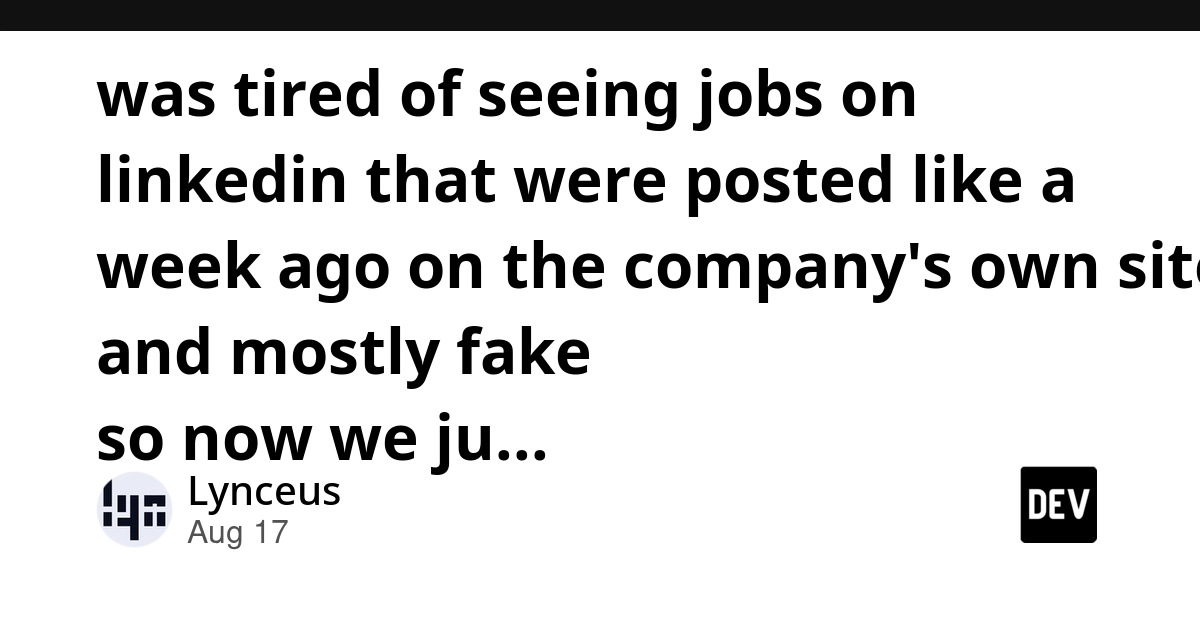
The current landscape of online job searching is plagued by outdated and often misleading listings. Many platforms, including prominent ones like LinkedIn, frequently display jobs that have already been filled or were never genuinely available. This leads to significant frustration for job seekers who invest time and effort into applications that have no chance of success. The core issue stems from the reliance on third-party data aggregation and delayed updates, creating a disconnect between the advertised opportunity and its real-world availability.
One developer, tired of this persistent problem, decided to take a direct approach. Instead of relying on aggregated data that is often slow to refresh or inaccurate, they developed a system to scrape job listings directly from the career pages of companies themselves. This method bypasses the intermediaries and their inherent delays and inaccuracies, aiming to provide a more reliable and up-to-date source of employment opportunities.
Introducing the Direct Scraping Solution
The project, hosted on GitHub under the repository name 'jobs' (github.com/trylynceus/jobs), aims to curate a comprehensive and current database of job openings. By directly scraping company career pages, the system ensures that the listed positions are active and officially posted by the hiring organization. This direct method is designed to circumvent the common pitfalls of aggregated job boards, such as stale listings and fake postings, which waste job seekers' time and energy.
The current database boasts an impressive 240,000 job listings. Crucially, the system is designed to update itself daily, ensuring that users are always seeing the most current opportunities available. This daily refresh cycle is a significant improvement over platforms that may update listings weekly or even less frequently. The project is also entirely free to use, removing financial barriers that often exist with premium job search services.
The developer's motivation was clear: to create a tool that genuinely serves job seekers by providing accurate, timely, and readily accessible information. The decision to make the project open-source on GitHub further underscores a commitment to community collaboration and transparency. This approach allows other developers to contribute, identify issues, and help improve the system over time, fostering a more robust and reliable job-searching resource.
Technical Approach and Future Improvements
The underlying technology involves web scraping, a technique used to extract data from websites. In this case, automated scripts are employed to systematically visit company career pages, identify job postings, and extract relevant details such as job title, location, description, and application link. The challenge in such a project lies in the diversity of website structures and the implementation of anti-scraping measures by companies. The developer has evidently tackled these challenges to build a substantial database.
The 'will be better overtime' statement in the project's description indicates a commitment to continuous improvement. This likely involves refining the scraping algorithms to handle more complex website structures, improving data extraction accuracy, expanding the list of companies being scraped, and potentially adding features such as filtering, search capabilities, or even basic company profiling. The open-source nature of the project means that the community can play a vital role in identifying and fixing bugs, suggesting new features, and contributing to the codebase.
The implications for the job market are significant. If this direct scraping model proves scalable and reliable, it could disrupt traditional job board business models. Companies that rely on advertising revenue from job postings might face increased competition from free, data-driven alternatives. For job seekers, it offers a more efficient and less frustrating way to find relevant opportunities, potentially leading to faster and more successful job placements.
Why This Matters for Job Seekers
For developers, engineers, designers, and countless other professionals, finding a new role is a critical part of career progression. The current system often feels like searching for a needle in a haystack, compounded by the frustration of finding that the needle has already been found by someone else days ago. This new repository offers a potential solution by providing a more direct line to available positions. The daily updates mean that users can be confident they are seeing what's genuinely open right now. The sheer volume of 240,000 jobs suggests a broad coverage across various industries and company sizes.
The direct-from-source approach is akin to cutting out the middleman in any industry. Instead of relying on a reseller with potentially inflated prices or outdated stock, you go directly to the manufacturer. In this case, the 'manufacturer' is the company posting the job, and the 'reseller' is the traditional job board. By going direct, the job seeker gets the freshest, most accurate information, without the noise and inefficiency of aggregators. This bypasses the often-opaque algorithms of large job platforms that may prioritize certain listings or advertisers.
The free accessibility is also a crucial factor. Many job seekers are currently employed and searching discreetly, or are in between roles and managing finances carefully. A free, high-quality resource like this levels the playing field. It means that anyone, regardless of their financial situation, can access a comprehensive and up-to-date job market. The success of this project will likely depend on its ability to maintain accuracy and expand its reach, but the initial offering addresses a widely recognized pain point in the job search process.
What's Next?
The success of this project hinges on its continued development and community adoption. As more companies are scraped and the data becomes more comprehensive, its value will grow. The developer's commitment to ongoing improvement suggests that this is more than just a temporary fix, but a sustained effort to build a better job searching experience. For anyone actively looking for a new role, or even passively keeping an eye on the market, this GitHub repository is a resource worth bookmarking and checking regularly.