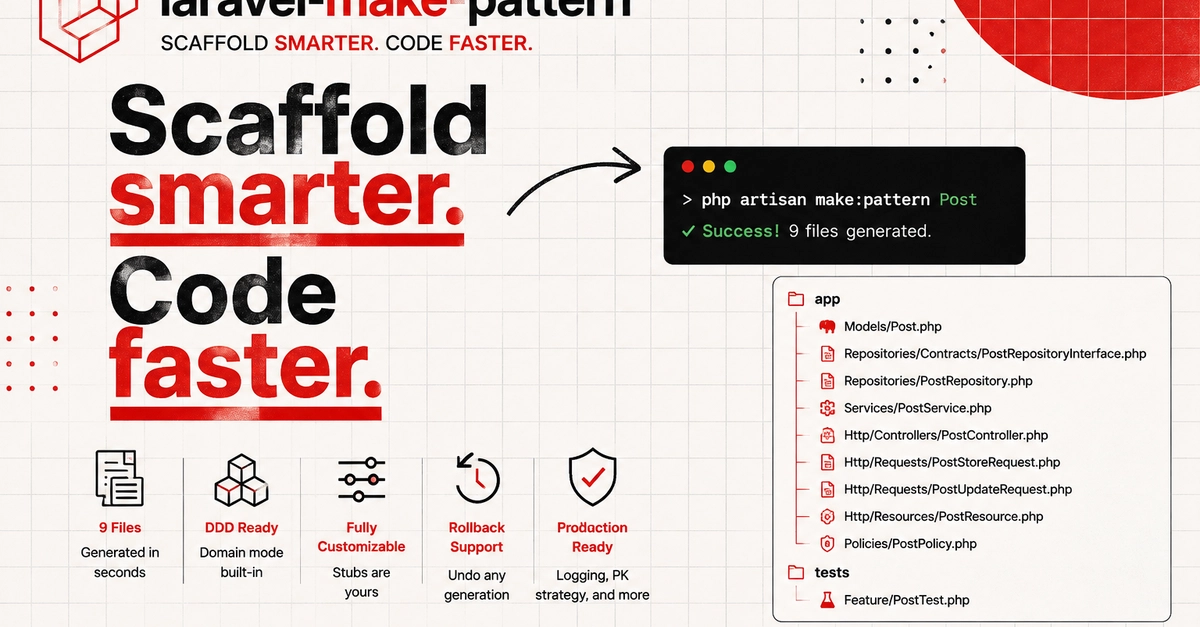
The Problem: Repetitive CRUD Generation
Developing in Laravel often involves a predictable pattern for handling data: Model, Migration, Factory, Controller, plus additional components like Repository, Service, Form Requests, Policies, Resources, and Tests. Developers frequently find themselves copying and pasting these structures from previous projects, leading to inconsistencies and errors. Writing them manually each time is slow and error-prone. While Laravel's built-in make:model -a command generates several of these components, it doesn't extend to the full DDD (Domain-Driven Design) compliant stack many teams prefer.
This is the exact problem that the new bouda/laravel-make-pattern package aims to solve. It provides a single Artisan command to generate an entire, consistent set of files for a given resource, streamlining the setup process and enforcing architectural patterns.
Introducing make:pattern
The bouda/laravel-make-pattern package introduces a new Artisan command: php artisan make:pattern <ResourceName>. For instance, running php artisan make:pattern Post will instantly generate nine separate files:
app/Domain/Post/Post.php(Model)database/migrations/YYYY_MM_DD_HHMMSS_create_posts_table.php(Migration)database/factories/PostFactory.php(Factory)app/Application/Post/PostService.php(Service)app/Infrastructure/Post/PostRepository.php(Repository)app/Presentation/Post/PostController.php(Controller)app/Application/Post/Requests/StorePostRequest.php(Form Request for storing)app/Application/Post/Requests/UpdatePostRequest.php(Form Request for updating)app/Presentation/Post/PostResource.php(API Resource)
This command is designed to create a DDD-ready structure, ensuring that each component is placed in its designated domain layer. The generated code is intended to be consistent and follows common Laravel best practices.
Key Features and Benefits
The primary benefit of make:pattern is the significant reduction in boilerplate code and the enforcement of architectural consistency. By automating the generation of these files, developers can:
- Save Time: Eliminate the manual effort of creating and configuring each file. What previously took minutes of copy-pasting or typing can now be accomplished in seconds.
- Ensure Consistency: Every generated stack adheres to the same structure and naming conventions, regardless of who on the team runs the command or for which resource. This reduces cognitive load when navigating different parts of the application.
- Adopt DDD Principles: The package encourages and facilitates a DDD approach by organizing generated files into domain-specific directories (e.g.,
app/Domain/Post,app/Application/Post,app/Infrastructure/Post,app/Presentation/Post). - Customization: The package includes stub files that developers can override. If the default generated code doesn't precisely match your project's needs or coding standards, you can modify the stubs to generate code that does. This provides flexibility without sacrificing the automation benefits.
- Rollback Included: A crucial feature for any code generation tool is the ability to undo changes. The package includes a rollback mechanism, allowing developers to revert the generated files if a mistake is made or if the generated code needs to be discarded.
How it Works (Under the Hood)
The package leverages Laravel's built-in stub publishing and generation capabilities. When you run the make:pattern command, it looks for predefined stub files within the package. These stubs contain the basic structure for each of the nine file types. The command then replaces placeholders within these stubs with the resource name provided (e.g., 'Post') and places the generated files into the appropriate directories according to the DDD structure. For example, the model stub might contain a placeholder like {{ ClassName }}, which gets replaced with 'Post'.
The organization into domain layers (Domain, Application, Infrastructure, Presentation) is a key aspect of the package's design, promoting a cleaner separation of concerns. This structure helps in building more maintainable and scalable applications, especially as they grow in complexity. The repository pattern, for instance, separates data access logic from the service layer, making it easier to swap out data sources or implement caching strategies.
The Surprising Detail: Rollback and Overridable Stubs
While generating a full CRUD stack with one command is impressive, the truly valuable features for professional development are the included rollback mechanism and the ability to override stubs. Many code generation tools, particularly older or simpler ones, create files and leave developers to manage the consequences if the generation isn't perfect or needs to be undone. The inclusion of a rollback feature demonstrates a mature understanding of the development workflow. Similarly, making the stubs easily overridable means the tool isn't opinionated to the point of being inflexible. Developers can tailor the generated code to their exact needs, integrating the tool seamlessly into their existing development practices rather than forcing their practices to conform to the tool.
Future Implications
This package addresses a common pain point for Laravel developers, particularly those working on larger projects or adhering to specific architectural patterns like DDD. By providing a standardized and automated way to generate foundational CRUD components, it can significantly speed up project initialization and reduce the likelihood of introducing inconsistencies early on. For teams that have struggled with maintaining a consistent structure across multiple developers or projects, make:pattern offers a compelling solution. It encourages best practices and allows developers to focus more on business logic rather than repetitive setup tasks. The ease of customization also means it can adapt to various team preferences, making it a versatile addition to the Laravel ecosystem.