Understanding NeuroVidz: A New Frontier in Content Analysis
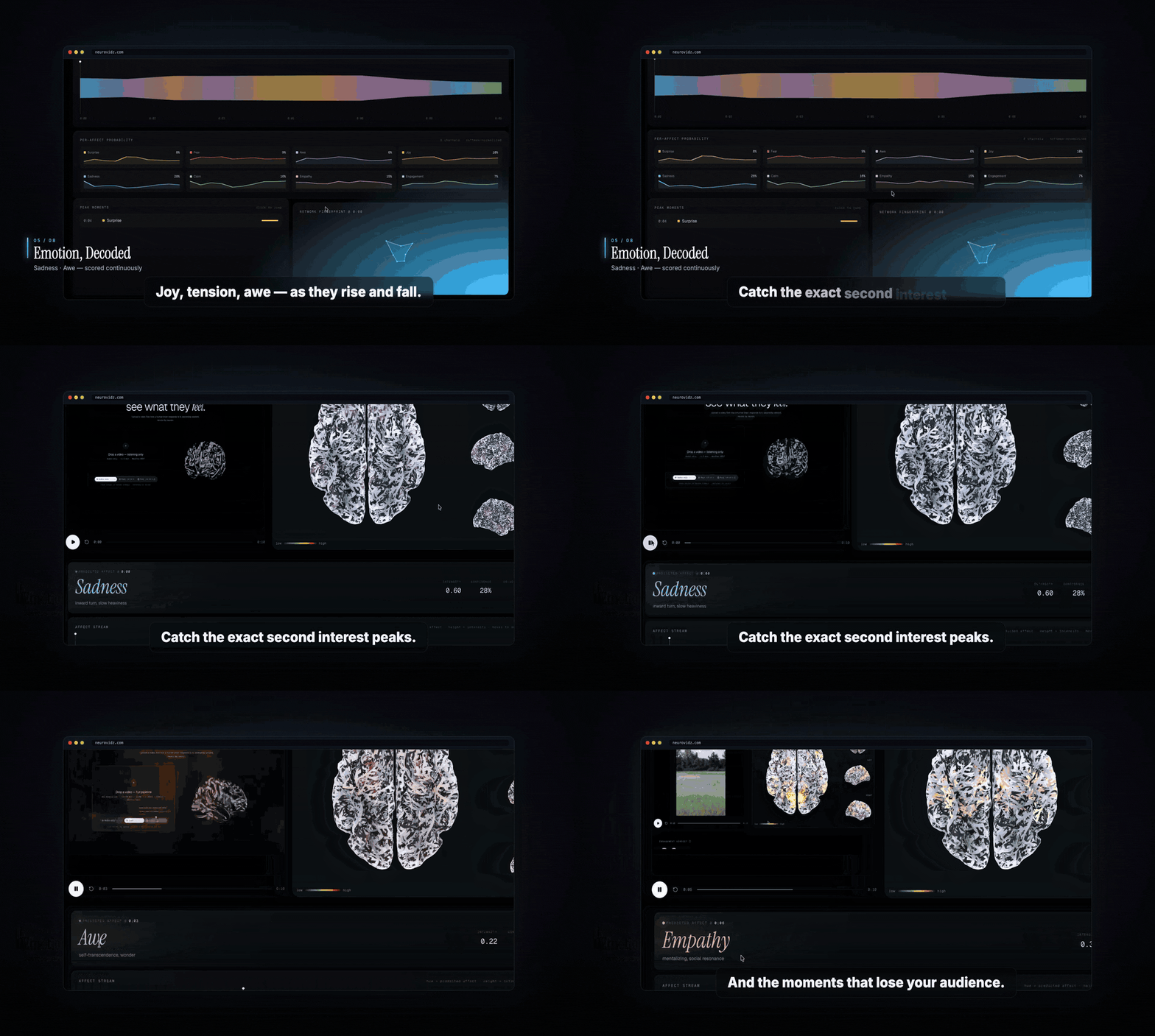
NeuroVidz emerges as a novel tool aiming to bridge the gap between content consumption and neurological response. The platform, recently featured on Product Hunt, proposes to visualize how a user's brain reacts to video clips. This capability, if fully realized, could represent a significant shift in how content creators, advertisers, and researchers understand audience engagement.
At its core, NeuroVidz leverages principles from neuroscience and potentially advanced signal processing to infer emotional and cognitive states from brain activity. While the specifics of its methodology remain proprietary, the implication is that users can upload video content, and the system will provide insights into viewer reactions. This could range from detecting moments of high engagement, surprise, or confusion to identifying potential emotional triggers within the video.
Potential Applications and Market Impact
The potential applications for a tool like NeuroVidz are broad and impactful. For content creators, understanding visceral audience reactions in real-time, beyond traditional metrics like watch time or likes, could lead to more effective storytelling and content optimization. Imagine a filmmaker being able to see precisely which scene elicits the strongest emotional response, or a YouTuber identifying moments where viewers become disengaged. This granular feedback loop could accelerate the iterative process of content refinement.
In the advertising industry, NeuroVidz could revolutionize A/B testing and campaign effectiveness. Instead of relying solely on click-through rates or post-campaign surveys, advertisers could gauge the immediate neurological impact of their ads. This would allow for the creation of more persuasive and less intrusive advertising, by understanding what truly captures and holds attention at a fundamental level. The ability to detect negative reactions early could also prevent costly campaigns from running based on flawed assumptions.
From a research perspective, NeuroVidz could offer a more accessible way to study media psychology and cognitive science. While sophisticated neuroimaging techniques like fMRI and EEG are standard in academic research, they are often expensive, time-consuming, and require specialized environments. A more streamlined, potentially software-based approach, as suggested by NeuroVidz, could democratize this type of research, allowing for larger sample sizes and more frequent data collection.

Technical Challenges and Future Directions
The primary challenge for any technology claiming to interpret brain activity is accuracy and interpretation. The human brain is incredibly complex, and its electrical and chemical signals are nuanced. Translating these signals into clear, actionable insights about specific reactions to video content requires sophisticated algorithms and extensive validation. Without transparency into the underlying technology, it's difficult to assess the reliability of NeuroVidz's claims.
Furthermore, the method of capturing brain activity is crucial. If NeuroVidz relies on non-invasive methods like consumer-grade EEG headsets, the signal quality might be limited, potentially leading to less precise interpretations. If it involves more advanced, proprietary sensor technology, the accessibility and cost could become significant barriers. The ethical implications of collecting and interpreting neurological data also warrant careful consideration, especially regarding user privacy and the potential for misuse.
The future of NeuroVidz likely hinges on its ability to provide demonstrably accurate and interpretable data that surpasses existing engagement metrics. Its success will depend on rigorous scientific validation, user-friendly interfaces, and clear communication of its capabilities and limitations. If NeuroVidz can deliver on its promise, it could become an indispensable tool for anyone seeking to deeply understand how their content resonates with an audience, moving beyond surface-level analytics to the very core of human perception and emotion.
The surprising detail here is not the existence of neuro-technology for content analysis, which has been explored in academic circles for years, but the potential for a more accessible, productized solution aimed at a broader creator and marketing audience. This suggests a growing market demand for deeper audience insights that go beyond traditional engagement metrics.
The Unanswered Question: Data Interpretation and Bias
What nobody has addressed yet is the inherent subjectivity and potential bias in interpreting neurological data. While NeuroVidz might accurately detect spikes in brain activity, attributing those spikes to specific emotions or cognitive states requires a layer of interpretation. How does the system differentiate between excitement and anxiety if both manifest similarly in certain brainwave patterns? Will the algorithms be trained on diverse datasets to avoid cultural or demographic biases in response interpretation? These are critical questions that will determine the true utility and ethical standing of such a tool.