The Dichotomy in Enterprise Systems
For decades, enterprise financial audit and fraud detection systems have been caught between two opposing forces. On one side stands the rigid, deterministic nature of classical rule engines and relational databases. These systems excel at enforcing predefined rules and known patterns, offering a high degree of accuracy and explainability. However, they falter when faced with the dynamic, nuanced, and often unstructured language of evolving regulations. Regulatory prose is rife with semantic subtleties and contextual interpretations that brittle rule sets struggle to capture, leading to compliance gaps and missed fraud indicators.
On the other side are modern Large Language Models (LLMs). These models offer unprecedented flexibility in processing natural language, understanding context, and identifying novel patterns. Their probabilistic nature allows them to grapple with the ambiguity inherent in regulatory text. Yet, their significant drawback is a tendency to hallucinate citations, invent statutory articles, and, crucially, fail to provide the auditable, mathematically verifiable proofs that statutory auditors and regulatory bodies demand. This opacity makes them unsuitable as standalone solutions for critical financial compliance and fraud detection tasks where transparency and provability are paramount.
This fundamental dichotomy presents a significant challenge: how to leverage the power of neural networks for understanding complex, unstructured data without sacrificing the explainability and accuracy required for regulatory adherence and fraud prevention.
The Neuro-Symbolic Synthesis
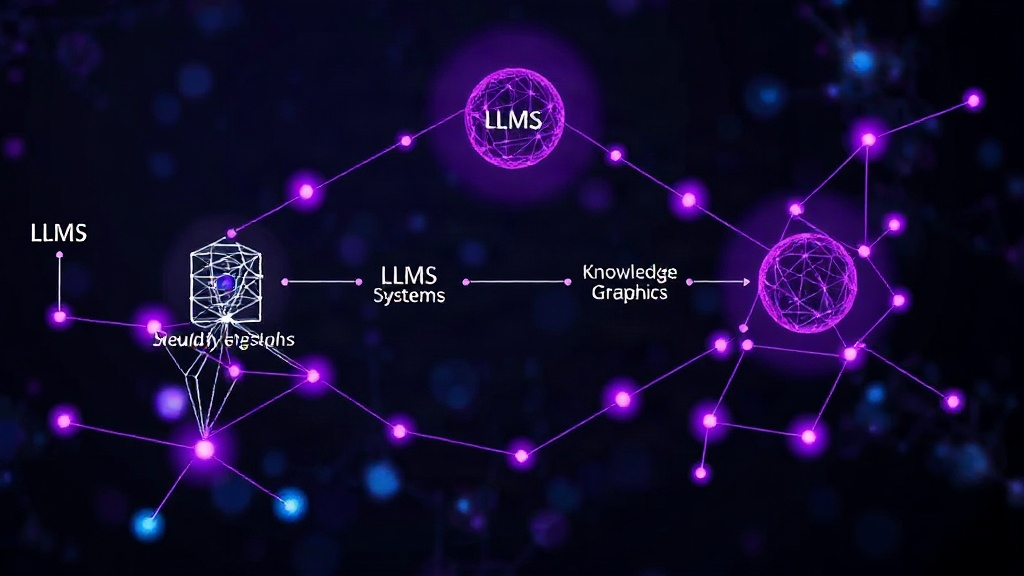
The emerging solution lies in the theoretical synthesis of Neuro-Symbolic AI. This approach aims to bridge the gap by grounding the fluid, pattern-recognizing capabilities of neural networks within the deterministic, structured logic of symbolic AI. In the context of enterprise regulatory audit and fraud detection, this means integrating LLMs with Knowledge Graphs and classical reasoning engines.
Knowledge Graphs, with their ability to represent entities and their relationships in a structured, ontological manner, provide the necessary framework for symbolic reasoning. By mapping regulatory requirements, financial entities, transaction patterns, and compliance rules into a Knowledge Graph, organizations can build a deterministic model of their operational and regulatory landscape. This graph serves as the bedrock of truth, providing a verifiable structure against which data can be analyzed.
LLMs, in this neuro-symbolic architecture, act as sophisticated natural language interfaces and pattern identifiers. They can parse unstructured regulatory documents, extract relevant clauses, and interpret the semantic nuances of legal and financial text. Instead of directly outputting decisions, LLMs can use their understanding to query the Knowledge Graph, identify potential anomalies, and suggest hypotheses. For example, an LLM could read a new piece of legislation, identify its key obligations, and then use this information to update or query the existing Knowledge Graph, flagging any transactions or policies that might now be non-compliant.
Applications in Audit and Fraud Detection
The practical implications of this neuro-symbolic approach for enterprise audit and fraud detection are profound. For regulatory audits, the system can provide auditors with verifiable, step-by-step reasoning chains. When a potential compliance issue is flagged, the system can point to the specific regulatory articles (parsed by the LLM from unstructured text), the relevant entities and relationships within the Knowledge Graph, and the deterministic rules that were violated. This level of transparency directly addresses the 'black box' problem of pure neural networks, satisfying auditor requirements for explainability and proof.
In fraud detection, the system offers a more robust and adaptable approach. Classical systems are often reactive, requiring manual updates to detect new fraud typologies. LLMs can proactively identify emerging fraud patterns by analyzing news feeds, social media, and dark web forums, translating this unstructured threat intelligence into actionable queries against the Knowledge Graph and rule engines. The neuro-symbolic system can then correlate these potential threats with transactional data, flagging suspicious activities with a higher degree of confidence and providing explainable reasons for the alert. This hybrid model is far more effective than either approach in isolation, capable of detecting both known fraud typologies with high accuracy and novel, sophisticated schemes by combining pattern recognition with structured reasoning.
Building the System: Key Components and Challenges
Constructing such a neuro-symbolic system involves several key components and presents distinct challenges:
- Ontology Development: Creating a comprehensive and accurate ontology for the relevant domain (e.g., financial regulations, corporate structures, transaction types) is foundational. This requires deep domain expertise and careful mapping of concepts and relationships.
- Knowledge Graph Construction: Populating the ontology with real-world data from various enterprise systems (ERPs, CRMs, transaction logs) into a scalable Knowledge Graph.
- LLM Integration: Selecting and fine-tuning LLMs to accurately interpret regulatory text, extract relevant information, and formulate queries for the Knowledge Graph. This includes developing robust prompt engineering strategies and grounding techniques to minimize hallucinations.
- Reasoning Engine: Implementing a symbolic reasoning engine that can process queries from the LLM against the Knowledge Graph and apply predefined rules.
- Explainability Layer: Developing mechanisms to trace the decision-making process from LLM interpretation to Knowledge Graph traversal and rule application, generating auditable logs.
The primary challenge lies in the seamless integration and orchestration of these disparate components. Ensuring that the LLM's probabilistic outputs are reliably translated into deterministic queries, and that the Knowledge Graph and reasoning engine can handle the scale and complexity of enterprise data, requires sophisticated engineering. Furthermore, maintaining the Knowledge Graph and the LLM's understanding as regulations and business practices evolve necessitates continuous updates and validation processes.
The Future of Enterprise Intelligence
The neuro-symbolic revolution is not just about building better audit and fraud detection systems; it represents a paradigm shift in how enterprises can harness artificial intelligence for complex decision-making. By marrying the interpretive power of neural networks with the logical rigor of symbolic AI, organizations can unlock new levels of insight, compliance, and operational efficiency. This hybrid approach promises systems that are not only intelligent and adaptable but also trustworthy and auditable—qualities essential for navigating the increasingly complex landscape of modern business and regulation.