
SQL as a Computational Engine
A recent Show HN post on Hacker News has sparked considerable discussion and intrigue by showcasing a fully functional neural network implemented entirely in SQL. The project, spearheaded by a developer from xqlsystems, demonstrates the surprising computational capabilities of SQL when pushed beyond its traditional database management role. This implementation challenges the common perception of SQL as merely a query language for structured data, revealing its potential as a more general-purpose programming environment.
The core idea is to leverage SQL's procedural extensions and data manipulation features to construct and execute the complex algorithms required for neural network operations. This includes defining layers, managing weights and biases, performing forward and backward propagation, and optimizing the network. The demonstration focuses on a common benchmark task, suggesting that the implementation is not just a theoretical exercise but a practical application of SQL for machine learning workloads. The surprising detail here is not the complexity of the neural network itself, but the choice of language to implement it. Developers typically reach for Python with libraries like TensorFlow or PyTorch for such tasks, making this SQL-native approach a significant departure.
Technical Implementation and Challenges
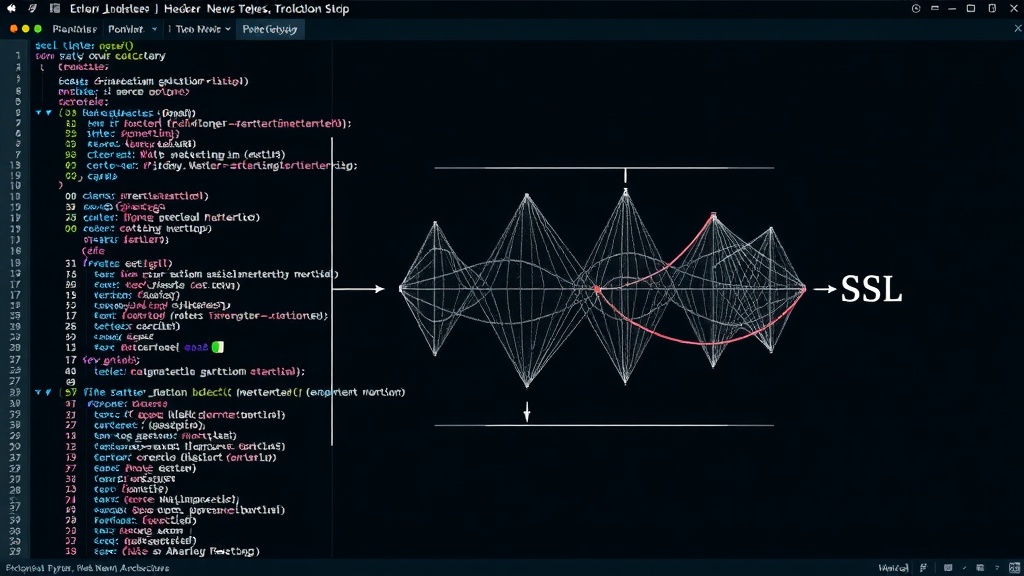
Implementing a neural network in SQL involves a series of sophisticated techniques. The developer has to represent neural network components—such as neurons, activation functions, weights, and biases—as database tables and rows. Computations, which are typically performed using arithmetic operations and matrix multiplications in other languages, must be translated into SQL queries. This requires careful use of joins, aggregations, window functions, and potentially recursive Common Table Expressions (CTEs) to simulate iterative processes like gradient descent. Activation functions, like ReLU or sigmoid, would likely be implemented as CASE statements or user-defined functions (UDFs) within the SQL dialect.
The forward pass, where input data is fed through the network to produce an output, would involve a series of joins and aggregations to compute weighted sums and apply activation functions layer by layer. The backward pass, crucial for training, is even more complex. It requires calculating gradients with respect to weights and biases, which involves back-propagating errors through the network. This necessitates storing intermediate values and performing derivative calculations, all within the constraints of SQL syntax and performance characteristics. The optimization step, where weights are updated based on gradients, would be handled by UPDATE statements, likely using the results from the backward pass.
One of the primary challenges is performance. SQL databases are optimized for querying and data retrieval, not for the high-volume, iterative numerical computations characteristic of deep learning. Executing millions of operations for training a single epoch can be extremely slow if not carefully optimized. The developer likely had to make significant concessions or employ clever indexing and query optimization strategies to achieve even a basic level of performance. The choice of SQL dialect also matters; different database systems (e.g., PostgreSQL, MySQL, SQL Server) have varying levels of support for procedural programming, UDFs, and performance features that would impact such an implementation.
Why SQL for Neural Networks?
The motivation behind such an unconventional implementation is multifaceted. For developers deeply embedded in database environments, this approach offers a way to perform machine learning tasks directly within their existing data infrastructure. It bypasses the need for separate data pipelines to move data into specialized ML platforms, potentially simplifying deployment and reducing latency. Imagine a scenario where a business intelligence dashboard needs to perform real-time predictions based on live database data; running the model directly in SQL could be more efficient than querying an external API.
Furthermore, this project highlights the extensibility of modern SQL databases. They are evolving into powerful data processing engines capable of handling complex analytical workloads. By demonstrating a neural network, the developer is pushing the boundaries of what's considered possible within a relational database management system. It could inspire new ways of thinking about data processing pipelines and the integration of AI/ML capabilities into traditional data architectures.
The comparison here is less about replacing Python-based ML frameworks and more about augmenting them. Think of it less like a full-fledged ML development environment and more like a highly specialized, in-database prediction engine. For specific use cases where data resides in SQL databases and predictions are needed with minimal latency, this approach could be a compelling alternative. It might be particularly useful for organizations that have invested heavily in SQL expertise and infrastructure and want to leverage AI without a significant shift in their technology stack.
Broader Implications and Future Questions
This implementation raises several interesting questions about the future of data processing and AI. Could we see more complex machine learning models being developed and deployed directly within databases? What are the practical limits of SQL as a programming language for AI? The performance implications are significant; while this demo might be feasible for small models and datasets, scaling it to production-grade deep learning would require substantial database engine improvements or highly specialized SQL implementations.
What nobody has addressed yet is the maintainability and readability of such complex SQL code. While impressive from a technical feat perspective, debugging and updating a neural network written in thousands of lines of SQL could become a significant challenge for teams. The learning curve for developers transitioning from Python ML libraries to a SQL-based ML paradigm would also be steep. However, the project undeniably opens a new avenue for discussion on the convergence of database technology and artificial intelligence, proving that innovation often comes from exploring the unexpected.