
A Software-First Doctrine for Defense

The Dutch Ministry of Defence is embarking on a significant strategic shift, prioritizing software development as the core of its future unmanned aerial vehicle (UAV) capabilities. This ambitious move is cemented by a multi-million euro partnership with Dutch defense technology firm Intelic. The agreement aims to build the foundational software architecture for the nation's next generation of military drones, signaling a departure from traditional hardware-centric procurement models. This strategy acknowledges that in modern warfare, the true advantage lies not just in the physical platform, but in the intelligence, adaptability, and operational flexibility delivered by sophisticated software.
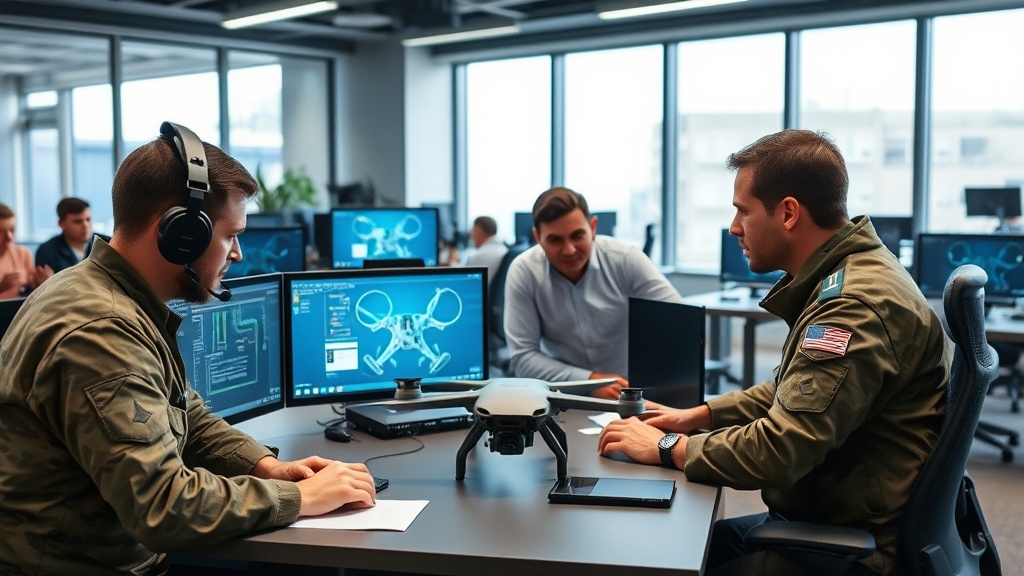
Dutch military personnel examining a drone control console in a modern operations room.
This multi-year commitment, worth tens of millions of euros, underscores a belief that future military operations will be heavily influenced by the ability to rapidly update, adapt, and integrate drone systems through software. It moves beyond simply acquiring off-the-shelf drone hardware and instead focuses on creating an open, modular, and future-proof software ecosystem. This approach is designed to allow for continuous innovation, enabling new functionalities and mission profiles to be deployed with greater speed and less reliance on lengthy hardware redesign cycles. The partnership with Intelic, a company with deep roots in defense technology, suggests a deliberate choice to leverage domestic expertise for a critical national security asset.

Intelic's Role in the Digital Battlefield

Intelic's primary responsibility under this partnership will be to architect and develop the core software that will underpin the Dutch military's drone fleet. This includes everything from the flight control systems and sensor data processing to mission planning, communication protocols, and potentially artificial intelligence-driven decision support tools. The emphasis on an "open" software foundation is crucial. It implies that the system will be designed to be interoperable with various hardware components, allowing the Ministry of Defence to mix and match different drone platforms and payloads from various manufacturers in the future, without being locked into a single vendor's ecosystem. This modularity is key to achieving long-term cost-effectiveness and operational agility. The implications for how military drones are developed and deployed are profound. Instead of purchasing a drone with a fixed set of capabilities, the Dutch military will be able to acquire a platform and then continuously enhance its performance and add new features through software updates. This is akin to how consumer electronics and personal computing have evolved, where the hardware might remain the same for years, but its functionality is expanded through regular software releases. For a military context, this means drones can be adapted to new threats, new environments, or new intelligence requirements much faster than before. What remains to be seen is the extent to which this software-first approach will be truly vendor-agnostic. While the stated goal is an open architecture, the initial deep partnership with Intelic raises questions about how other potential hardware or software suppliers will integrate into this ecosystem. Will Intelic's foundational software become the de facto standard, potentially creating a new form of vendor lock-in, albeit at the software layer? Or will the architecture be robust enough to genuinely foster competition and innovation from a wider range of Dutch and potentially international technology providers?

Strategic Implications for Defense Procurement

This strategic partnership represents a significant departure from traditional defense procurement, which has often been characterized by long lead times, high upfront costs for hardware, and a slower pace of technological integration. By focusing on software, the Netherlands is positioning itself to be more agile and responsive to the rapidly evolving landscape of aerial warfare. The ability to rapidly deploy counter-drone capabilities, enhance surveillance and reconnaissance missions with new AI algorithms, or adapt swarm drone tactics through software updates offers a distinct operational advantage. Think of this strategy less like buying a fixed-function tool and more like investing in a highly adaptable operating system for aerial intelligence. The hardware platforms will serve as the