
The Phantom Refund Problem
A founder approached me with a perplexing issue: customers reported not receiving refunds, despite payment providers confirming the transactions were processed. Support agents, checking the payment gateway, saw the refunds as completed and told customers they had been issued. Yet, the money never appeared back in the customer's account, and crucially, the internal system offered no record of the refund. The payment had been made, but the backend never knew. This disconnect between the external payment system and the internal application logic was the root cause.
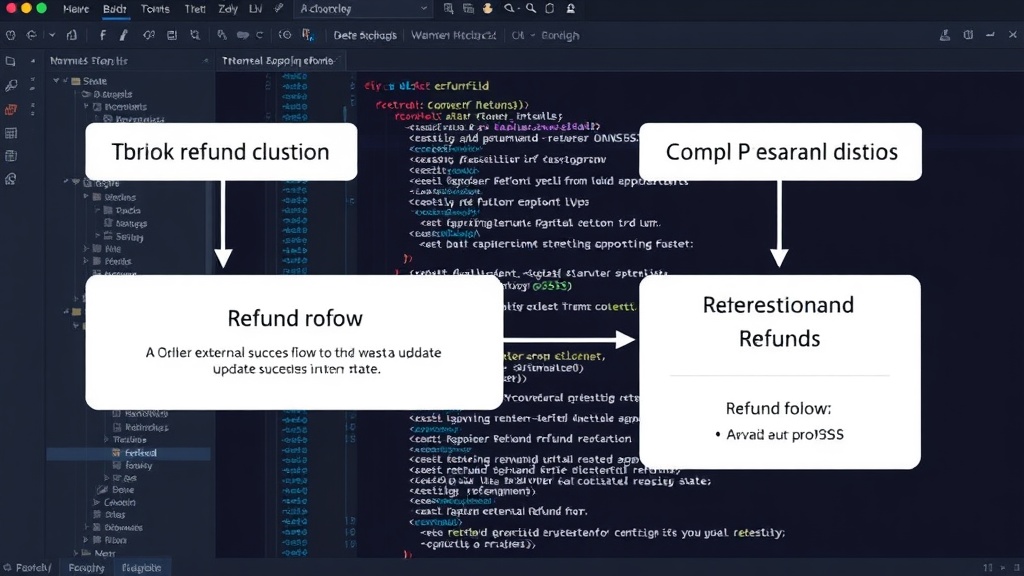
The typical refund flow, when envisioned, seems straightforward: initiate a refund request with the payment provider. If the provider's API call succeeds, update the internal transaction record to reflect that the payment has been refunded. This logic, however, was flawed in its implementation. The success of the external API call was being treated as the end of the process, without ensuring that the application's own state was updated accordingly. The money moved, but the application's ledger remained unchanged, creating a discrepancy that was invisible until a customer complained.
Where the Logic Broke Down
The core of the problem lay in how the NestJS application handled the asynchronous nature of payment processing and the importance of maintaining a consistent internal state. When a refund was initiated, the application would make a call to the payment provider's refund endpoint. If this external call returned a success status, the common assumption was that the refund was complete. However, this success status from the provider did not automatically translate into an update within the application's database.
The application's internal state, the source of truth for customer transactions, was not being updated. This meant that even though the payment provider had initiated the refund, the application's database still showed the original payment as active or finalized, with no record of a refund. Consequently, no email notification was sent to the customer about the refund, and customer support had no internal record to reference when investigating claims. The money was gone from the merchant's account and ostensibly on its way to the customer, but the application itself was operating under the assumption that nothing had changed.
The NestJS Implementation Gap
In a NestJS environment, developers often leverage asynchronous operations and decorators to manage complex workflows. The issue here was not necessarily a bug in NestJS itself, but rather a logical oversight in how the application's services interacted with external APIs and managed their own state. A typical implementation might involve a controller receiving a refund request, passing it to a service, which then calls an external payment module. The success of this external call was incorrectly treated as the final step.
Consider a scenario where a service method might look something like this:
async processRefund(orderId: string, amount: number): Promise<boolean> {
  try {
    const paymentProviderResponse = await this.paymentService.refund(orderId, amount);
    if (paymentProviderResponse.success) {
      // PROBLEM: This is where the gap exists.
      // The internal transaction status is NOT updated here.
      console.log('Refund processed by provider.');
      return true;
    }
    // Handle specific provider errors if needed
    return false;
  } catch (error) {
    console.error('Error processing refund:', error);
    throw new Error('Failed to initiate refund');
  }
}
The critical omission is the lack of a subsequent step to update the internal database. The `paymentProviderResponse.success` being true is a signal, not a final state change for the application. The application needs to explicitly record this refund in its own ledger, marking the order as refunded and potentially triggering a notification to the customer.
The Corrected Workflow
To resolve this, the refund process must ensure that both the external payment is processed and the internal application state is updated. This means that after a successful call to the payment provider's refund endpoint, the application must then execute a separate operation to update its own database. This could involve marking the order as refunded, creating a refund transaction record, and triggering a customer notification.
The corrected service method in NestJS would incorporate this crucial step:
async processRefund(orderId: string, amount: number): Promise<boolean> {
  try {
    const paymentProviderResponse = await this.paymentService.refund(orderId, amount);

    if (paymentProviderResponse.success) {
      // CORRECTED: Update internal transaction status AND notify customer
      await this.transactionService.markAsRefunded(orderId, amount);
      await this.notificationService.sendRefundConfirmation(orderId, amount);
      console.log('Refund processed by provider and internal state updated.');
      return true;
    } else {
      // Handle specific provider errors if needed
      console.warn('Refund failed by provider for order:', orderId);
      return false;
    }
  } catch (error) {
    console.error('Error processing refund:', error);
    // Depending on the error, you might want to retry or mark for manual review
    throw new Error('Failed to initiate refund');
  }
}
This revised approach ensures that the application's state is consistent with the reality of the transaction. The `transactionService.markAsRefunded` call is paramount. It updates the internal database, providing a clear record of the refund. The `notificationService.sendRefundConfirmation` ensures the customer is informed, closing the communication loop and preventing future confusion.
Implications for Developers and Systems
This oversight highlights a common pitfall in integrating with external services, particularly in financial applications. It’s a reminder that the success response from an external API is merely an acknowledgment of a request being processed by that external system. It does not guarantee that your own system's state has been updated to reflect that change. Developers must always implement explicit logic to reconcile their internal state with external events.
For any application handling financial transactions or critical state changes that rely on external services, a robust reconciliation process is essential. This includes not only updating internal records but also implementing mechanisms for handling failures, retries, and potential data inconsistencies. The NestJS framework, with its modularity and dependency injection, provides the tools to build these robust systems, but the responsibility for correct logical implementation rests with the developer. The phantom refund issue serves as a stark warning: a successful API call is only half the story; the other half is ensuring your own system knows about it.