
The Indispensable Role of Structure in Financial Applications
In the realm of banking and financial technology, precision and security are not optional extras; they are foundational necessities. Every single transaction must undergo rigorous verification, meticulous logging, robust protection against tampering, and maintain a clear audit trail for accountability. This unforgiving environment is precisely where the architectural discipline of NestJS proves its mettle. Unlike frameworks where structure is an add-on, NestJS was conceived with a focus on consistency, testability, and maintainability from its inception.
This inherent structure is why financial institutions, from traditional banks to agile fintech startups, increasingly opt for NestJS. It provides a predictable and standardized way to manage the complex and sensitive flow of money. Let's examine the specific architectural components and practices that make NestJS a strong choice for handling secure transactions.
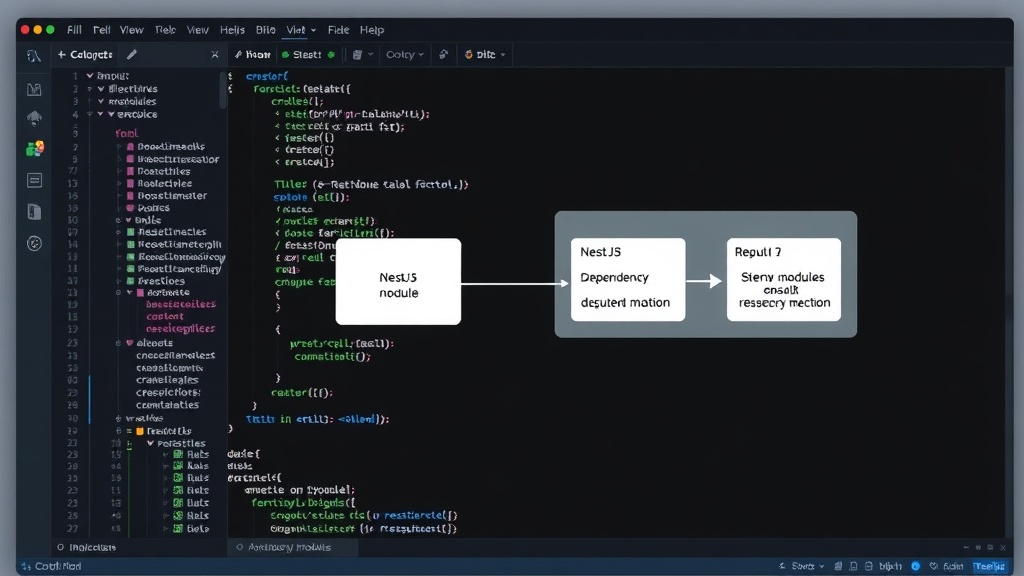
Modularity and Encapsulation: Building Blocks of Security
NestJS is built upon a modular architecture. Applications are broken down into distinct modules, each responsible for a specific feature or domain. In a banking context, this means you can have dedicated modules for user authentication, transaction processing, account management, and regulatory compliance. This separation of concerns is critical for security:
- Isolation: A vulnerability or bug in one module is less likely to cascade and affect unrelated parts of the system. For instance, a flaw in the notification module should not compromise the core transaction engine.
- Access Control: Modules can expose specific interfaces (providers, controllers) while keeping their internal implementation details private. This encapsulation prevents unauthorized access to sensitive data or logic. Think of it like a bank vault: only authorized personnel with specific keys can access certain areas, and the inner workings of the vault’s locking mechanism are hidden from view.
- Testability: Each module can be tested in isolation, allowing developers to verify the security and correctness of individual components before integrating them into the larger application. This granular testing is vital for catching edge cases related to financial logic.
Dependency Injection: Managing Dependencies with Precision
At the heart of NestJS is its powerful dependency injection (DI) system. DI allows components to declare their dependencies, and the NestJS framework manages the instantiation and injection of these dependencies. In secure transaction processing, this translates to:
- Controlled Instantiation: The framework ensures that services, repositories, and other components are instantiated in a predictable manner. This prevents accidental misuse or misconfiguration of critical services like cryptography modules or database access layers.
- Testability: DI makes it straightforward to mock dependencies during testing. For example, when testing the transaction service, you can easily inject a mock database repository that returns predefined data, allowing you to test the transaction logic without hitting a real database, thereby isolating potential issues.
- Centralized Configuration: Dependencies can be configured centrally, ensuring that security-related settings (like API keys for external services or database connection strings) are managed consistently across the application, reducing the risk of misconfiguration in different parts of the codebase.
Interceptors and Guards: Enforcing Security Policies
NestJS provides built-in mechanisms like Interceptors and Guards, which are invaluable for enforcing security policies at the request lifecycle level:
- Guards: These are responsible for authorization. Before a request even reaches a controller method that initiates a transaction, a Guard can verify if the authenticated user has the necessary permissions. For example, a
TransactionGuardcould check if the logged-in user is authorized to initiate a transfer from a specific account, or if a certain API endpoint requires administrative privileges. - Interceptors: Interceptors can modify the request or response, or perform actions before or after a request is handled. In banking applications, they can be used for:
- Request/Response Logging: Ensuring all sensitive transaction requests and their outcomes are logged comprehensively for auditing purposes.
- Data Transformation: Sanitizing input data to prevent injection attacks or transforming sensitive output data to mask details before it leaves the system.
- Error Handling: Standardizing error responses to prevent information leakage about the internal system state.
These features act as gatekeepers, ensuring that only valid, authorized, and properly processed requests make it through the system, acting as a crucial layer of defense for sensitive financial operations.
Pipes: Data Validation and Transformation
Pipes in NestJS are used for data validation and transformation. This is paramount in banking applications where input data integrity is non-negotiable.
- Input Validation: Before any data is processed by a service, Pipes can ensure that incoming request payloads conform to expected schemas. For example, a
CreateTransactionPipecould validate that the amount is a positive number, the currency code is valid, and the recipient account exists. If validation fails, the request is rejected early, preventing malformed data from corrupting the system or leading to incorrect financial calculations. - Type Casting: Pipes can also handle type casting, ensuring that data types are correct before they are used in business logic.
This upfront validation acts as a primary defense against malicious inputs and accidental data errors, reinforcing the overall security posture.
Database Transactions: Ensuring Atomicity
For operations that involve multiple database writes, such as transferring funds from one account to another, atomicity is essential. A transaction must either complete entirely or fail entirely, with no partial states left behind. NestJS, by leveraging powerful ORMs like TypeORM or Prisma, can easily manage database transactions:
- Atomicity: Using the transactional capabilities of the chosen ORM, developers can wrap a series of database operations within a single transaction. If any part of the operation fails (e.g., insufficient funds, network error during an update), the entire transaction is rolled back, ensuring data consistency.
- Isolation: Database transactions also provide isolation, preventing concurrent transactions from interfering with each other. This is critical in high-throughput banking systems where multiple users might be performing operations simultaneously.
The ability to manage these database-level transactions reliably within the NestJS application structure ensures that even complex multi-step financial operations maintain their integrity.
The Unanswered Question: Scalability Under Extreme Load
While NestJS provides a robust framework for secure transaction handling, the critical unanswered question for high-frequency trading platforms or retail banking systems operating at extreme scale remains: How does the inherent overhead of NestJS's abstraction layers (DI, modules, interceptors) perform under sustained, peak-load conditions that might push even well-architected Node.js applications to their limits? Benchmarking these specific architectural choices against bare-bones Node.js implementations for critical transaction paths is an area that warrants deeper, public investigation.