The Problem: Undifferentiated AI Spend
The opaque nature of AI model spending is a growing concern for engineering teams. In typical setups, a single API key or gateway credential often serves multiple environments: production, various preview branches, continuous integration (CI) pipelines, and even ad-hoc load testing. This creates a monolithic cost figure that obscures the actual expenditure of each component. Teams cannot easily answer how much a specific preview environment consumed, nor can they set spending caps for individual branches. The first indication of a runaway CI job or an inefficient model call often comes with the monthly invoice, long after the issue has occurred and impacted budgets.
The root cause lies in how usage is attributed. Costs are typically tied to an API key, and that key is shared across all these disparate functions. This makes granular cost analysis and control impossible. If a CI job enters a retry loop against an expensive model, or if a preview environment is over-utilizing resources, the financial impact is hidden within the broader production spend. This lack of visibility hinders effective resource management, budget allocation, and proactive issue detection.
Imagine trying to understand your household utility bill if every light switch, appliance, and charging port in your house used the same circuit breaker. You’d see a total power consumption figure, but you’d have no idea if the gaming console was draining the most power, if a forgotten lamp was left on, or if the washing machine was running inefficiently. This is precisely the challenge AI spend presents in shared-credential environments.
Neon's Solution: Per-Branch Ledgers
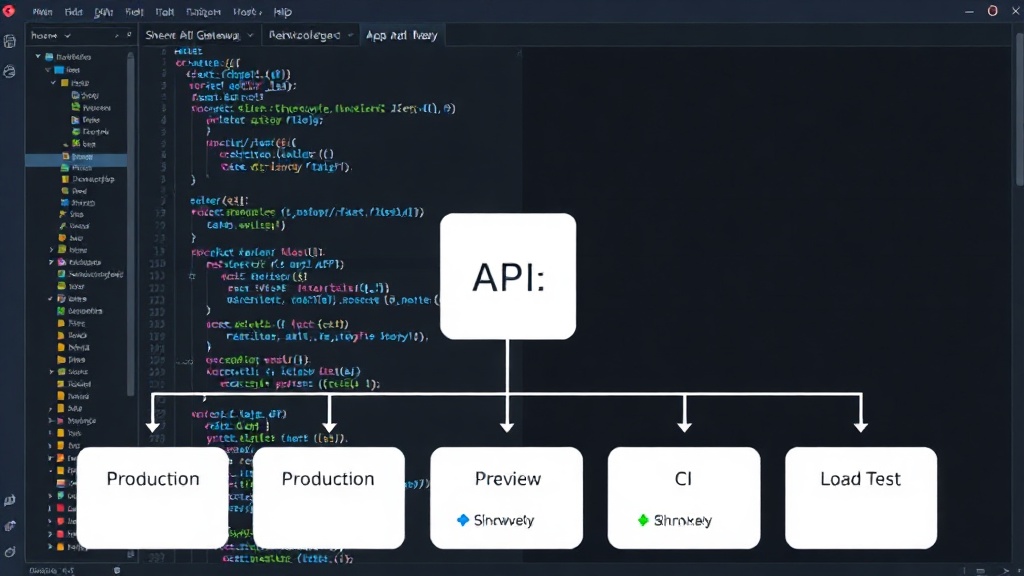
Neon, a platform that typically focuses on managed PostgreSQL, has introduced a novel solution to this problem by reimagining how AI usage is tracked and attributed. Instead of sharing a single credential, Neon’s approach treats each development branch as an isolated deployment. This isolation extends to the logging of AI model usage. When a branch makes calls to AI models, the usage data is recorded in a dedicated ledger specific to that branch.
This means that usage from a preview environment or a CI pipeline is logged independently, maintaining its own distinct cost record. Crucially, this branch-specific ledger does not impact or merge with the cost records of the production environment. This architectural shift provides the granular visibility that was previously unattainable.
The practical implication is straightforward: developers can now see precisely how much AI spend is attributable to a specific preview branch, a CI build, or any other development workflow. This enables immediate cost monitoring and control at an environment level. The system acts like a personal spending tracker for each branch, ensuring that the production environment’s financial footprint remains pristine and unadulterated by development or testing activities.
Demonstrating the Isolation
To validate this approach, a practical test was conducted. By initiating AI model calls exclusively from a CI branch, the system’s behavior was observed. The outcome was as expected: the ledger for the production environment remained static, showing no increase in usage or cost. This clearly demonstrated that the AI spend generated by the CI branch was being recorded entirely within its own isolated ledger, separate from production’s financial data.
The accompanying repository, available at The-DevOps-Daily/neon-ai-gateway-demo on GitHub, provides the technical implementation details and code for replicating this setup. This transparency allows other teams to understand and adopt a similar strategy for managing their AI expenditures.
Impact and Implications
This per-branch AI endpoint capability has significant implications for managing AI costs and optimizing development workflows. For engineering and finance teams, it offers:
- Granular Cost Visibility: The ability to see exactly how much AI is costing for each environment – production, staging, preview branches, and CI/CD pipelines.
- Budget Control: The capacity to set spending limits or alerts for specific branches, preventing unexpected overages and enabling proactive budget management.
- Performance Optimization: Identifying inefficient AI calls or overly expensive model usage in development or testing phases before they impact production costs.
- Resource Allocation: Better understanding of where AI resources are being consumed, allowing for more informed decisions about model selection and infrastructure allocation.
- CI/CD Efficiency: Preventing CI jobs from incurring significant, unexpected AI costs due to retries or inefficient processing, thereby ensuring faster and cheaper builds.
The previous model, where all AI usage was aggregated under a single umbrella, was fundamentally unsustainable as AI adoption grew and model costs became more significant. This new approach, demonstrated by Neon, offers a path towards more responsible and manageable AI deployment. It shifts the paradigm from a black-box cost center to a traceable and controllable component of the development lifecycle.
What remains to be seen is how broadly this pattern will be adopted by other AI gateway providers or cloud platforms. The current landscape often defaults to shared credentials for simplicity, but as AI spend becomes a larger portion of engineering budgets, the demand for this level of granular control will undoubtedly increase. Teams that adopt this isolation strategy early will likely gain a significant advantage in managing their AI operational expenses.