
The Pain of Static to Dynamic Conversion
Every web designer knows the dread: a beautiful, pixel-perfect static HTML page is complete, complete with smooth animations and custom cursors. Then comes the client's request: "Can I edit this myself?" This seemingly simple question triggers a cascade of work that often consumes an entire week. The designer transforms into a "CMS plumber," tasked with rebuilding the site in platforms like WordPress or Contentful. This involves mapping every headline to a content field, wrestling with unfamiliar templating languages, and inevitably, debugging broken animations that were working perfectly before. The design's integrity suffers, not improves, under the weight of this conversion process. This is the problem Neleto aims to solve.
Neleto's Approach: A Native MCP Server
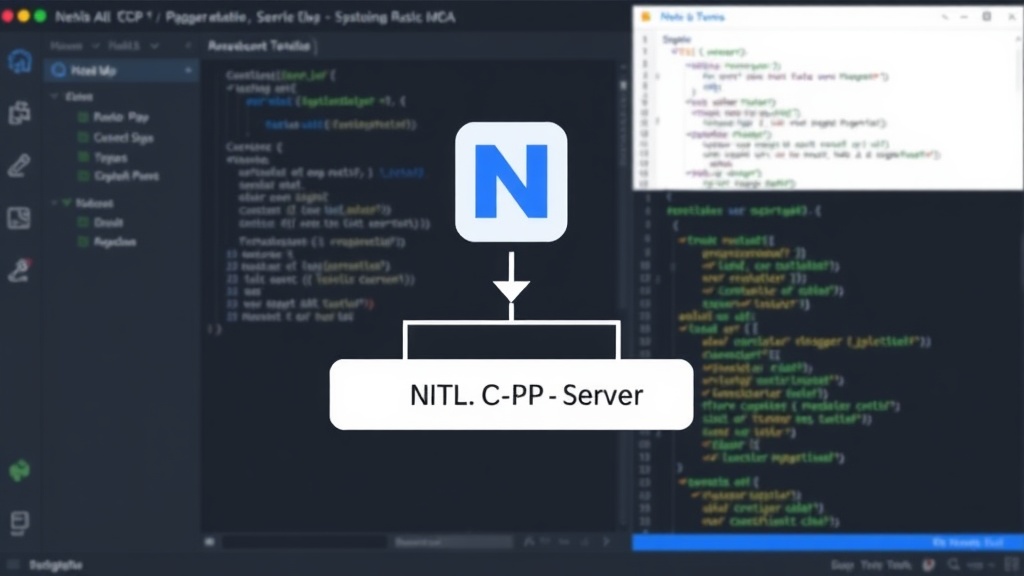
Neleto positions itself as a unique CMS, built with the explicit goal of streamlining the static-to-dynamic workflow. Its core innovation lies in its native MCP (Model Context Protocol) server. Unlike traditional CMSs that require extensive manual mapping and often break existing design elements, Neleto's MCP server is designed to understand and integrate existing HTML structures directly. The process is intended to be significantly faster, aiming to reduce the week-long conversion into a much shorter, possibly even 30-second, task. This approach bypasses the need to rebuild components or fight with restrictive templating systems.
The Prompt-Based Workflow
The key to Neleto's efficiency is its prompt-driven interface. Instead of manually configuring content types, fields, and templates, users reportedly provide a natural language prompt to Neleto. This prompt guides the AI in understanding the existing HTML structure and identifying elements that should become editable content fields. For example, a prompt might instruct Neleto to treat all `
` tags as main headlines, all `
` tags within a specific `
What This Means for Designers and Developers
For web designers, this technology promises a return to focusing on aesthetics and user experience, rather than getting bogged down in the technicalities of CMS implementation. The ability to quickly make a static design editable means faster project turnarounds and fewer compromises on design fidelity. Developers benefit by offloading a significant portion of the repetitive setup work. Instead of spending hours or days building out CMS infrastructure for a client, they can leverage Neleto's AI to generate the editable components. This frees up development time for more complex tasks, custom integrations, or further refinement of the user interface. The technology essentially democratizes the creation of editable websites, making it accessible with minimal technical overhead.
Comparing Neleto to Traditional CMS Solutions
Traditional CMS platforms like WordPress, Drupal, or headless solutions like Contentful and Strapi, while powerful, all require a structured approach to content modeling. Building a site in these platforms often involves defining custom post types, custom fields, taxonomies, and then developing or configuring themes and templates to display this content. This process is inherently manual and time-consuming, especially for clients who have already delivered a fully designed static site. Neleto's MCP server and prompt-based AI aim to abstract away much of this complexity. By interpreting an existing HTML structure, Neleto circumvents the need for a predefined content model. It's less about defining what content *should* be editable and more about telling the AI what *is* editable in the current design. This direct conversion approach is a significant departure from the build-from-scratch or extensive re-architecture often required by established CMSs.
Potential Challenges and Future Implications
While the concept is compelling, the effectiveness of Neleto will hinge on the AI's accuracy in interpreting diverse HTML structures and complex design elements. The success of a prompt like "make this whole page editable" depends heavily on the AI's ability to discern meaningful content blocks from purely structural or decorative HTML. Developers will need to understand how Neleto handles dynamic elements, JavaScript-driven interactions, and complex layouts. Furthermore, the long-term maintainability and scalability of sites built this way will be a crucial factor. Will the generated CMS structure be flexible enough for future content expansion or design modifications? What happens when a client wants to add a new type of content that wasn't present in the original static HTML? These are questions that will shape the adoption of such AI-driven CMS solutions. The ability to provide a truly simple, one-prompt solution to a long-standing web development pain point could redefine workflows, but the robustness and flexibility of the underlying AI and platform will be key to its success.
The "So What?" Perspective
Developers can leverage Neleto to drastically cut down conversion time from static HTML to an editable CMS. The prompt-based approach abstracts away manual content modeling, allowing focus on custom integrations or frontend enhancements. Expect to benchmark Neleto's AI interpretation against manual CMS setup for future projects.
Neleto's security model is not detailed in the provided source. Users should investigate how the MCP server handles input validation, authentication, and authorization, especially when converting arbitrary HTML to editable content. Ensure any generated endpoints or data handling are secure by design.
This product addresses a significant pain point for agencies and freelancers, potentially opening a new market for rapid website deployment. The key competitive advantage is the AI-driven speed of conversion. Founders should consider how to build a moat around the AI's interpretation capabilities and manage client expectations regarding AI limitations.
For creators and designers, Neleto offers a way to deliver editable websites much faster, allowing more time for creative iteration and less for technical implementation. The workflow shift means less time spent as a 'CMS plumber' and more time focusing on design quality and user experience.
Neleto's AI likely relies on natural language processing and HTML parsing models to interpret static pages. The effectiveness of the system depends on the training data and the sophistication of these models. Future research could explore how to fine-tune these models for specific industry verticals or complex interactive components.
Sources synthesised
- 11% Match