
A Triumph of Algorithmic Compression and Hardware Hacking
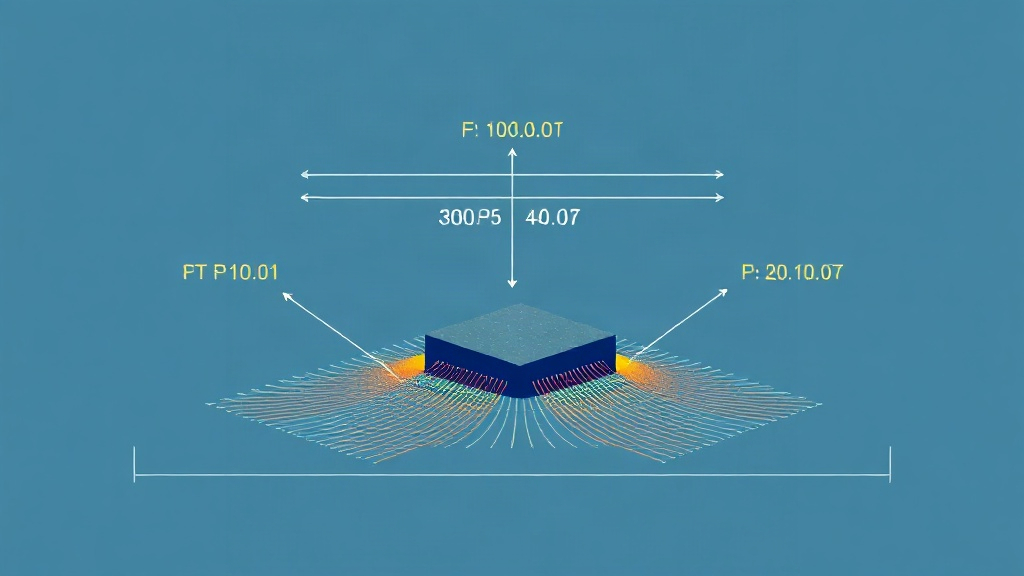
In a remarkable display of technical prowess, a developer has achieved what might seem like the impossible: visualizing the complex Navier-Stokes equations, the bedrock of fluid dynamics, within a mere 1 kilobyte of executable code for the i386 architecture. This feat, shared on Hacker News under the "Show HN" banner, represents a fascinating intersection of advanced computational physics, extreme code optimization, and a deep understanding of legacy hardware.
The Navier-Stokes equations describe the motion of viscous fluid substances. They are notoriously difficult to solve analytically, often requiring immense computational power for numerical simulations. Typically, such simulations involve large datasets, complex algorithms, and significant memory footprints. To condense this into a 1kB i386 executable is not just an optimization; it's an art form that pushes the boundaries of what's considered feasible.
The author, who goes by the handle juandecos, has presented these demos on their GitHub repository, specifically targeting the venerable i386 processor. This architecture, while foundational to modern computing, operates with vastly less power and memory than today's systems. The challenge, therefore, was not merely to implement a fluid dynamics solver but to do so with extreme efficiency, avoiding any non-essential code, libraries, or data structures. The result is a set of self-contained programs that run directly on compatible hardware or emulators, producing visual outputs of fluid motion.
The Art of 1kB Demos
Creating a 1kB demo that solves a problem as computationally intensive as the Navier-Stokes equations requires a multi-pronged approach. Firstly, the algorithm itself must be simplified without losing its core essence. This might involve using lower-resolution grids, simplified boundary conditions, or approximations that are valid for the intended visual output. The goal is not scientific accuracy to the nth degree, but a visually compelling and reasonably representative simulation.
Secondly, the implementation must be incredibly lean. This means writing every line of assembly or C code with meticulous attention to size. Techniques like bitwise operations, clever loop unrolling (or the opposite, aggressive loop optimization for size), and manual memory management are essential. The absence of standard libraries, floating-point units (if targeting older i386 modes or specific configurations), and even basic operating system calls would necessitate direct interaction with hardware or BIOS routines, further increasing the complexity of optimization.
The i386 architecture, while powerful for its time, presents specific constraints. Its instruction set, memory addressing modes, and register availability all influence how code can be written and optimized. Targeting this architecture specifically means leveraging its unique features while working around its limitations, all within the tightest possible space. The author’s success suggests a deep dive into assembly language programming and a profound understanding of the i386 instruction set.
Why This Matters
This project is more than just a technical curiosity; it’s a testament to the ingenuity that arises from constraints. In an era of ever-increasing software bloat and reliance on powerful hardware, projects like this remind us of the fundamental principles of efficient programming and algorithmic design. It demonstrates that complex problems can still be tackled with elegant solutions, even on seemingly inadequate hardware.
For developers, it’s an educational showcase. It highlights techniques for optimizing code for size, which can be relevant in embedded systems, game development (especially retro-style games), and even in performance-critical applications where every byte counts. It also sparks interest in the history of computing and the creative spirit of the demo scene, where pushing hardware to its absolute limits was a primary objective.
The visual output of these demos, even if simplified, provides a tangible representation of complex physics. It makes abstract concepts like fluid flow accessible and understandable. The fact that this can be achieved in such a small package is, frankly, surprising. One might expect a full-fledged simulation to require megabytes, if not gigabytes, of code and data. Juandecos has proven that a 1kB footprint is achievable for a compelling visualization.
The Future of Extreme Optimization
What remains to be seen is the extent to which these techniques can be applied to other complex scientific problems. Could similar optimization efforts yield visible results for other computationally intensive fields, perhaps in areas like weather modeling, financial simulations, or even basic AI inference, on resource-constrained devices? The success of these Navier-Stokes demos suggests that the limits of software optimization are still being explored, driven by skilled individuals who understand both the algorithms and the hardware at a fundamental level.
This project serves as a powerful reminder that innovation doesn't always require the latest, most powerful hardware. Sometimes, it requires a deep understanding of the fundamentals and a creative approach to problem-solving. The 1kB i386 Navier-Stokes demos are a modern marvel, built with the spirit of a bygone era of computing, and they offer valuable lessons for developers today.