Introducing Nautis: The AI-Native Operating System for Founders
The landscape of startup operations is notoriously complex, demanding founders juggle product development, marketing, sales, fundraising, and team management. Many tools exist to tackle these individual challenges, but a cohesive, intelligent layer that integrates them and proactively assists founders has remained elusive. Nautis aims to fill this void with its announcement of an AI-native operating system designed specifically for the founder's journey. The platform positions itself not just as a dashboard, but as an intelligent co-pilot for building and scaling a business.
At its core, Nautis is built around the idea that artificial intelligence can fundamentally change how founders interact with their business data and manage their daily tasks. Unlike traditional operating systems or project management tools, Nautis is conceived from the ground up to leverage AI. This means it's designed to understand context, predict needs, and automate actions across various facets of a startup's operations. The vision is to move beyond simple task tracking to proactive, intelligent support.
Key Features and Functionality
Nautis is rolling out with a suite of features intended to address the most pressing needs of early-stage company leaders. The platform focuses on integrating disparate data sources and providing actionable insights through an AI-driven interface.
AI-Powered Task Management
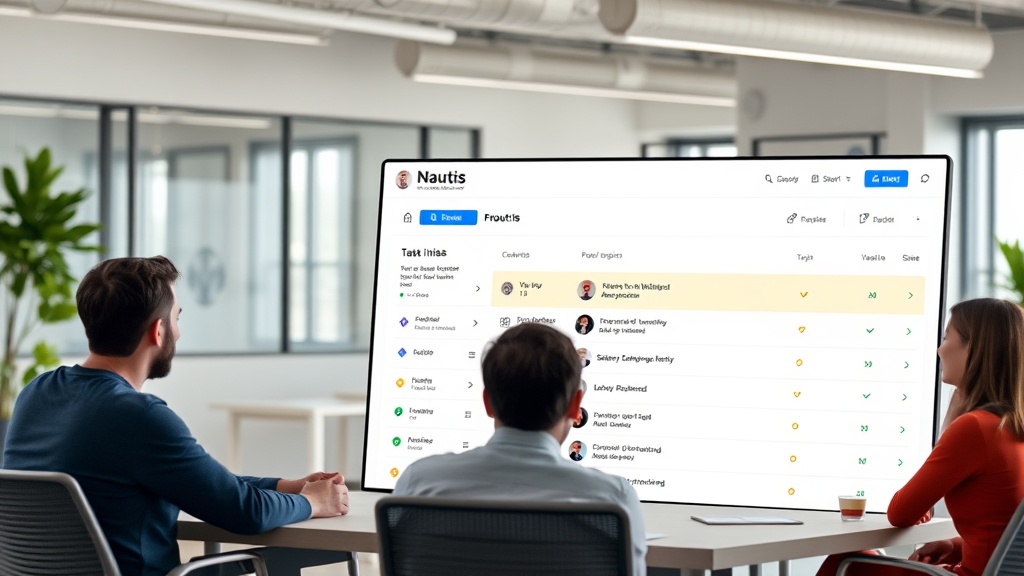
One of the primary pain points for founders is the sheer volume of tasks and the difficulty in prioritizing them. Nautis employs AI to analyze incoming information, project timelines, and strategic goals to suggest and even automate task creation and prioritization. This goes beyond a simple to-do list; the system aims to understand the urgency and impact of each task in relation to the startup's overall objectives. For example, it might flag a customer support issue as high priority based on sentiment analysis of recent feedback or suggest follow-ups on investor communications based on predefined outreach cadences.
Integrated Data Analysis and Reporting
Startups generate data from numerous sources: CRM, marketing analytics, financial software, customer support tickets, and product usage logs. Nautis seeks to unify this data, providing a single source of truth. Its AI can then parse this consolidated data to generate reports, identify trends, and highlight potential opportunities or risks. Instead of founders spending hours compiling spreadsheets or navigating multiple analytics dashboards, Nautis can deliver concise, relevant summaries. This could include identifying which marketing channels are driving the most valuable leads, pinpointing bottlenecks in the sales pipeline, or forecasting cash flow based on current burn rate and projected revenue.
Customer and Market Intelligence
Understanding the customer and the market is crucial for any startup. Nautis incorporates features for gathering and analyzing customer feedback, market trends, and competitor activities. By integrating with communication tools and social media, it can help founders stay informed about what users are saying, what the competition is doing, and emerging market shifts. This intelligence is then presented in a digestible format, enabling founders to make more informed strategic decisions about product roadmaps, marketing strategies, and competitive positioning.
Fundraising Support
Fundraising is a critical, often time-consuming, process for startups. Nautis aims to assist founders by organizing investor outreach, tracking communication, and even helping to prepare pitch materials by synthesizing key company metrics and narratives from the platform's integrated data. The system can remind founders about follow-ups, suggest relevant investors based on the startup's stage and sector, and help ensure that all necessary documentation is readily accessible.
The AI-Native Approach: What It Means
The term "AI-native" is key to Nautis's proposition. It signifies that AI is not an add-on feature but the foundational element upon which the entire operating system is built. This contrasts with existing tools that might incorporate AI capabilities into specific functions. For Nautis, this means the AI is designed to have a holistic understanding of the business context. Think of it less like a collection of smart tools and more like an exceptionally capable chief of staff who understands your entire operation, remembers every detail, and can anticipate what you'll need next.
This native integration allows Nautis to perform more complex tasks, such as cross-referencing sales data with marketing campaign performance to attribute revenue accurately, or analyzing customer support tickets to identify product bugs that are impacting user retention. The goal is to create a symbiotic relationship where the founder's intent and the AI's capabilities work in concert to drive the business forward more efficiently.
Implications for Founders and the Startup Ecosystem
The launch of Nautis signals a potential shift in how startups are managed. By abstracting away much of the operational overhead and providing intelligent, data-driven insights, Nautis could allow founders to focus more on strategic vision, innovation, and leadership. This could democratize access to sophisticated operational support, which has traditionally been the domain of larger companies with dedicated analytics and operations teams.
However, the success of Nautis will depend on its ability to truly integrate with the diverse tools founders already use and to provide genuinely accurate and actionable insights. The learning curve for adopting a new operating system, even one promising efficiency, can be a barrier. Furthermore, the reliance on AI for critical business decisions raises questions about data privacy, security, and the potential for algorithmic bias. What nobody has addressed yet is the long-term impact on founder skill development; will over-reliance on AI for operational and analytical tasks hinder the growth of essential entrepreneurial instincts?
For competitors, Nautis presents a challenge by aiming to be the central hub rather than just another point solution. The market for startup tools is crowded, but a truly AI-native operating system that delivers on its promise could redefine user expectations and force existing players to accelerate their own AI integrations or risk becoming obsolete.