The Core Mental Model Endures, the Implementation Changes
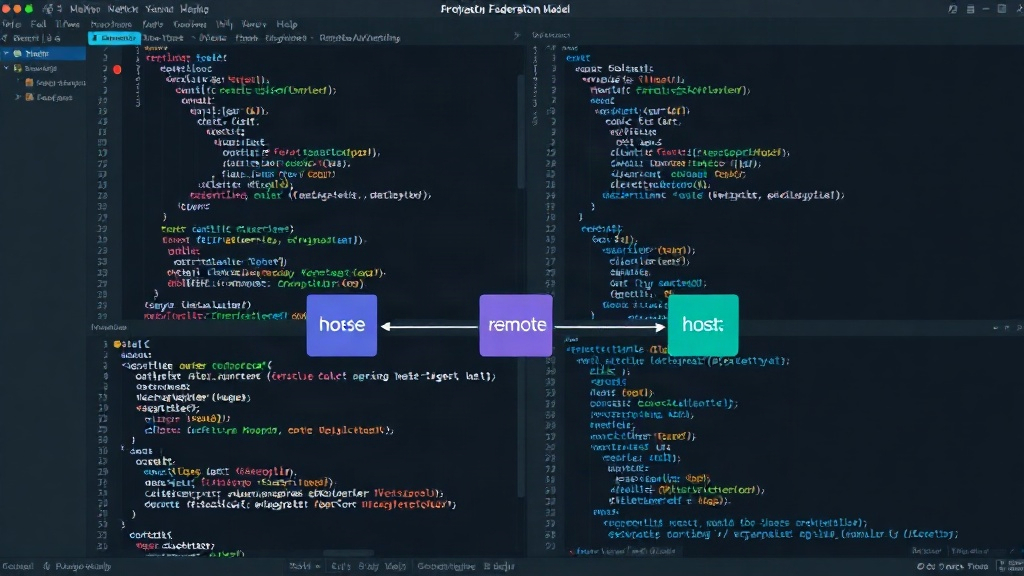
The fundamental mental model of micro-frontend architecture, particularly as popularized by webpack Module Federation, remains sound. This model hinges on a host application dynamically loading code from a remote application at runtime. Crucially, it ensures that shared dependencies, like multiple copies of React, are not duplicated across these independently deployed units, saving bandwidth and improving load times. The problem was never this conceptual framework; it was the intricacies and structural debt inherent in its initial implementation. Native Federation, a project aiming to provide a more robust and maintainable alternative, deliberately adopted this existing model. Its existence and the recent v4 rewrite signal a focus on refining the execution, not reinventing the paradigm.
The original webpack Module Federation implementation, while innovative, accumulated technical debt. This debt manifested in several ways, including challenges with dependency management, build performance, and overall developer experience when scaling complex micro-frontend architectures. Native Federation's genesis lies in addressing these specific pain points. It sought to offer a cleaner, more efficient, and more predictable way to achieve the same distributed application architecture.
The decision to retain the established mental model was strategic. It meant that teams already familiar with the host/remote dynamic and shared dependency concepts could adopt Native Federation with a shallower learning curve. The focus shifted from teaching a new way of thinking about micro-frontends to providing a better tool for an already understood problem. This approach allows developers to leverage their existing knowledge while benefiting from architectural improvements.
Why Build a Second Implementation? Addressing Structural Debt
The question arises: why invest in building an entirely new implementation of an existing pattern? The answer lies in the concept of structural debt. Early implementations of complex systems, even groundbreaking ones like webpack Module Federation, often make trade-offs to achieve initial functionality. Over time, as systems scale and requirements evolve, these early decisions can lead to codebases that are difficult to maintain, extend, and optimize. Native Federation's creators identified specific areas where the original implementation's structure created friction:
- Dependency Resolution Complexity: Managing shared dependencies across numerous remotes and hosts can become a tangled web, leading to runtime errors and unexpected versioning issues.
- Build Performance Bottlenecks: As projects grow, the build times associated with federated modules can become prohibitive, impacting developer productivity.
- Developer Experience (DX): Debugging, configuration, and overall integration of federated modules could be cumbersome, requiring deep expertise and significant effort.
- Maintainability and Extensibility: The original codebase might have lacked the modularity or clear separation of concerns needed for long-term evolution and easier contribution.
Native Federation aimed to refactor these areas, providing a more streamlined and performant solution. It's akin to rebuilding a house not because the architectural style is wrong, but because the plumbing and electrical systems are outdated, inefficient, and difficult to repair. The new foundation and wiring allow for modern amenities and easier upgrades.
What the v4 Rewrite Signifies
The recent v4 rewrite of Native Federation is a significant indicator of its maturation and the project's commitment to addressing the structural debt. Rewrites are typically undertaken to:
- Introduce a cleaner architecture: This often involves better modularity, more explicit interfaces, and improved separation of concerns.
- Optimize performance: Leveraging newer language features, algorithms, or build tools can yield substantial speed improvements.
- Simplify the API: A more intuitive and less complex API can drastically improve the developer experience.
- Future-proof the codebase: Adapting to evolving JavaScript standards and ecosystem trends ensures longevity.
For Native Federation, the v4 rewrite specifically targets the underlying implementation details that were contributing to the structural debt. This could involve changes to how modules are loaded, how dependencies are negotiated, or how the build process itself is managed. The goal is to create a system that is not only functional but also resilient, performant, and a pleasure to work with, especially in large-scale enterprise environments.
The implications of this rewrite are substantial. It suggests that Native Federation is moving beyond an experimental alternative to a stable, production-ready solution. It signals that the project is investing in long-term maintainability and developer productivity. For teams considering or already using micro-frontends, this rewrite provides renewed confidence in Native Federation as a viable and potentially superior option compared to the original webpack Module Federation implementation, particularly for projects facing scaling challenges or maintenance overhead.
The Unanswered Question: Long-Term Ecosystem Support
While the technical merits of Native Federation and its v4 rewrite are clear, a critical question looms for the broader ecosystem: what is the long-term support and community investment strategy for this alternative implementation? webpack Module Federation benefits from the vast webpack community and its established ecosystem. For Native Federation to gain widespread adoption and trust, it needs to demonstrate a commitment to ongoing development, clear communication, and robust support structures. Without this, it risks remaining a niche solution, despite its technical advantages. The success of any architectural pattern, especially one as critical as micro-frontend federation, depends as much on its community as on its code.