The Unseen Data Leak in n8n RAG Workflows
Retrieval-Augmented Generation (RAG) is frequently presented as a secure method for integrating proprietary data with large language models (LLMs). The core promise is that your sensitive documents remain within your private vector database, never needing to be shared or used for model fine-tuning. However, a critical vulnerability exists within many production n8n RAG pipelines: the retrieved data chunks are sent to OpenAI's API in plain text, exposing sensitive information.
This oversight means that personally identifiable information (PII) and other confidential data, even after being retrieved from a secure vector store, can be transmitted directly to external LLM providers. The security model of RAG, which relies on keeping data in a local vector database, is effectively broken at the point of LLM interaction. This is not a theoretical risk; it's a blind spot present in numerous n8n workflows we've encountered.
The problem arises because while the RAG pattern ensures that the initial retrieval process queries a local vector database, the subsequent step of sending the retrieved context to the LLM for generation often bypasses any further security measures. n8n's workflow automation capabilities, while powerful for orchestrating AI tasks, can inadvertently become conduits for data exfiltration if not configured with this specific vulnerability in mind.
Why Guardrails Fall Short
Many developers assume that tools like n8n's built-in Guardrails can mitigate such risks. Guardrails are designed to enforce rules and prevent specific types of undesirable output or input. However, in the context of this RAG data leak, Guardrails are insufficient. They operate at a higher level of abstraction and are not designed to intercept and sanitize the raw text chunks being sent to the LLM as context. By the time Guardrails might theoretically be applied, the sensitive data has already been transmitted to OpenAI.
Think of it like this: A RAG pipeline with Guardrails is like a secure courier service. The documents are picked up from a secure vault (your vector database) and placed in a locked box (the LLM API call). The promise is that only the intended recipient sees the contents. But in this scenario, the courier service opens the locked box, copies the documents, sends the copies to a third party, and then reseals the box before delivering it. The Guardrails are on the outside of the box, ensuring it's delivered, but they don't prevent the contents from being copied internally.
The fundamental issue is that the LLM call itself is the point of leakage. Standard n8n nodes that interact with OpenAI's API do not inherently offer mechanisms to tokenize or encrypt the context payload before it leaves your environment. This means that any sensitive data within those retrieved chunks is sent in clear text, making it vulnerable to interception or logging by the LLM provider.
Introducing Privent: A Solution for Context Tokenization
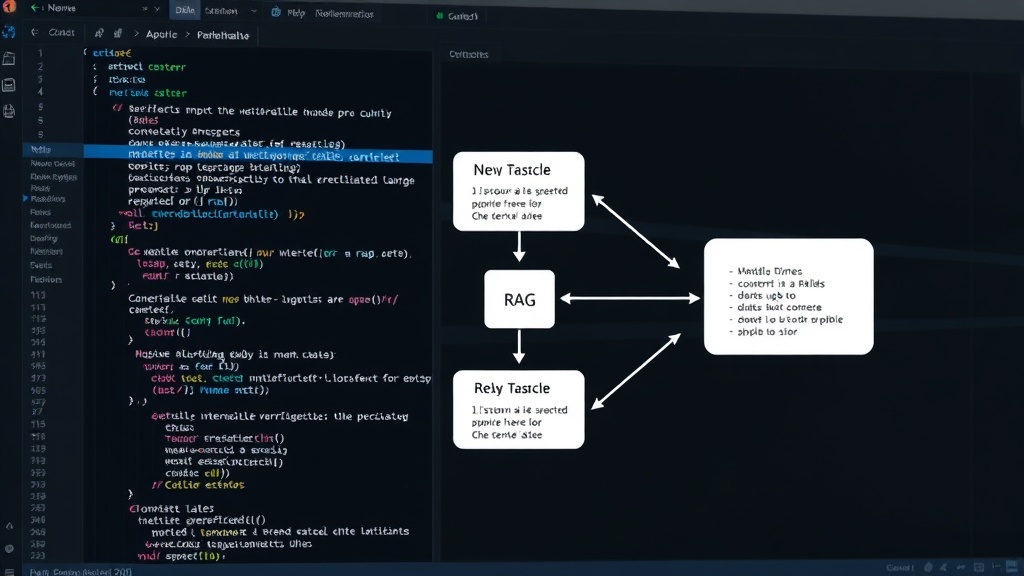
To address this critical security gap, a new approach is needed. Privent offers a solution by implementing context tokenization before the data is sent to the LLM and detokenization after the LLM generates a response, but before it is presented to the user. This ensures that sensitive information never reaches the LLM provider in a readable format.
Privent's strategy involves a pre-processing step. When n8n retrieves chunks from the vector database, Privent intercepts this data. It then identifies and tokenizes any PII or sensitive keywords within these chunks. Tokenization replaces sensitive data with unique placeholders, effectively anonymizing the context. This anonymized context is then sent to the LLM for generation. The LLM processes the request using the tokenized context, generating a response that may refer to the original sensitive information but without having direct access to it.
Following the LLM's response generation, Privent performs a post-processing step. It takes the LLM's output and uses the stored tokenization map to re-insert the original sensitive data. This means the user receives a fully contextualized and accurate answer, as if the LLM had processed the raw data, but the LLM provider never saw the sensitive information itself. This two-step process—tokenization before LLM, detokenization after—effectively creates a secure intermediary layer, preserving data privacy without compromising the utility of LLM-powered RAG applications.
Impact and Mitigation Strategies
The implications of this data leak are significant for any organization using n8n for RAG-based AI applications, particularly those handling sensitive customer data, internal financial records, or proprietary intellectual property. Failure to address this vulnerability could lead to severe data breaches, regulatory non-compliance (e.g., GDPR, CCPA), and irreparable damage to trust and reputation.
For developers building or maintaining n8n workflows that incorporate RAG, the immediate action is to audit existing pipelines. Identify any workflows that retrieve data from sensitive sources and send it to external LLM APIs like OpenAI. Assess the nature of the data being retrieved – does it contain PII, financial details, or confidential business information?
The most robust mitigation strategy involves implementing a solution like Privent that handles context tokenization. This requires integrating Privent's capabilities into the n8n workflow, typically by adding custom nodes or logic that performs the pre-processing and post-processing steps. Alternatively, developers might explore using self-hosted LLMs where data transit is entirely within their controlled infrastructure, though this introduces significant operational overhead.
Simply relying on the RAG pattern's vector database security is no longer sufficient. The point of interaction with the LLM is the new frontier for data protection in AI workflows. Organizations must ensure that sensitive data is protected not just at rest, but also in transit to and from the LLM, even when using powerful automation tools like n8n.