
AI Agent for Motorsports Simulation Analysis
A motorsports company, deeply entrenched in the physics of race car dynamics, is embarking on its first AI agent project. The goal is to create an agent capable of navigating a complex ecosystem of technical documentation, including internal company knowledge bases, vehicle dynamics textbooks, and the ability to execute physics simulations. The agent will then analyze the output of these simulations, which can generate large result files requiring Python processing and further reference to specialized textbooks.
The company, whose core expertise lies in physics rather than AI, recognizes the transformative potential of artificial intelligence. They have chosen to integrate with the Claude API, citing its strong performance with tool usage and sandbox environments as key factors in their decision. This initial step is driven by a need to streamline their research and development processes, making them more efficient and data-driven.
Agent Capabilities and Technical Challenges
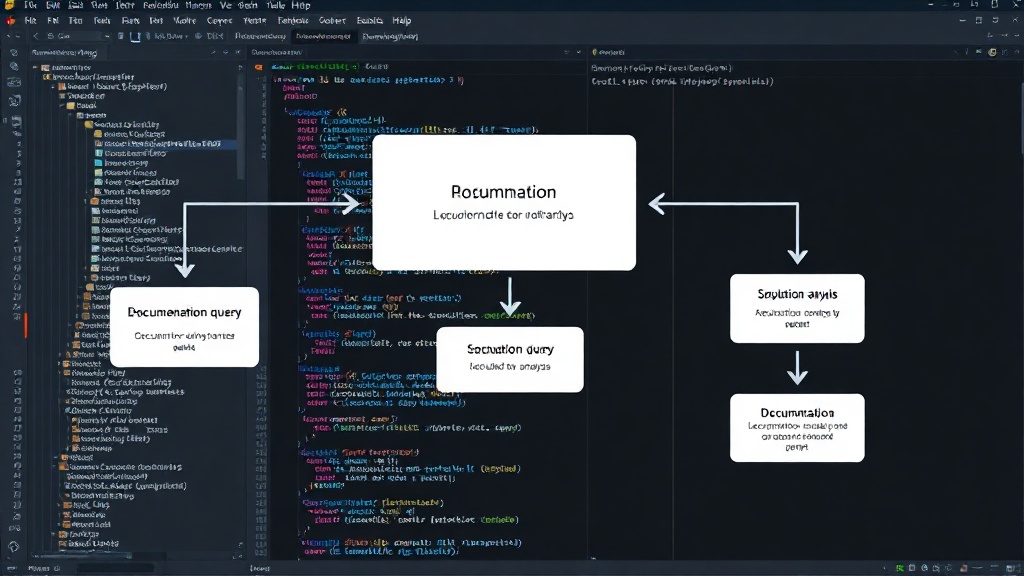
The envisioned AI agent must perform several critical functions. First, it needs to access and interpret a vast corpus of information. This includes proprietary documentation detailing the intricate physics models used in their race car simulations, as well as established knowledge from vehicle dynamics textbooks. This requires sophisticated natural language understanding to extract relevant information accurately from potentially dense and technical texts.
Second, the agent must be able to interact with external tools. The primary tool in question is the company's own simulation platform. The agent needs to be able to trigger simulations, presumably with specific parameters derived from its understanding of the user's query or the problem at hand. This integration is crucial for automating the simulation workflow.
Third, the agent must process and analyze the simulation outputs. These results can be substantial in size, necessitating efficient data handling and processing capabilities, likely involving Python scripts. The analysis phase requires the agent to not only interpret numerical data but also to cross-reference it with the knowledge base, including vehicle dynamics principles, to derive meaningful insights. This is where the agent moves beyond simple data retrieval to actual problem-solving and analysis.
Economic Considerations and API Choices
The company is actively seeking ways to make this AI agent implementation more economical. The choice of Claude API is a strategic one, based on its perceived strengths in handling tool integrations and providing a robust sandbox for development and testing. However, the long-term operational costs of API calls, especially for complex tasks involving large data processing and extensive querying, are a significant consideration.
The open-ended nature of the query for more economical solutions suggests a search for alternative models, optimized prompting strategies, or potentially different architectural approaches. This could involve exploring smaller, fine-tuned models for specific tasks, leveraging open-source LLMs where feasible, or implementing caching mechanisms to reduce redundant API calls. The balance between the advanced capabilities of commercial APIs and the cost-effectiveness of other solutions is a common challenge for organizations adopting AI.
Broader Implications for Technical Fields
This initiative highlights a growing trend of specialized AI agents being developed for highly technical domains. While general-purpose AI assistants are becoming commonplace, the creation of agents tailored for specific industries like motorsports, where complex physical laws and massive datasets are involved, represents a significant step forward. These agents can act as intelligent assistants, augmenting the capabilities of human experts who may not have deep AI backgrounds.
The success of such projects hinges on several factors: the quality and accessibility of the domain-specific data, the robustness of the AI model's reasoning and tool-use capabilities, and the ability to manage the computational and financial costs associated with running these agents. For companies like this motorsports firm, the potential gains in efficiency, innovation, and competitive advantage are substantial, justifying the investment in developing these sophisticated AI tools.
The core challenge remains in bridging the gap between AI technology and domain expertise. By integrating AI agents that can understand and interact with complex technical information and processes, companies can unlock new levels of productivity and insight. The journey of building this first AI agent is a testament to the expanding frontiers of AI application across diverse and demanding industries.