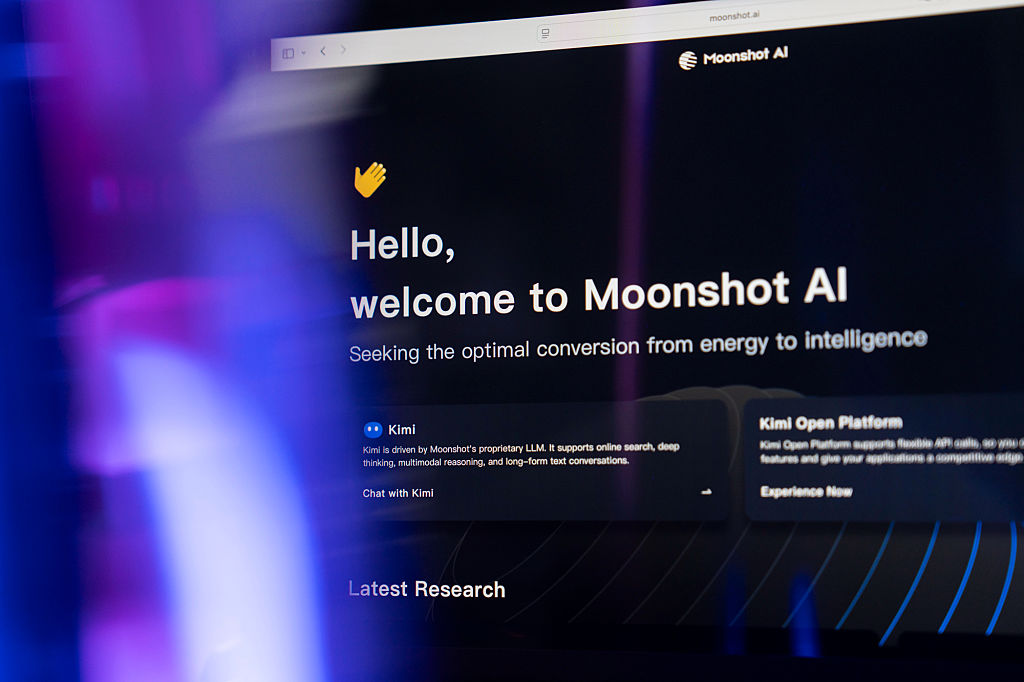
Kimi 2.0 Emerges Amidst 'AI Communism' Debate
Moonshot AI, the Chinese company behind the Kimi large language model, has released a significant update to its flagship AI. This new iteration, Kimi 2.0, is not just an incremental improvement; it's a development that has ignited a fervent debate within the AI community, particularly around the concept of "full AI communism." The term, coined by some observers, suggests a future where advanced AI capabilities are widely and openly accessible, potentially to the point of commoditization, blurring the lines between proprietary and public domain AI technologies.
The core of the concern stems from Kimi's impressive capabilities and Moonshot AI's apparent strategy. While specific technical details of Kimi 2.0 are still emerging, early reports highlight its enhanced ability to process vast amounts of information and generate sophisticated outputs. This has led to speculation that the model could be a foundational element for a new wave of AI applications, potentially available at low cost or even freely. This accessibility, proponents argue, could democratize AI development. Critics, however, see a potential threat to established AI companies and the current economic models that rely on proprietary AI infrastructure and services. The fear is that an open, highly capable model could devalue existing investments and create an uneven playing field.
Understanding 'Full AI Communism'
The phrase "full AI communism" is a provocative label for a complex set of anxieties. At its heart, it questions the sustainability of current AI development paradigms. For years, major AI labs have invested billions in training massive models, often keeping the specifics of their architecture, training data, and weights closely guarded. This proprietary approach allows them to offer AI as a service, generating revenue and maintaining a competitive edge. The release of powerful, open-source, or highly accessible models like Kimi 2.0, if it proves to be as capable as some fear, could disrupt this model entirely.
Think of it less like a traditional software license and more like the early days of open-source operating systems. If Kimi 2.0, or models derived from it, become widely available and easily adaptable, it could empower a vast ecosystem of developers and startups. They could build specialized AI applications without the prohibitive costs of training their own foundational models from scratch. This could lead to rapid innovation and widespread adoption of AI across industries. However, this also means that the companies that have spent heavily on developing their own large-scale models might find their competitive advantage eroding. Their moat, built on the complexity and cost of AI development, could shrink dramatically.

Moonshot AI's Strategy and Market Impact
Moonshot AI, backed by significant investment, has positioned itself as a challenger in the global AI landscape. Its approach with Kimi, particularly with this latest release, appears to be pushing the boundaries of what's accessible. The company's stated goal is often to advance AI technology and make it more useful for society. However, the market interpretation of such moves can be varied and often carries strategic implications far beyond the stated intent. If Kimi 2.0 indeed offers capabilities comparable to leading proprietary models but with a more open distribution strategy, it could force a re-evaluation of AI market dynamics.
Competitors, particularly those relying on a closed, service-based model, will be watching closely. The pressure will be on to demonstrate unique value propositions that cannot be easily replicated by accessible, powerful open-source alternatives. This could lead to increased focus on specialized applications, superior user experience, enhanced security features, or integration with existing enterprise workflows. For smaller players and startups, however, this could be a golden opportunity. Access to a state-of-the-art foundational model could significantly lower the barrier to entry, enabling them to compete more effectively with larger, established entities.
The 'Threat or Menace' Question
The dichotomy of "threat or menace" is central to the discussion. Is Kimi 2.0 a threat to the existing business models of AI giants, thereby forcing innovation and potentially lowering costs for end-users? Or is it a menace that could lead to a chaotic, devalued AI landscape, potentially hindering long-term, sustainable research and development due to a lack of viable commercial incentives? The answer likely lies somewhere in between and will depend on how Moonshot AI and other players in the AI space evolve their strategies.
What nobody has addressed yet is the potential impact on AI safety and governance. If powerful AI models become exceptionally easy to replicate and modify, the challenges in controlling their deployment, ensuring ethical use, and preventing misuse could multiply. The decentralized nature of "full AI communism" might make it significantly harder to implement and enforce global AI safety standards. This is a critical area that will require proactive attention from researchers, policymakers, and the industry as a whole. The rapid advancement and potential democratization of AI necessitate a parallel advancement in our understanding and implementation of AI governance frameworks.
Ultimately, Kimi 2.0 represents a pivotal moment. It challenges the status quo and forces a conversation about the future direction of AI development and distribution. Whether it ushers in an era of unprecedented innovation and accessibility or creates unforeseen challenges remains to be seen. The AI community, from developers to founders to policymakers, must engage with these developments thoughtfully to navigate the evolving landscape.