
A New Frontier in Wireless Communication: Harnessing Thermal Noise
Traditional wireless communication relies on actively generated signals, often requiring significant power. A recent paper published in PNAS introduces a paradigm shift: communication by means of modulated Johnson noise. This innovative approach leverages the ubiquitous and unavoidable thermal noise present in electronic components – known as Johnson-Nyquist noise – to encode and transmit information. The implications are profound, particularly for the burgeoning Internet of Things (IoT) sector, where power efficiency is paramount.
Johnson noise, a fundamental physical phenomenon, arises from the random thermal motion of charge carriers (electrons) within a conductor. This random motion generates a fluctuating voltage across the conductor, which is broadband and has a power spectral density proportional to temperature. For decades, this noise has been viewed primarily as an impediment, a source of interference that degrades signal quality and limits the sensitivity of electronic devices. However, the research team, led by Dr. Michael R. R. Watts of the University of Oxford, has ingeniously repurposed this ubiquitous 'static' into a carrier for meaningful data.
The core of their innovation lies in modulating this naturally occurring noise. Instead of generating a distinct carrier wave, they manipulate the statistical properties of the Johnson noise itself to encode bits. This is achieved by rapidly switching between two different resistance values in a circuit. When the resistance changes, the power spectral density of the Johnson noise also changes. By carefully controlling the sequence and timing of these resistance switches, a transmitter can imprint a data stream onto the noise. A receiver, tuned to detect these subtle statistical fluctuations in the noise spectrum, can then decode the transmitted information.
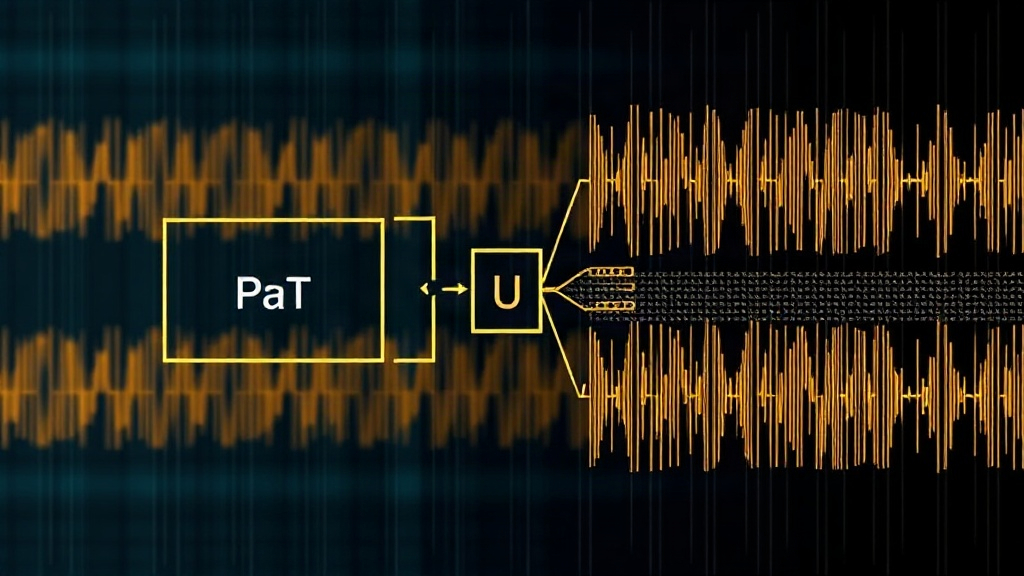
Technical Underpinnings and System Design
The experimental setup described in the PNAS paper involves a transmitter and a receiver. The transmitter utilizes a resistor whose value can be rapidly toggled between two states, effectively altering the noise power over specific frequency bands. This modulation scheme is designed to be extremely low-power, as it doesn't require the high-energy oscillators and amplifiers typical of conventional radio frequency (RF) transmitters. The energy consumption is primarily dictated by the switching speed and the physical characteristics of the switching element, which can be orders of magnitude lower than traditional methods.
The receiver, conversely, is designed to be sensitive to these specific spectral changes. It employs a narrow-band filter that can be swept across a range of frequencies, or a correlator that looks for specific temporal patterns in the incoming noise. The key challenge for the receiver is to distinguish the modulated noise signal from ambient thermal noise and other environmental interference. This is where sophisticated signal processing techniques come into play. By analyzing the statistical distributions and power spectral densities of the received signal over time, the receiver can reliably extract the encoded data.
The theoretical basis for this communication method is rooted in information theory and statistical signal processing. The researchers have demonstrated that by carefully selecting the modulation scheme and the receiver's processing algorithms, a significant amount of information can be transmitted reliably, even at very low signal-to-noise ratios. This resilience to noise is a critical advantage, allowing communication in environments where conventional methods would fail or require prohibitively high power.
Potential Applications and Broader Impact
The most immediate and compelling application for modulated Johnson noise communication is in the realm of ultra-low-power IoT devices. Imagine sensors deployed in remote locations, embedded within structures, or integrated into wearable technology, that can transmit data for years on a single coin-cell battery, or even harvest energy from their environment. This technology could enable a new generation of 'truly' wireless and ubiquitous sensing networks.
Consider smart grid sensors, environmental monitoring stations in national parks, or tiny implantable medical devices. These applications often face stringent power constraints. Traditional wireless protocols, even low-power ones like LoRa or Zigbee, still require active transmitters that consume more power than what might be achievable with noise modulation. This new technique could potentially reduce the power budget for data transmission to near-zero, limited only by the energy required for resistance switching and basic signal detection.
Furthermore, the passive nature of the transmitted signal could offer unique advantages in terms of security and stealth. Since the signal is essentially modulated thermal noise, it is inherently difficult to detect with conventional RF spectrum analyzers. This could be beneficial in applications where covert communication is desired, or where minimizing electromagnetic interference (EMI) is critical.
Challenges and Future Directions
Despite the promising results, several challenges remain before modulated Johnson noise communication can see widespread adoption. The data rates achieved in the initial experiments are relatively low compared to established wireless standards. Optimizing the modulation and demodulation schemes to increase throughput without significantly increasing power consumption will be a key area of future research.
The range of communication is also a factor. While the signal is ubiquitous, its effective transmission distance will depend on factors like antenna design, receiver sensitivity, and environmental noise levels. Scaling this technology to achieve longer ranges will require further innovation in both transmitter and receiver design. Additionally, developing standardized protocols for noise-modulated communication will be essential for interoperability and widespread deployment.
The surprising detail here is not the fundamental physics of Johnson noise, which is well-understood, but the elegant manipulation of its statistical properties for reliable data transfer. This moves beyond simply mitigating noise to actively utilizing it as a communication medium. It’s a testament to how fundamental physical phenomena, often considered limitations, can be repurposed with clever engineering to solve pressing technological challenges.
Conclusion: A Glimpse into Power-Efficient Wireless Future
The ability to communicate using modulated Johnson noise represents a significant step forward in the quest for ultra-low-power wireless systems. By transforming a fundamental physical limitation into a communication channel, researchers have opened a new avenue for data transmission. While practical deployment will require overcoming challenges related to data rate and range, the potential for this technology to enable a new generation of power-efficient, ubiquitous connected devices is undeniable. This work offers a compelling glimpse into a future where even the most basic physical phenomena can be harnessed for sophisticated communication.