The Unexpected Bottleneck: Model Upgrades Reveal Architectural Flaws
When Michael Truong, the developer behind Codenames AI, decided to upgrade the game's AI, he anticipated a straightforward improvement in clue quality and responsiveness. His goal was simple: enhance the player experience without escalating operational costs. The initial plan involved migrating from gpt-4o-mini to the newer gpt-5-mini, a seemingly logical step for better performance. However, the reality proved far more complex. The switch exposed significant architectural weaknesses that were masked by the older, less capable model.
Codenames AI operates with strict constraints: a single word clue, a count, optional intended targets, and a JSON output, all subject to deterministic validation before reaching the game board. This tight structure is designed for efficiency and predictable gameplay. Truong's first instinct was to leverage the latest model, expecting a boost in clue generation. The initial results were jarring. The default reasoning settings of gpt-5-mini made responses an order of magnitude slower for this specific workload. Minimal reasoning was identified as the apparent compromise, promising newer model capabilities with responsive gameplay.
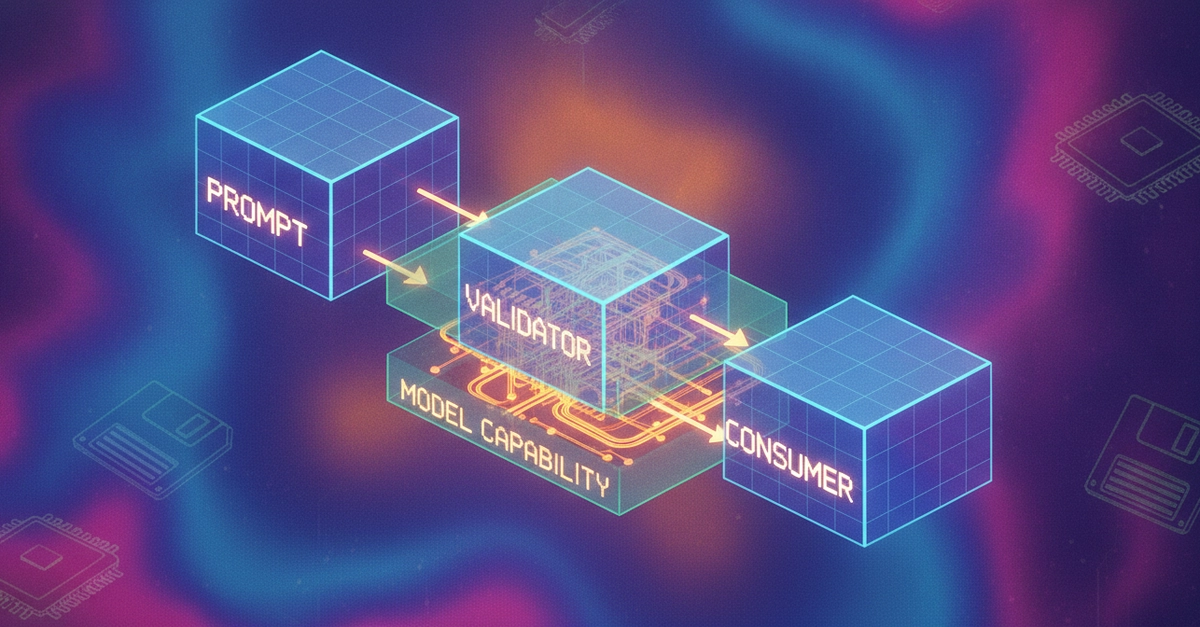
The expectation was to perform a direct comparison of clue quality, latency, and cost. The surrounding prompt, validator, and consumer logic were assumed to be robust enough to handle the upgrade. This assumption, however, quickly unraveled. The core issue wasn't the model's inherent capabilities, but how the existing architecture interacted with its new performance characteristics. The speed of the model's generation, particularly with default settings, created a bottleneck previously unobserved.
Unforeseen Latency and Architectural Debt
The primary challenge emerged from the latency introduced by gpt-5-mini. While gpt-4o-mini had a predictable response time that fit neatly within the game's operational flow, gpt-5-mini, even with minimal reasoning, introduced significant delays. This wasn't a minor slowdown; it was an order of magnitude increase, fundamentally disrupting the real-time nature of the game. The architecture, designed around the performance envelope of the older model, simply couldn't absorb this new latency.
This situation highlights a common pitfall in software development: architectural debt. When a system is built around specific performance characteristics of its components, upgrading those components can reveal underlying design flaws. The Codenames AI architecture, while functional, was implicitly optimized for the throughput of gpt-4o-mini. The validator and consumer logic, which process the model's output, were not designed to gracefully handle the extended wait times associated with a more powerful, but slower in this context, LLM.
Truong's experience suggests that the decision to upgrade an AI model is not merely a matter of swapping out one component for another. It requires a thorough re-evaluation of the entire system's architecture. The prompt engineering, the data serialization format (JSON), and the validation logic all interact with the LLM's generation speed. When this speed changes dramatically, these interactions can become points of failure or significant performance degradation.
The Trade-offs of Minimal Reasoning
The exploration of 'minimal reasoning' settings for gpt-5-mini was a direct response to the latency issue. The idea was to retain the model's advanced capabilities while stripping away unnecessary computational overhead. However, even this compromise didn't entirely solve the problem. The default reasoning, which is likely more thorough and generates more complex internal states, was significantly slower. Minimal reasoning offered a partial improvement, but it still wasn't enough to match the responsiveness of the older model for this specific, highly constrained task.
This reveals a critical aspect of LLM deployment: not all reasoning is created equal, and not all reasoning is necessary for every task. For a game like Codenames, where the output is a single word and a number, the deep, multi-step reasoning that a more general-purpose model might employ is overkill. Yet, even the 'minimal' setting proved to be a bottleneck. This suggests that the architecture might need to be re-thought not just in terms of latency, but also in how it structures the interaction with the LLM to extract only the essential information.
The surprising detail here is not the performance of the new model, but how the existing, seemingly robust, architecture was so brittle. It was a testament to how tightly coupled systems can become to the specific performance profiles of their dependencies. The upgrade acted as a stress test, pushing the architectural boundaries and revealing underlying weaknesses that were previously hidden.
Rethinking Model Integration for Specialized Tasks
Truong's experience with Codenames AI offers a valuable lesson for developers integrating LLMs into specialized applications. Simply choosing the latest or most powerful model is insufficient. A deep understanding of the model's performance characteristics, especially in the context of the application's specific constraints, is paramount. This includes not only latency but also cost, output consistency, and the appropriate level of reasoning required for the task.
The project's journey from gpt-4o-mini to gpt-5-mini underscores the need for proactive architectural design. Systems should be built with modularity and adaptability in mind, anticipating that underlying components will change and evolve. This might involve abstracting the LLM interaction layer more thoroughly, implementing dynamic performance monitoring, or even employing different models for different sub-tasks within an application.
For Codenames AI, the next steps likely involve re-evaluating the prompt engineering, potentially optimizing the JSON structure, or even exploring alternative LLM providers or fine-tuning a smaller, specialized model. The goal is to achieve a balance between advanced AI capabilities, cost-efficiency, and a seamless user experience. The architectural stress test has revealed the path forward: a more deliberate and informed approach to model integration.
What nobody has addressed yet is what happens when a popular, developer-built game relies on a specific LLM generation speed, and that speed fundamentally changes with an upgrade. The ripple effects on user retention and development resources can be substantial.