The Problem: Integration Glue Code
The advancement of AI, particularly Large Language Models (LLMs), has hit a significant roadblock: their inability to seamlessly interact with existing applications, databases, APIs, and local files. Developers spend an inordinate amount of time crafting bespoke “glue code” – custom adapters that wire individual AI agents to specific backend services. This approach scales poorly. For every agent and every backend, a new adapter is required, leading to a combinatorial explosion of complexity. The excerpt from Dev.to highlights this issue: “Your AI roadmap does not die from a bad model. It dies from integration glue code — the hand-written adapter that wires agent number four to backend number nine, times every agent and every backend you will ever build.” This complexity doesn't just slow down development; it becomes a significant barrier to scaling AI initiatives and maintaining them over time.
Consider a system like Mattrx, a multi-tenant marketing-analytics SaaS built on .NET 9 and Azure. Initially, integrating various AI capabilities required 14 distinct point-to-point client integrations. Each integration was a custom piece of code, a potential point of failure, and a maintenance burden. Adding a new capability meant developing a new adapter on both the agent side and the backend side, doubling the effort and increasing the risk of introducing bugs or security vulnerabilities.
The Solution: Model Context Protocol (MCP)
Model Context Protocol (MCP) emerges as the solution to this pervasive integration challenge. MCP is an open protocol designed to standardize the way AI models communicate with external tools and services. Instead of building unique connections for every interaction, developers can expose their services through an MCP server. AI assistants can then discover and leverage these capabilities through a single, consistent interface. This fundamentally shifts the integration model from N agents × M backends to a more manageable N agents + M servers.
The analogy often used is USB-C for AI applications. Just as USB-C provides a universal standard for connecting peripherals, MCP aims to provide a universal standard for AI models to interact with the vast ecosystem of digital tools. This standardization dramatically reduces the overhead associated with integrating AI into existing workflows and applications.
How MCP Works
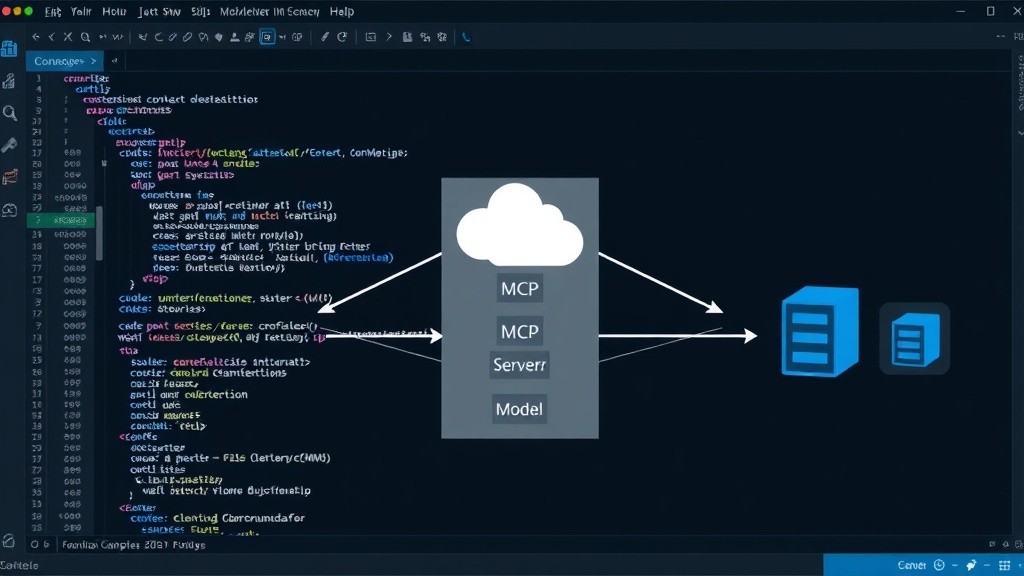
At its core, MCP defines a common language and structure for AI models to request information or actions from external services, and for those services to respond. An AI assistant, equipped with MCP client capabilities, can query an MCP server to understand what tools or data sources are available. The MCP server, acting as an intermediary, translates the AI's request into a format the specific backend service understands and then relays the service's response back to the AI. This abstraction layer means the AI agent doesn't need to know the intricate details of each backend service; it only needs to know how to speak MCP.
For developers, this means a significant reduction in the amount of custom code required. Instead of writing and maintaining numerous point-to-point adapters, they focus on building MCP servers that expose their services. The complexity of managing multiple integrations is consolidated into fewer, more manageable server components. For instance, the Mattrx example shows a reduction from 14 bespoke clients to just 3 MCP servers. This simplification accelerates development cycles and lowers the total cost of ownership for AI-powered applications.
Benefits of Adopting MCP
The primary benefit of MCP is the drastic reduction in integration “glue code.” This leads to faster development, easier maintenance, and increased scalability. By abstracting away the complexities of individual service integrations, MCP allows development teams to focus on building core AI capabilities and business logic rather than plumbing. Adding a new capability becomes a matter of declaring it through the MCP server rather than building new adapters on both ends of a connection.
Furthermore, MCP promotes interoperability. As more services adopt the MCP standard, AI models become more versatile and can interact with a wider range of tools without requiring custom integration work for each new service. This creates a more robust and flexible AI ecosystem. The consistent interface also enhances security, as it provides a centralized point for managing access control and data handling for AI interactions with external systems.
The Future of AI Integration
MCP represents a significant step forward in making AI more practical and accessible for real-world applications. It addresses a fundamental bottleneck that has hindered the widespread adoption and scaling of AI. By establishing a common protocol, MCP paves the way for a more interconnected and efficient AI landscape. The long-term vision is an environment where AI agents can fluidly access and utilize any connected service, unlocking new possibilities for automation, intelligence, and user experience.
The adoption of MCP is not just about simplifying current integrations; it’s about future-proofing AI development. As new models and services emerge, an MCP-based architecture will be far more adaptable than one reliant on custom, brittle glue code. This is why understanding MCP is crucial for anyone involved in building or deploying AI solutions today. The initiative is part of a broader movement towards open standards in AI, aiming to foster collaboration and accelerate innovation across the industry.