
From Haptics to High Fidelity: The Steam Controller Audio Hack
The Steam Controller, a device lauded for its innovative input methods, has found a new life beyond its intended function. A dedicated modder has engineered a custom Human Interface Device (HID) tool that repurposes the controller's trackpad haptic actuators into functional stereo speakers. This remarkable feat allows for the transmission of 16-bit audio directly through the controller's wired connection, producing sound quality that defies the device's original design.
Valve's Steam Controller, released in 2015, aimed to bridge the gap between traditional gamepad controls and the precision of a mouse and keyboard for PC gaming. Its dual trackpads, equipped with sophisticated haptic feedback engines, were designed to simulate textures, button clicks, and other tactile sensations. However, the limited success and eventual discontinuation of the controller left many units in the hands of enthusiasts. This new modification taps into the potential of those haptic motors, proving that even seemingly niche hardware can be pushed to unexpected new capabilities.
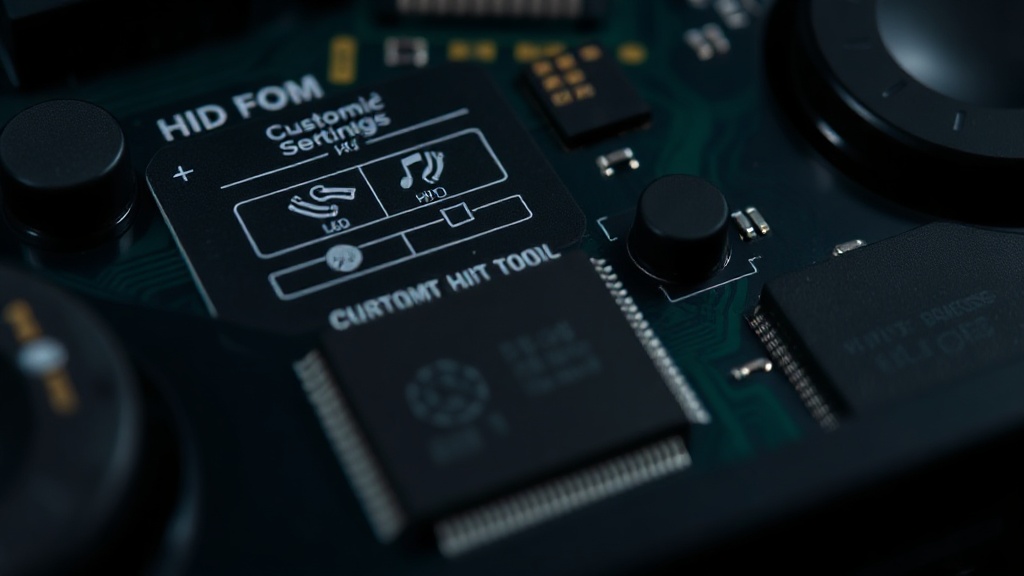
The core of this innovation lies in the custom HID tool. This software bypasses the controller's standard input protocols and instead injects an audio stream directly into the haptic feedback system. The trackpads, which normally vibrate to simulate physical interactions, are now driven by audio signals. This means that the subtle, nuanced vibrations that once conveyed the feel of a virtual surface can now be interpreted as sound waves. The modder leveraged the controller's wired USB connection, which offers significantly more bandwidth than its proprietary wireless dongle, to transmit the audio data.
The quality of the audio produced is a point of particular surprise. While one might expect a tinny, distorted mess from haptic motors, the modder reports that the wired connection can handle 16-bit audio, resulting in a sound profile that is described as "surprisingly full." This suggests that the underlying hardware, when fed the right signals, is capable of a fidelity far beyond its intended use. The stereo separation, achieved by driving the two trackpads independently, further enhances the immersive experience. Imagine not just feeling a rumble, but hearing distinct left and right channel audio emanating from the controller itself.
Technical Underpinnings of the Audio Hack
The technical challenge involved in this mod is substantial. Standard HID reports are designed for input commands and simple feedback, not for streaming complex audio data. The modder had to develop a method for encoding and transmitting audio packets in a way that the Steam Controller's firmware could interpret and translate into precise haptic actuator movements. This likely involved reverse-engineering parts of the controller's communication protocol and finding a way to piggyback audio data onto existing or newly defined HID usage pages.
The choice of a wired USB connection is critical. USB offers a data transfer rate that is orders of magnitude higher than the wireless communication used by the Steam Controller's puck. This increased bandwidth is essential for streaming uncompressed or lightly compressed 16-bit audio without introducing significant latency or data loss. The wireless protocol, while convenient, is simply not designed for the continuous, high-volume data flow required for audio playback. The modder's success highlights the often-underutilized capabilities of wired peripherals when pushed beyond their standard operational parameters.
The 16-bit audio quality is particularly noteworthy. For context, standard CD audio is 16-bit at 44.1kHz. While the sample rate and exact bit depth might vary in implementation, the fact that the haptic motors can be driven with enough precision and speed to reproduce something akin to this fidelity is impressive. This isn't just a simple buzz; it's a directed output that can differentiate between left and right channels and carry complex waveforms. The precision of the haptic engines, designed to simulate nuanced tactile feedback, is what allows them to function as rudimentary speakers.
Implications for Hardware Enthusiasts and Beyond
This mod opens up fascinating possibilities for hardware enthusiasts and tinkerers. It demonstrates a creative approach to repurposing existing technology, breathing new life into devices that might otherwise be considered obsolete or niche. The success of this project could inspire similar modifications for other controllers or peripherals that feature advanced haptic feedback systems. Imagine a future where game controllers offer not just rumble, but integrated, albeit basic, audio playback, enhancing immersion without the need for separate headphones or speakers.
For developers and users of the Steam Controller, this hack presents a compelling reason to explore the device's capabilities further. While Valve has largely moved on from the Steam Controller, community-driven innovation continues to highlight its unique design. The modder's tool, if made publicly available, could allow users to experience their games, or even listen to music, in an entirely new way, directly through their controller.
The broader implication for the tech industry is a reminder of the untapped potential within consumer electronics. Often, the hardware is capable of more than the software or firmware allows. Projects like this, driven by passionate individuals, can reveal these hidden capabilities and push the boundaries of what we consider possible with everyday devices. It begs the question: what other underutilized hardware features are waiting to be discovered and repurposed by innovative minds?