%22%20%2F%3E%0A%20%20%3C%2Fsvg%3E)
Bridging the Architecture Divide
The landscape of personal computing is increasingly fragmented, with a growing divide between traditional x86 architectures and the emerging dominance of ARM processors, particularly in mobile and increasingly in laptops and workstations. This schism presents a significant challenge for software and hardware compatibility. Traditionally, an x86-based graphics card like Nvidia's GeForce RTX 4060 would be incompatible with an ARM-based system running Windows on ARM. However, a recent feat by a Chinese modder, operating under the alias VoidTech, has demonstrated that these architectural barriers are not as insurmountable as once believed.
VoidTech managed to achieve a remarkable breakthrough: getting a consumer-grade x86 Nvidia GPU, specifically the GeForce RTX 4060, to function within a Windows 11 environment on a Huawei ARM workstation. This accomplishment is not merely a technical curiosity; it signals a potential pathway for greater hardware interoperability and expands the possibilities for high-performance computing on non-traditional architectures.
The Driver Hack: A Tale of Two Architectures
The core of VoidTech's success lies in a sophisticated driver modification. Nvidia's drivers are notoriously architecture-specific, designed to communicate directly with the underlying silicon. An x86 driver is built to interact with x86 instruction sets and hardware interfaces, which are fundamentally different from those found in ARM processors. To overcome this, VoidTech didn't create a new driver from scratch. Instead, the modder ingeniously borrowed a driver component from an upcoming, yet-to-be-released Nvidia product: the Nvidia RTX Spark.
The Nvidia RTX Spark is an AI-focused workstation card, and it's plausible that its development involved considerations for broader platform compatibility or perhaps utilized a more generalized driver framework that could be adapted. By porting elements of this driver to work with the RTX 4060, VoidTech essentially tricked the Windows 11 ARM operating system into recognizing and utilizing the x86 GPU. This is akin to giving a foreign-language speaker a phrasebook to communicate with someone who speaks a completely different language; the underlying structure is different, but the adapted tool allows for a functional exchange.
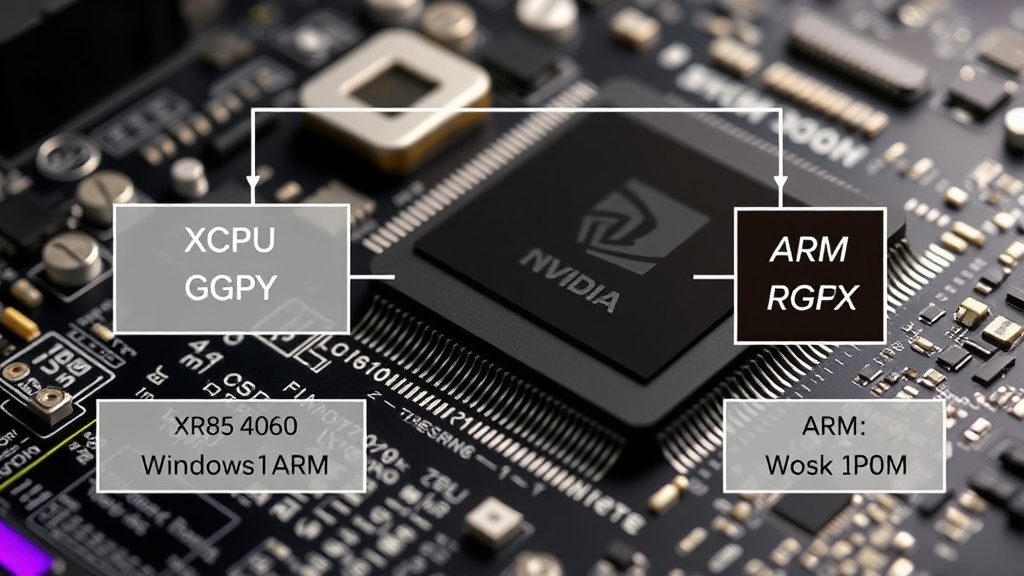
The implications of this hack are substantial. It suggests that the software layer, specifically the graphics driver, is the primary bottleneck for such cross-architecture functionality. If a driver can be sufficiently modified or adapted, it opens the door for a wider range of x86 hardware to be potentially utilized on ARM platforms. This could be particularly impactful for Windows on ARM devices, which have historically been limited in their GPU performance and hardware selection.
Windows on ARM: The Road Ahead
Windows on ARM has been Nvidia's ambitious play to bring its Windows ecosystem to the power-efficient ARM architecture. Microsoft has been pushing this initiative for years, aiming to compete with macOS on ARM-based MacBooks and the broader mobile computing landscape. However, one of the persistent challenges has been the availability of hardware and software that fully leverages the platform's potential. While native ARM applications are becoming more common, the ability to run legacy x86 applications and utilize powerful x86 hardware has been a key area of development and a significant hurdle.
Currently, Windows on ARM relies on emulation to run most x86 applications. This emulation layer, while impressive, introduces performance overhead and can limit compatibility. The ability to run a high-performance x86 GPU like the RTX 4060 natively, or at least with a driver that bypasses the emulation bottleneck for graphics processing, could significantly boost the performance of Windows on ARM devices for gaming, content creation, and AI workloads. VoidTech's work demonstrates that the potential exists, even if it requires significant technical expertise and a willingness to push the boundaries of hardware and software integration.
The specific hardware used by VoidTech was a Huawei ARM workstation. Huawei has been a significant player in the ARM space, particularly with its mobile processors, and has explored ARM-based computing solutions for various applications. Integrating a high-end consumer GPU into such a system, even with a driver hack, highlights the evolving synergy between different tech giants and the open-source community's role in driving innovation.
What's Next?
VoidTech's achievement is a testament to the ingenuity of individual modders and the broader developer community. It raises the question of whether Nvidia or other hardware manufacturers will explore more unified driver architectures or provide official support for such cross-architecture scenarios in the future. While this specific hack relied on an unreleased driver component, it proves the concept. For developers building applications on Windows on ARM, this opens up a tantalizing possibility: that future ARM workstations might not be limited to integrated graphics or specific ARM-native accelerators, but could potentially harness the power of the vast x86 GPU ecosystem.
The practical implications for mainstream users are still distant. This was a complex modification requiring deep technical knowledge. However, such pioneering efforts often pave the way for future standardization and improved compatibility. The ability to run x86 Windows games on an ARM workstation with a powerful Nvidia GPU is no longer a theoretical impossibility, but a demonstrated reality, albeit one achieved through unconventional means.
The broader impact could influence the trajectory of ARM computing. If x86 hardware can be more seamlessly integrated into ARM systems, it could accelerate the adoption of ARM in areas where raw performance and broad hardware compatibility have historically favored x86. This is a space to watch closely as the lines between traditional PC architectures and the new generation of efficient, powerful ARM processors continue to blur.