Mobileye's Dual Strategy: Supplier and Operator
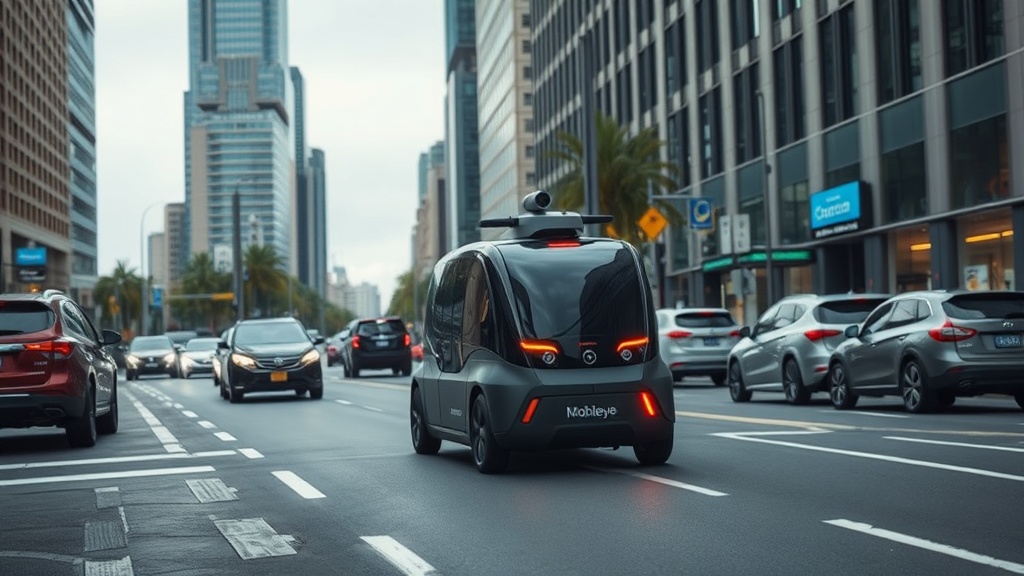
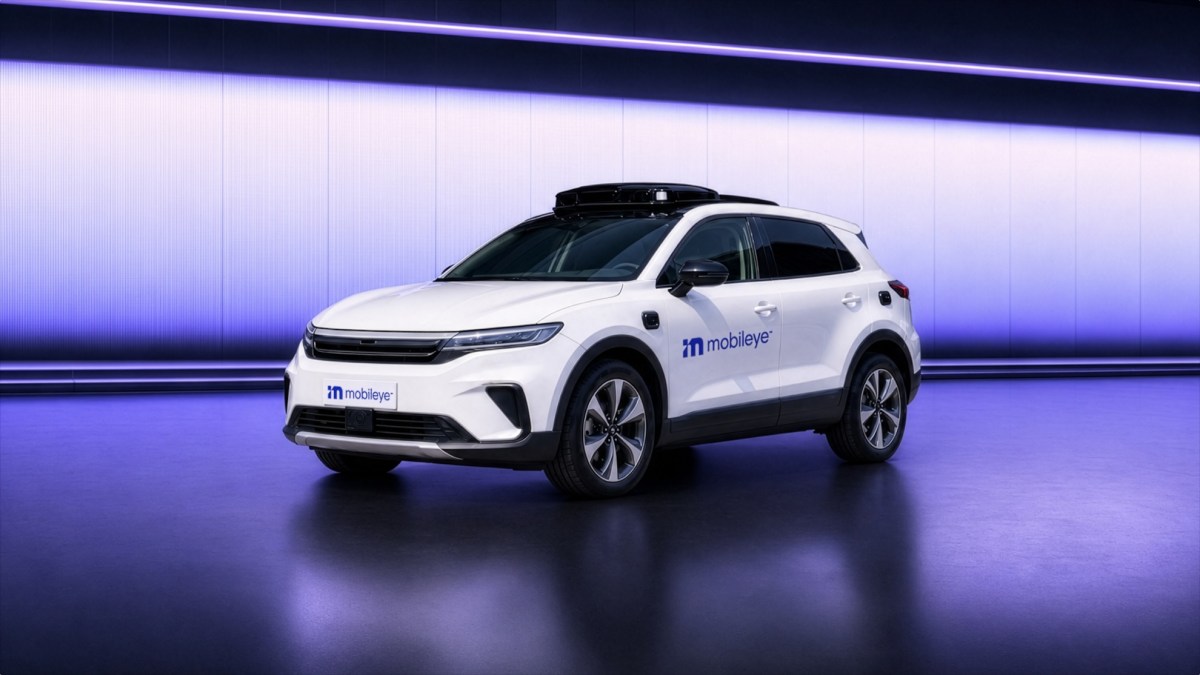
Mobileye, a leading supplier of advanced driver-assistance systems (ADAS) and autonomous driving (AV) technology, is taking a significant step into the operational side of the robotaxi business. The company announced its intention to launch its own robotaxi service in the U.S., a move that positions it directly against some of its most important customers who are also developing and deploying autonomous ride-hailing services.
This dual strategy is unusual in the tech industry. Typically, companies that supply core technology to other businesses avoid directly competing with them in the same market. However, Mobileye, owned by Intel, appears to believe that operating its own fleet will provide invaluable real-world data and insights, accelerating the development and refinement of its autonomous driving systems. It's a bold play that could redefine its relationships with existing partners and attract new ones.
The company’s approach to autonomous driving has historically focused on a camera-centric approach, augmented by radar and lidar. This strategy aims to create a more cost-effective and scalable solution for autonomous vehicles. By deploying its own robotaxi service, Mobileye can test and validate its proprietary hardware and software stack, known as Mobileye Drive, under the most demanding real-world conditions. This hands-on experience is crucial for iterating on safety features, improving navigation in complex urban environments, and optimizing the overall performance of its autonomous driving units.

Navigating the Competitive Landscape
The implications for the autonomous vehicle industry are considerable. Companies like Waymo, Cruise, Zoox, and Motional are all investing heavily in robotaxi services. Many of these companies, or their parent organizations, are also potential or existing customers of Mobileye's technology. For instance, companies developing their own AV platforms might be using Mobileye’s EyeQ chips as part of their processing hardware, or could be evaluating its full stack for future deployment.
Mobileye's decision to become an operator means it will now be privy to the operational challenges and successes of running a fleet. This knowledge, gathered from its own deployments, will undoubtedly inform its product development. The critical question is how Mobileye will manage the inherent conflict of interest: how will it share insights or potentially offer competitive advantages to its own nascent robotaxi operation without alienating or disadvantaging its supplier clients? Will its own fleet receive preferential treatment or access to advanced features before customers?
The company's CEO, Amnon Shashua, has long advocated for a phased approach to autonomy, starting with advanced ADAS features and progressing towards full self-driving. This robotaxi venture represents the pinnacle of that vision, moving from providing the 'brains' to orchestrating the entire 'body' of the autonomous vehicle service. It’s akin to a component manufacturer deciding to build and operate the final product that uses those components, a strategy fraught with risk but potentially rich in rewards.
Data is the New Fuel
The primary driver for Mobileye's move is likely data. Real-world driving data is the lifeblood of AI development for autonomous systems. The sheer volume and variety of scenarios encountered in daily robotaxi operations – from unpredictable pedestrian behavior to complex traffic interactions and diverse weather conditions – provide an unparalleled training ground for machine learning models. By operating its own service, Mobileye gains direct access to this rich data stream, allowing for continuous improvement and validation of its algorithms.
This data can be used to refine object detection, prediction models, path planning, and decision-making logic. It also allows Mobileye to fine-tune its systems for specific operational domains, such as dense urban cores, suburban routes, or highway driving. Unlike data collected purely for R&D, data from a commercial service reflects the actual demands and edge cases encountered by passengers and drivers (or lack thereof in a robotaxi). This granular, operational data is invaluable for building a robust and reliable autonomous driving system.
The company has stated that its robotaxi service will be powered by its Mobileye Drive technology, which includes its REM (Road Experience Management) mapping solution. REM uses data crowdsourced from its ADAS-equipped vehicles on the road to build and maintain high-definition maps, which are crucial for precise localization and navigation in autonomous vehicles. The robotaxi operation will further enhance this mapping data, creating a virtuous cycle of data collection and system improvement.
Future Implications and Potential Conflicts
The success of Mobileye's strategy hinges on its ability to balance its roles. If its robotaxi service becomes highly successful, it could cannibalize the market for its own customers. Conversely, if it fails to gain traction, it could be seen as a distraction from its core business as a technology supplier. The company will need to be transparent with its partners about how it uses data and how its own service operates.
What remains to be seen is how quickly Mobileye can scale its robotaxi operations and in which cities it plans to launch. The regulatory landscape for autonomous vehicles in the U.S. is complex and varies by state. Mobileye will need to navigate these regulations while simultaneously building out its fleet, operational infrastructure, and customer support. The company has indicated initial launches in select U.S. cities, with plans for further expansion.
This move by Mobileye is more than just a product launch; it’s a strategic pivot that underscores the intense competition and rapid evolution within the autonomous vehicle sector. By embracing a dual role as both a technology provider and an operator, Mobileye is signaling its ambition to be a dominant force, not just in the components of self-driving cars, but in the future of mobility itself.