A Foundational Course Revived
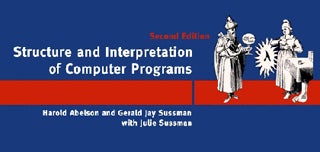
For decades, MIT's "Structure and Interpretation of Computer Programs" (SICP) has stood as a cornerstone of computer science education. It's a course that doesn't just teach programming; it teaches how to think about computation. Now, the video lectures from the Spring 2005 offering of 6.001, the original SICP course number, have resurfaced and are readily available. This isn't just a historical artifact; it's a chance for a new generation of developers, founders, and serious hobbyists to engage with the fundamental principles that shaped modern computing.
The availability of these lectures, primarily through MIT OpenCourseWare, offers an unparalleled opportunity. Unlike many introductory programming courses that focus on specific languages or tools, SICP delves into the underlying concepts: abstraction, recursion, state, and the very nature of computation. The course famously uses Scheme, a dialect of Lisp, as its primary language. This choice is deliberate. Scheme's elegant syntax and powerful meta-programming capabilities allow students to explore deep ideas about how programs are constructed and how programming languages themselves work.
The SICP Philosophy: Beyond Syntax
What sets SICP apart is its rigorous approach to understanding how programs are built and how computational processes can be represented. The course emphasizes building complex systems from simple primitives, a core tenet of software engineering. Students learn to design and implement various forms of computation, including procedural, declarative, and object-oriented paradigms, all within the expressive power of Scheme. The lectures, delivered by renowned educators like Professor Hal Abelson and Professor Gerald Jay Sussman, are known for their depth and clarity. They guide students through the construction of interpreters, compilers, and symbolic manipulation systems, providing a profound understanding of how software operates at a fundamental level.
The course material is structured to build intuition. It starts with basic building blocks like procedures and recursion, then moves to more complex data structures, and eventually tackles topics like symbolic computation, logic programming, and concurrent computation. The lectures don't shy away from the mathematical underpinnings of computer science. Instead, they integrate them seamlessly, showing how mathematical concepts directly translate into computational structures and algorithms. This holistic approach ensures that students don't just learn to code, but to design and reason about code at a high level.
Why SICP Still Matters Today
In a landscape often dominated by rapidly evolving frameworks and languages, the enduring relevance of SICP is remarkable. The principles taught in this course are language-agnostic. Understanding recursion, for example, is crucial whether you're writing Python, JavaScript, or Rust. The ability to design abstractions, a key theme in SICP, is vital for building scalable and maintainable software systems. The course teaches students to think about the *essence* of a problem and how to model it computationally, rather than just memorizing syntax. This foundational understanding is what separates a programmer who can follow instructions from one who can innovate and build truly novel solutions.
The Hacker News community, a frequent barometer for developer interest, has shown sustained engagement with SICP over the years. The reappearance of these lectures on platforms like MIT OpenCourseWare often sparks discussions about the course's impact and its continued value. Many experienced developers credit SICP with fundamentally changing their understanding of programming and problem-solving. It's a course that often requires significant effort, but the payoff in terms of intellectual growth and problem-solving ability is substantial. For anyone looking to gain a deeper, more theoretical understanding of computer science, these lectures are an invaluable resource.
Accessing the Lectures
The video lectures are available through MIT OpenCourseWare, the university's initiative to publish all of its course materials online. While the Spring 2005 iteration is widely referenced, other terms and versions of SICP have also been documented and made available over the years, often with accompanying text, assignments, and solutions. The video format provides a direct window into the classroom experience, allowing viewers to follow the instructors' thought processes and the dynamic nature of teaching these complex topics. The availability of these resources democratizes access to a high-caliber computer science education, enabling individuals worldwide to learn from one of the most respected curricula in the field.
For those new to computer science, SICP can be challenging. It demands active engagement, a willingness to grapple with abstract concepts, and a dedication to working through complex problems. However, the rewards are immense. It equips learners with a mental toolkit that transcends specific technologies and fosters a deep appreciation for the elegance and power of computation. The resurgence of interest in these foundational lectures underscores a growing recognition within the tech community that a strong theoretical grounding is more critical than ever in navigating the ever-changing landscape of software development.