
The AI Landscape Beyond the Hype Cycle
On April 21, 2026, MIT Technology Review published what may be the most concisely useful AI reading of the year: "10 Things That Matter in AI Right Now." After months of editorial debate across their newsroom, MIT Tech Review's reporters distilled the current AI landscape into ten items that actually matter — not hype, not incremental news, but the developments genuinely shaping where AI goes from here.
For developers and AI practitioners, this list is a useful forcing function. It moves the conversation away from "which model dropped today" and toward the structural shifts that will determine which bets pay off over the next two to five years. This breakdown covers all ten items with commentary on what each one means for teams building with AI right now.
MIT Technology Review's journalism has a track record that matters here. They were among the first mainstream publications to cover transformers, and their insights often precede broader industry consensus. This list isn't about predicting the future; it's about identifying the forces already in motion that will dictate AI's trajectory. If you're building with AI, understanding these ten points is no longer optional. It's a prerequisite for making informed strategic decisions about your technology stack, your talent acquisition, and your product roadmap.
1. The Rise of Specialized Foundation Models
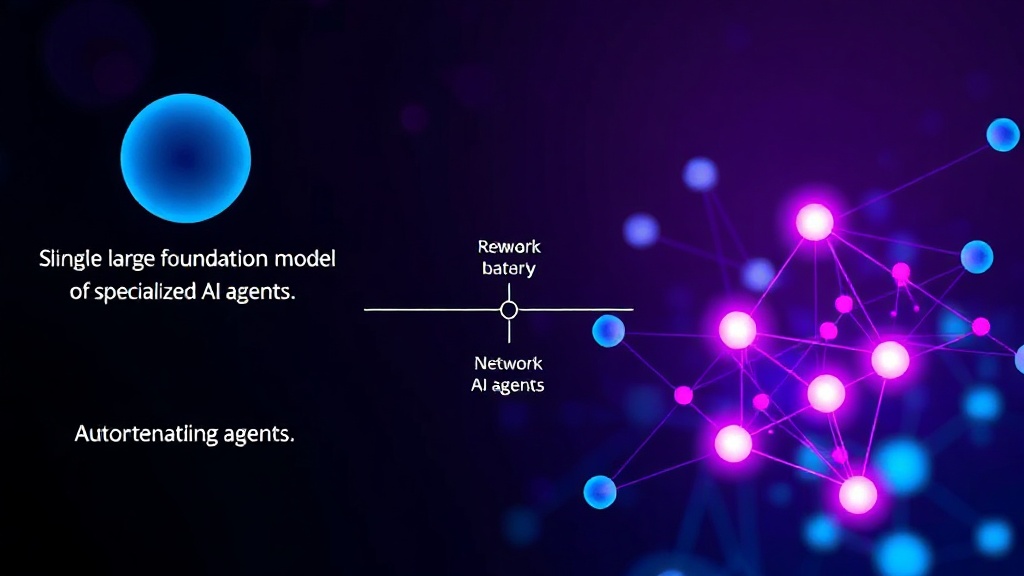
The era of monolithic, general-purpose foundation models is giving way to a more fragmented landscape of specialized models. While large language models (LLMs) like GPT-4 and its successors continue to advance, the real innovation is happening in models trained for specific domains or tasks. Think of it less like a single, all-knowing oracle and more like a team of highly skilled specialists, each an expert in their narrow field. For developers, this means a shift from fine-tuning massive general models to selecting and integrating smaller, more efficient, task-specific models. This approach promises better performance, reduced computational costs, and greater control over model behavior. The challenge lies in identifying the right specialized model for your use case and managing the complexity of a multi-model architecture.
2. Embodied AI and Real-World Interaction
AI is moving beyond the screen and into the physical world. Embodied AI, where AI systems learn to interact with and manipulate their environment, is rapidly maturing. This isn't just about robots on assembly lines; it encompasses advancements in autonomous vehicles, sophisticated robotic assistants for logistics and healthcare, and even AI agents that can perform physical tasks in simulated or real environments. For developers, this opens up new frontiers in robotics, simulation, and human-robot interaction. It requires a different skillset, blending traditional AI/ML expertise with control theory, sensor fusion, and an understanding of physical dynamics. The ability to train AI in simulation and transfer that learning to the real world is becoming a critical capability.
3. The AI-Powered Scientific Discovery Engine
AI is transforming scientific research at an unprecedented pace. From accelerating drug discovery and materials science to aiding in climate modeling and astrophysics, AI is becoming an indispensable tool for scientific breakthroughs. This involves not just analyzing vast datasets but also generating hypotheses, designing experiments, and even discovering new scientific principles. Developers in research settings will find themselves working with AI tools that can automate complex simulations, identify novel patterns in experimental data, and suggest new avenues of inquiry. This democratizes access to advanced research capabilities but also demands a deep understanding of both the scientific domain and the AI methodologies being applied.
4. Generative AI for Code and Creativity
The ability of AI to generate human-like text and images has expanded to include code, music, and other creative outputs. AI code assistants are becoming more sophisticated, capable of not just suggesting snippets but writing entire functions or even debugging complex issues. Similarly, generative AI is democratizing creative production, enabling individuals with limited technical skills to produce high-quality art, music, and written content. For developers, this means a potential boost in productivity, with AI handling more of the boilerplate and repetitive coding tasks. The challenge is to ensure the generated code is secure, efficient, and maintainable, and to understand the ethical implications of AI-generated creative works.
5. AI Alignment and Safety as Core Concerns
As AI systems become more powerful and autonomous, ensuring their alignment with human values and safety remains a paramount concern. This area, often referred to as AI alignment or AI safety, is moving from an academic niche to a critical engineering challenge. It involves developing techniques to ensure AI systems behave predictably, ethically, and in accordance with their intended goals, even in novel situations. Developers will increasingly need to incorporate safety protocols, interpretability methods, and robust testing procedures into their AI development workflows. The ability to demonstrate that an AI system is safe and aligned will become a significant differentiator and a regulatory requirement.
6. Decentralized AI and Federated Learning
Concerns around data privacy and computational efficiency are driving the adoption of decentralized AI approaches. Federated learning, in particular, allows models to be trained across multiple devices or servers holding local data samples, without exchanging the data itself. This preserves privacy and reduces the need for massive, centralized data lakes. For developers, this means learning new paradigms for distributed training, secure aggregation of model updates, and managing the complexities of heterogeneous data sources. It's a significant shift from traditional centralized training methods and is crucial for applications in sensitive domains like healthcare and finance.
7. The Continued Evolution of Reinforcement Learning
Reinforcement learning (RL) continues to be a powerful paradigm for training AI agents to make sequential decisions in complex environments. Beyond game playing, RL is finding applications in robotics, optimization, personalized recommendations, and autonomous systems. The advancements are in developing more sample-efficient RL algorithms, improving exploration strategies, and enabling RL agents to learn from sparse rewards. Developers looking to build systems that can learn and adapt through trial and error will find RL increasingly relevant. Mastering RL requires a strong grasp of Markov decision processes, deep learning, and sophisticated simulation environments.
8. AI for Climate Change Mitigation and Adaptation
The urgency of climate change is driving significant investment and innovation in AI applications aimed at addressing environmental challenges. This includes using AI for optimizing energy grids, developing new sustainable materials, monitoring deforestation, predicting extreme weather events, and improving agricultural yields. Developers working in this space are at the forefront of applying AI to one of humanity's most pressing problems. It requires interdisciplinary knowledge, combining AI expertise with an understanding of environmental science, policy, and engineering.
9. The Shifting Economics of AI Infrastructure
The cost and accessibility of AI infrastructure are undergoing significant changes. While the demand for high-end GPUs and specialized AI chips continues to grow, there's also a parallel trend towards more efficient hardware, optimized software stacks, and cloud-agnostic deployment strategies. This is making powerful AI capabilities more accessible to a broader range of organizations. Developers need to be aware of the evolving economics, understanding how to leverage cloud services, on-premise solutions, and specialized hardware effectively to manage costs and performance. The rise of optimized inference hardware and software is particularly important for deploying AI at scale.
10. AI Governance and Regulation
Governments worldwide are grappling with how to regulate AI. This is moving beyond theoretical discussions to concrete policy proposals, standards, and legal frameworks. For developers and organizations building AI systems, understanding and complying with these evolving regulations is becoming a critical aspect of product development and deployment. Issues like data usage, algorithmic bias, transparency, and accountability are all under scrutiny. Staying abreast of AI governance trends is essential to avoid legal pitfalls and to build trust with users and stakeholders. This area will shape the ethical boundaries and operational constraints of AI for years to come.