
The Face Value Challenge: More Than Meets the Eye
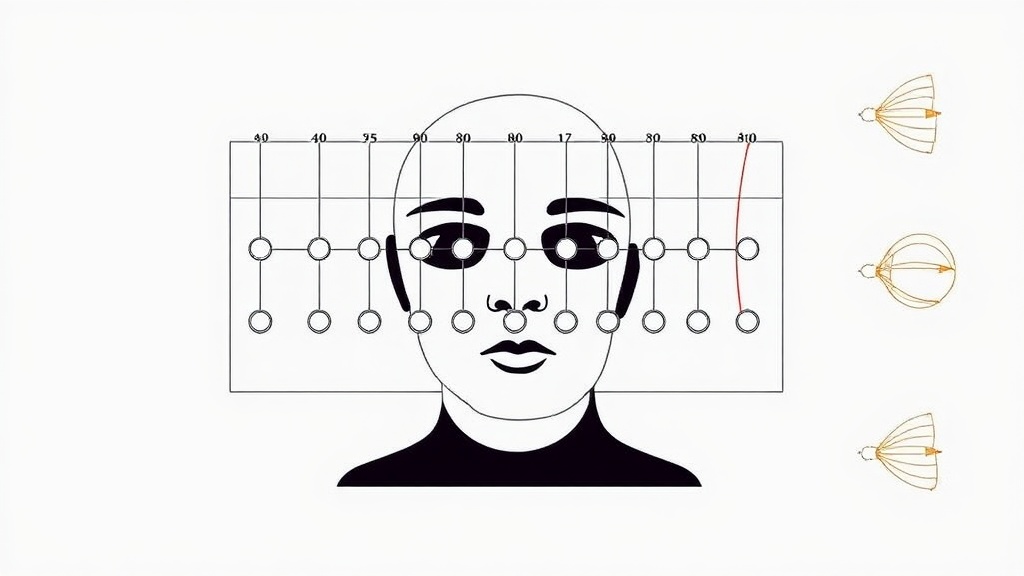
What began as a seemingly straightforward puzzle at HackMIT, dubbed "Face Value," quickly revealed itself to be a complex data science challenge. Participants were tasked with customizing a cartoon avatar by adjusting ten sliders: Face, Skin, Hair, Brows, Eyes, Nose, Mouth, Glasses, Mole, and Accessory. Each slider could be set to a value from 0 to 9. The objective was to find a specific avatar configuration that satisfied four strict criteria set by a hidden scoring model: Confidence must be 99.9% or higher, the edit distance from the initial configuration should not exceed 5 (meaning no more than half the sliders could be changed), and the avatar had to pass both a "Charm check" and a "Sync check." The puzzle's own hint, "Not all features affect the model equally. Some are more sensitive than others, especially together. Single-feature sweeps can be misleading," was a critical clue that the problem was far from trivial.
From Manual Adjustment to API Exploration
Initially, participants might have approached the puzzle by manually adjusting sliders and observing the avatar's reaction. However, the constraints, particularly the limited edit distance and the unknown weighting of each feature, made brute-force or simple trial-and-error methods inefficient. The true nature of the challenge emerged as developers realized the need to systematically probe the hidden model. This led to the development of scripts that could interact with the scoring model via an API, sending thousands of different avatar configurations and recording the resulting scores and checks. The goal shifted from simply finding a solution to understanding the underlying mechanics of the scoring system itself.
Reverse-Engineering the Hidden Formula
The core of the data science project involved reverse-engineering the hidden scoring formula. By generating approximately 10,000 API calls, each representing a unique avatar configuration and its corresponding score, the participants could begin to infer the relationships between slider values and the final score. The hint about features having unequal sensitivity and interacting with each other was key. It suggested a non-linear model where the impact of changing one slider could depend on the state of others. This pointed towards techniques used in machine learning and statistical modeling. The data collected would allow for the training of a predictive model or the identification of patterns that would reveal the weights and biases of the original hidden model.
Applying Data Science Techniques
Several data science approaches could be employed to tackle this reverse-engineering problem. One method would be to treat each slider as a feature and the final score as the target variable. Techniques like linear regression could provide an initial approximation, but given the hint about non-linearity and interactions, more advanced methods would be necessary. Polynomial regression, decision trees, or even neural networks could be used to model the complex relationships. Feature importance analysis would be crucial to identify which sliders had the most significant impact on the score, and correlation analysis could reveal how sliders interacted. The "Charm check" and "Sync check" likely represented binary classifiers or logical conditions that also needed to be understood and replicated.
The Significance of the HackMIT Puzzle
The "Face Value" puzzle at HackMIT serves as an excellent microcosm of real-world data science problems. It demonstrates how a seemingly simple interface can hide a complex underlying system. It highlights the importance of careful experimentation, systematic data collection, and the application of appropriate analytical techniques. The transition from manual tweaking to programmatic interaction and subsequent model inference mirrors the workflow of many data science projects, where raw data is gathered, cleaned, analyzed, and used to build predictive or explanatory models. The puzzle also underscores the value of understanding problem constraints and hints; in this case, the warning about feature sensitivity was a direct pointer towards the need for sophisticated modeling rather than simple heuristics.
Beyond the Hackathon: Broader Implications
The journey from a hackathon puzzle to a data science project has broader implications. For developers, it's a lesson in dissecting black-box systems and understanding that even seemingly simple applications can rely on intricate logic. For aspiring data scientists, it's a practical example of how to approach problems where the underlying model is unknown, requiring a blend of programming, statistical analysis, and domain-specific intuition (in this case, understanding how facial features might contribute to perceived attractiveness or "charm"). The success of such a project hinges on the ability to translate observed behavior into quantifiable metrics and then into a predictive model, a skill set highly valued in the tech industry. It also raises the question of how many other systems we interact with daily operate on similarly complex, hidden formulas that could be reverse-engineered with enough data and analytical rigor.