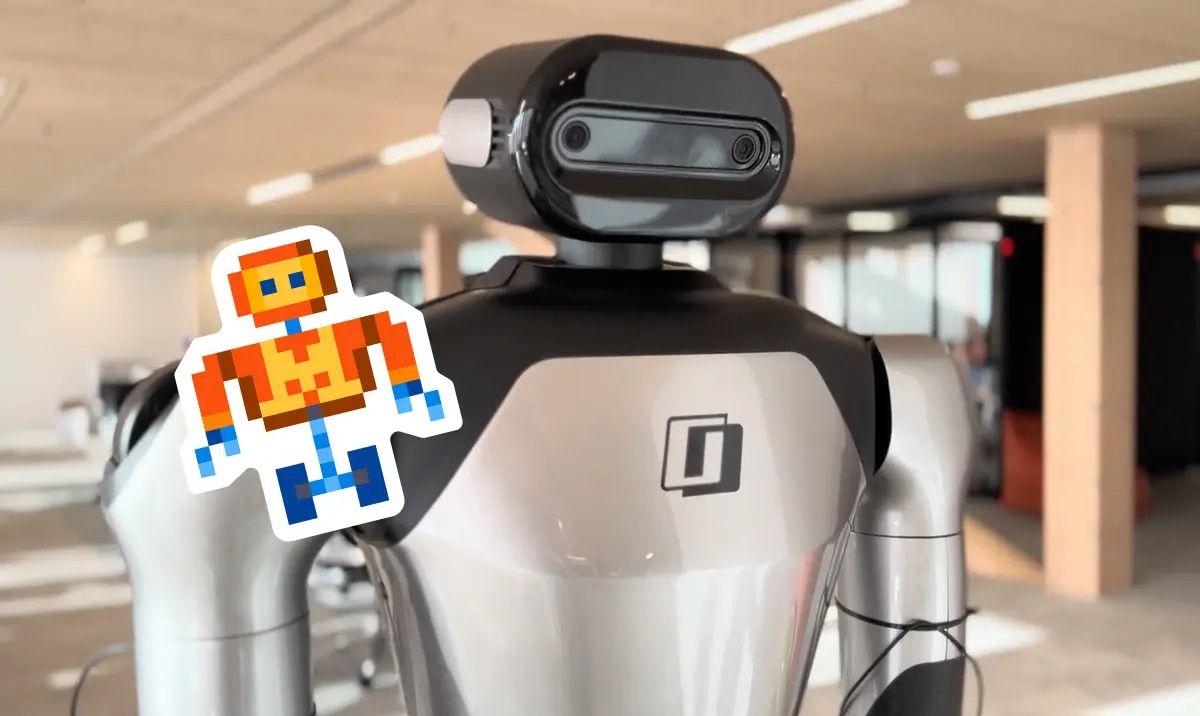
Mistral AI Unveils Robostral Navigate

Mistral AI has introduced Robostral Navigate, a new large language model (LLM) specifically engineered to address the intricate challenges of robotic navigation. This model represents a significant step forward in enabling robots to understand and interact with their environments more autonomously and intelligently. Unlike general-purpose LLMs, Robostral Navigate is trained on a vast dataset of robotics-specific information, including sensor data, motion planning algorithms, and environmental representations. This specialized training allows it to perform tasks such as pathfinding, obstacle avoidance, and scene understanding with a level of sophistication previously difficult to achieve.
Diagram illustrating Robostral Navigate's input-output flow for robotic navigation
The core innovation behind Robostral Navigate lies in its ability to fuse multimodal sensory inputs with linguistic reasoning. Robots equipped with this model can process data from cameras, LiDAR, and other sensors, interpret it within a navigational context, and generate actionable plans. This is crucial for real-world applications where robots must operate reliably in dynamic and unpredictable settings. For instance, a robot navigating a warehouse needs to not only identify shelves and corridors but also react to moving forklifts, changing inventory, and unexpected blockages.

Key Capabilities and Architecture

Robostral Navigate is built upon Mistral AI's proprietary transformer architecture, optimized for efficiency and performance. The model’s capabilities include:
  • Perception and Scene Understanding: Interpreting sensor data to build a coherent understanding of the robot's surroundings, identifying navigable spaces, and recognizing objects of interest.
  • Path Planning: Generating optimal and safe paths from a current location to a target destination, considering various constraints like robot kinematics, environmental layout, and dynamic obstacles.
  • Decision Making: Making real-time decisions in complex scenarios, such as choosing between alternative routes or adapting to unforeseen events.
  • Multimodal Fusion: Seamlessly integrating data from diverse sensors (e.g., visual, depth, inertial) with high-level instructions or goals.
The model’s architecture is designed to be modular, allowing for customization and adaptation to specific robotic platforms and operational environments. This flexibility is essential, as navigation requirements can vary dramatically between a domestic service robot, an industrial autonomous mobile robot (AMR), or an exploration rover. Mistral AI emphasizes that Robostral Navigate is not just about finding the shortest path, but about navigating intelligently and safely, much like a human would.

Training Data and Methodology

The development of Robostral Navigate involved curating a unique dataset that combines simulated robotic environments with real-world data. This approach allows the model to learn from a wide array of scenarios, including edge cases that are rare or dangerous to reproduce in physical testing. The training process leverages reinforcement learning techniques alongside supervised learning on expert demonstrations. This dual approach helps the model develop both robust foundational navigation skills and the ability to learn from experience and adapt to novel situations. Think of Robostral Navigate less like a rigid set of pre-programmed rules for a robot, and more like an experienced human driver who can intuitively understand road conditions, predict other drivers' actions, and choose the best route, even when faced with unexpected detours. The model learns to generalize its knowledge across different environments and tasks, reducing the need for extensive re-training for each new deployment.

Applications and Future Implications

The potential applications for Robostral Navigate are vast. In logistics and warehousing, it can power more agile and efficient AMRs. In manufacturing, it can enable collaborative robots to navigate factory floors safely alongside human workers. For consumer robotics, it opens doors for more capable domestic assistants and autonomous vehicles. Furthermore, in fields like disaster response and space exploration, highly reliable autonomous navigation is paramount. One of the most surprising aspects of this release is Mistral AI’s focus on making such advanced navigation capabilities more accessible. By abstracting away much of the complexity of traditional robotics navigation stacks, Robostral Navigate democratizes access to sophisticated AI-driven autonomy. This could accelerate innovation across the robotics industry, allowing smaller teams and startups to develop advanced robotic solutions without needing deep expertise in low-level control systems and sensor fusion. The broader implication is a future where robots can operate with greater autonomy and adaptability, moving beyond confined, pre-mapped environments. This model is a significant step toward achieving that vision, bridging the gap between theoretical AI advancements and practical, real-world robotic deployment. The success of Robostral Navigate will likely spur further research into LLMs for embodied AI, pushing the boundaries of what machines can perceive, reason, and do in the physical world. What nobody has fully addressed yet is the long-term impact on human-robot collaboration. As robots become more autonomous and capable of complex navigation, how will this fundamentally change the nature of human jobs and interactions in environments where both humans and robots coexist?