
Mira: AI-Powered Emotional Analysis in Interviews
Mira, a new AI-powered tool, is entering the market with a unique proposition: moderating interviews by analyzing the emotional states of participants. The platform promises to go beyond traditional interview analytics by interpreting subtle cues in voice and facial expressions to gauge how individuals are feeling during conversations. This capability could offer recruiters, researchers, and content creators a more nuanced understanding of interview dynamics and participant responses.
The core functionality of Mira revolves around real-time emotional detection. Unlike tools that focus solely on transcription or keyword analysis, Mira aims to provide a qualitative layer of insight by quantifying emotional sentiment. This is achieved through advanced machine learning models trained on vast datasets of human interaction, enabling the AI to identify patterns associated with various emotions such as happiness, frustration, confusion, or engagement.
How Mira Works
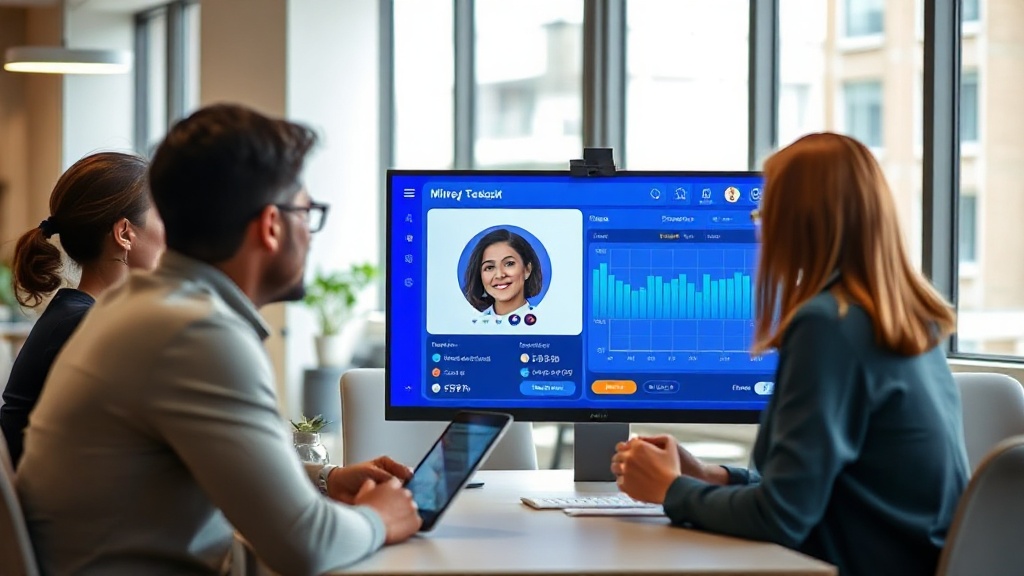
Mira processes audio and video feeds from interviews. Its AI engine analyzes vocal inflections, speech patterns, and facial micro-expressions. The system then synthesizes this information to generate an emotional profile for the interviewee throughout the conversation. This data can be presented in various formats, potentially including dashboards, sentiment timelines, or summary reports, highlighting key moments of emotional shift or intensity.
For recruiters, this could mean identifying candidates who exhibit genuine enthusiasm, manage stress effectively, or demonstrate resilience under pressure. In market research, Mira might help gauge consumer reactions to products or services during focus groups, providing feedback that goes beyond verbal responses. Content creators could use Mira to understand audience engagement during interviews for podcasts, documentaries, or journalistic pieces.
Potential Applications and Impact
The implications of such technology are far-reaching. In the hiring process, Mira could augment human judgment, flagging candidates who might be struggling to articulate their thoughts due to nervousness, or conversely, identifying those who are highly confident and articulate. This doesn't replace the need for human interviewers but offers an additional data stream to consider.
For academic research, Mira could be a powerful tool for studying human behavior, communication patterns, and psychological responses in controlled or semi-controlled environments. Researchers could analyze how different questioning techniques elicit specific emotional reactions, contributing to fields like psychology, sociology, and communication studies.
Content creators might find Mira invaluable for refining their interview techniques and understanding the unspoken reactions of their guests. By seeing when a guest appears uncomfortable or particularly engaged, creators can adjust their approach in real-time or better understand the subtext of a conversation for post-production analysis.
Challenges and Future Development
However, the deployment of AI that interprets emotions raises significant ethical considerations. Accuracy is paramount; misinterpreting a participant's emotional state could lead to unfair judgments in hiring or flawed conclusions in research. The technology must be transparent about its limitations and potential biases. Ensuring data privacy and obtaining informed consent from participants will be critical for widespread adoption.
Mira's success will depend not only on the technical accuracy of its emotional detection but also on its ability to integrate seamlessly into existing workflows. The platform needs to provide actionable insights that are easily digestible and demonstrably valuable to its target users. The company behind Mira will need to navigate the complexities of user trust and the ethical implications of emotional AI.
What remains to be seen is how Mira will handle cultural nuances in emotional expression, as different cultures may convey emotions through distinct verbal and non-verbal cues. Developing a universally applicable model for emotional recognition is a formidable challenge, and Mira's approach to this will be a key differentiator.
Ultimately, Mira represents a step towards more sophisticated AI tools that analyze human interaction. By focusing on emotional intelligence, the platform aims to unlock deeper understanding in conversations, offering a new dimension to data-driven decision-making in professional and research settings.