
The Unlikely Conduit: Microwaves for Megawatts
The idea of transmitting power wirelessly has long been a staple of science fiction, conjuring images of energy beams zipping through the air to power devices or even entire cities. While the practicalities have always seemed distant, a new wave of research is pushing the boundaries, exploring the use of high-power microwave beams for grid-scale energy transmission. This isn't about charging your phone across the room; it's a radical reimagining of how we could move massive amounts of energy, potentially bypassing the need for extensive physical infrastructure like power lines.
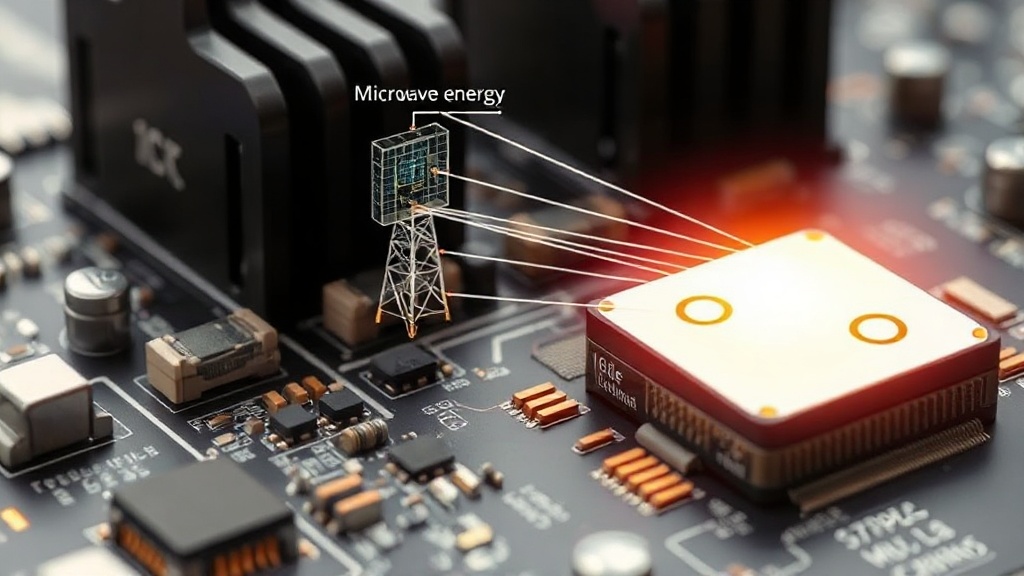
At its core, the concept relies on converting electrical energy into microwave radiation, focusing it into a tight beam, transmitting it over a distance, and then converting it back into usable electricity at the receiving end. While individual components of this process have existed for decades – think radar systems, satellite communications, and even the magnetron in your kitchen microwave – integrating them for high-power, efficient, and safe grid-scale transmission presents a formidable engineering challenge. The primary hurdle isn't just generating enough microwave power, but doing so efficiently, directing it with precision, and ensuring it can be safely received and converted without significant loss or environmental impact.
The Science and the Challenges
The fundamental principle is straightforward: energy can travel as electromagnetic waves. Microwaves, occupying a specific portion of the electromagnetic spectrum, offer a compelling balance. They can be generated at high power levels and, crucially, can be focused into relatively narrow beams using directional antennas, similar to how a spotlight works. This directional capability is key to minimizing energy dissipation over distance and preventing the beam from spreading uncontrollably.
However, the devil is in the details. Efficiency is a major concern. Converting electricity to microwaves and then back to electricity inevitably involves losses. Current experimental setups aim for efficiencies that are far from ideal for grid-scale applications. A significant portion of the energy can be lost as heat or scattered radiation. This means that for every megawatt transmitted, only a fraction might be usable at the destination, requiring an even larger input power.
Another critical challenge is beam control and safety. A high-power microwave beam, while directional, is still a form of radiation. Ensuring that the beam stays precisely on its intended path, unaffected by atmospheric conditions like rain or fog, or by intervening obstacles, is paramount. Accidental deviation or dispersion could pose significant environmental and safety risks, potentially impacting wildlife, aircraft, or even populated areas. Sophisticated tracking and aiming systems, coupled with robust safety protocols, would be essential.
Furthermore, the technology for generating and receiving these high-power microwaves at the required scale is still under development. While magnetrons and klystrons can produce microwave power, scaling them up for grid-level transmission while maintaining efficiency and reliability is a complex engineering feat. Similarly, developing efficient rectennas (rectifying antennas) capable of capturing and converting these high-frequency waves back into direct current (DC) or alternating current (AC) with minimal loss is an active area of research.
Potential Applications and the Future Landscape
If these challenges can be overcome, the implications are vast. Imagine remote locations that are difficult or prohibitively expensive to connect to the traditional power grid. Wireless microwave transmission could deliver power to these areas without laying miles of cables. It could also be a critical component in future renewable energy systems. For instance, solar or wind farms located far from population centers could beam their generated power directly to where it's needed. This could unlock the potential of vast, underutilized renewable energy resources.
The technology could also play a role in space-based solar power. Satellites equipped with solar panels could beam energy down to Earth, providing a consistent power source independent of terrestrial weather conditions. While this is an even more ambitious application, it highlights the long-term potential of microwave power transmission.
The concept of