The Agent Tooling Conundrum
AI agents, while adept at reasoning, often hit a wall when tasked with performing real-world actions. This typically involves integrating with external services like GitHub, internal knowledge bases, or partner APIs. The conventional approach necessitates writing custom client code for each integration, managing credentials insecurely, and struggling with compliance and audit trails, especially across multiple agents and environments. The process of adding a new tool can become a significant development overhead.
Microsoft Foundry Agent Service addresses this challenge with the adoption of the Model Context Protocol (MCP). MCP provides a standardized communication protocol, enabling any MCP-compatible client to interact with any MCP-compatible server without the need for bespoke integration code.
Think of it less like building a custom bridge for every river crossing, and more like adopting a universal shipping container standard. Once the standard is in place, any crane can load any container, and any ship can carry it, anywhere. MCP aims to bring that level of interoperability to how AI agents access and utilize external tools and data sources.
Introducing the Toolbox Pattern
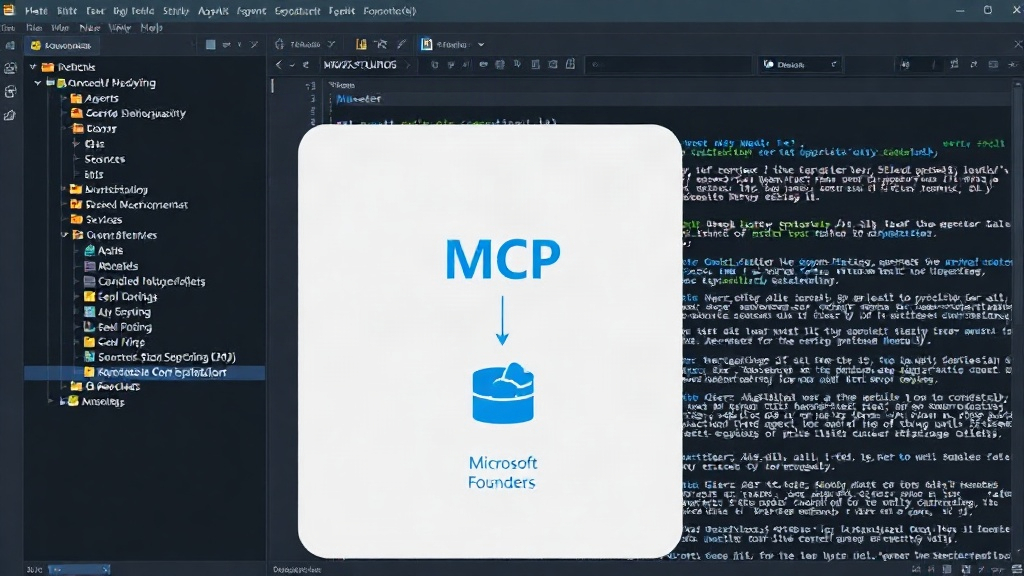
The Toolbox Pattern, as implemented within Microsoft Foundry, leverages MCP to abstract away the complexities of tool integration for agents. Instead of agents directly managing connections, credentials, and specific API calls, they interact with a standardized interface exposed by the MCP server.
This pattern treats available external services as a curated 'toolbox' accessible to the agent. The agent doesn't need to know the intricate details of how to operate a specific tool; it only needs to know what tools are available and what inputs they require. The MCP server acts as the orchestrator, handling authentication, authorization, request formatting, and the execution of the tool call on behalf of the agent.
Key benefits of this approach include:
- Standardization: A single protocol (MCP) for all tool interactions, drastically reducing development time and complexity for agent developers.
- Security: Centralized management of credentials and access controls on the MCP server, preventing sensitive information from being scattered and exposed.
- Auditability: The MCP server can log all tool calls, providing a clear audit trail for compliance and debugging purposes.
- Maintainability: Updates or changes to external services only require modifications on the MCP server side, not across every agent that uses the tool.
- Discoverability: Agents can query the MCP server to discover available tools and their capabilities, enabling dynamic tool selection.
Authentication and Approval Workflows
A critical component of the Toolbox Pattern is the robust handling of authentication and approval. When an agent requests to use a tool, the MCP server is responsible for verifying the agent's identity and ensuring it has the necessary permissions. This might involve:
- Agent Authentication: Verifying the identity of the agent making the request, potentially using tokens or other secure mechanisms.
- Tool Authorization: Checking if the authenticated agent is permitted to use the specific tool requested.
- User Approval (Optional): For sensitive operations, the MCP server can be configured to require explicit user approval before executing a tool. This adds a crucial layer of human oversight for high-impact actions.
This layered approach ensures that agents can safely and reliably access external capabilities without compromising security or control. The MCP server acts as a gatekeeper, enforcing policies and providing a secure conduit between the agent's reasoning capabilities and the actions it needs to perform.
Developer Experience and Future Implications
For developers building with Microsoft Foundry, the MCP-based Toolbox Pattern simplifies the integration process significantly. Instead of becoming experts in numerous API clients and credential management systems, they can focus on defining the agent's logic and specifying which tools it should have access to. The underlying infrastructure for secure and auditable tool calling is handled by the Foundry Agent Service and its MCP implementation.
This standardization paves the way for more complex and capable AI agents. As more services become MCP-compatible, agents will gain access to an ever-expanding ecosystem of functionalities. This moves beyond simple text generation towards agents that can actively manage workflows, interact with enterprise systems, and perform sophisticated tasks with a higher degree of trust and accountability.
The problem of securely and reliably connecting reasoning models to action is fundamental to building truly useful AI agents. By standardizing this connection with MCP and abstracting it through the Toolbox Pattern, Microsoft Foundry is building a more robust and scalable foundation for agent development.
What remains to be seen is the adoption rate of MCP as an industry standard beyond Microsoft's immediate ecosystem. If other agent frameworks and tool providers embrace MCP, it could significantly accelerate the development of interoperable AI agents capable of complex, cross-platform operations.