A Glimpse into Early AI Chat
Microsoft has open-sourced Comic Chat, a pioneering AI-powered chat client developed in the mid-1990s. The move, announced via Microsoft's open-source blog, makes the code and technology behind this unique application available to developers and researchers worldwide. This release offers a fascinating look at the state of conversational AI and user interface design from an era when such technologies were nascent.
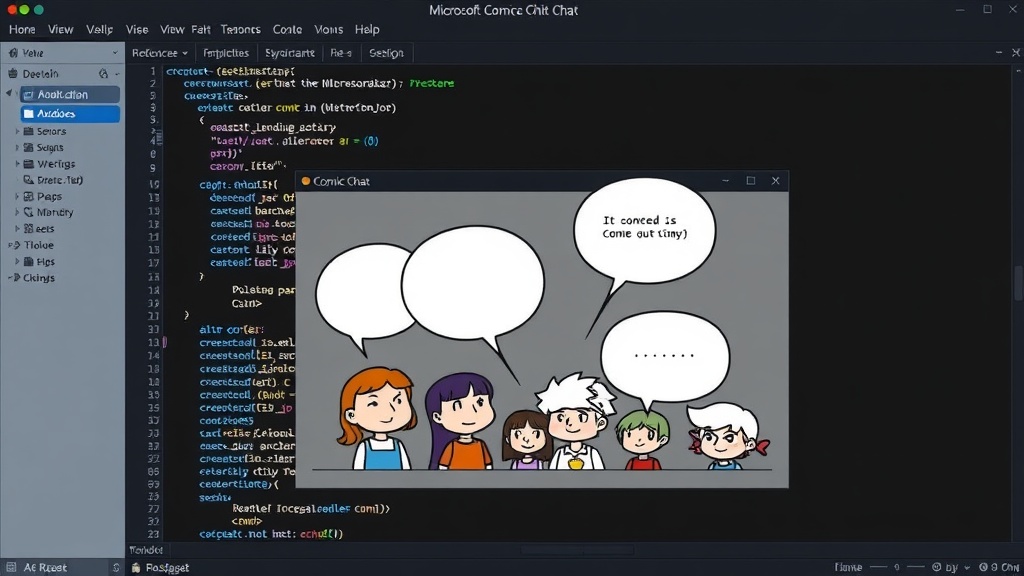
Comic Chat was more than just a simple instant messaging client. It aimed to make online conversations more engaging and expressive by allowing users to choose cartoon characters to represent themselves and their emotions. These characters would react to the conversation, with speech bubbles and animated expressions adding a layer of visual feedback that was novel for its time. The system used a form of natural language processing to interpret user input and generate appropriate character responses and visual cues.
The core innovation of Comic Chat lay in its hybrid approach. It combined a traditional text-based chat interface with a graphical representation driven by AI. Users typed messages as usual, but the system would then process these messages to select an appropriate cartoon character, pose, and speech bubble to convey the sentiment and content of the message. This made interactions feel more dynamic and less sterile than plain text chat, anticipating some of the expressive features found in modern messaging apps, albeit with a distinct visual style.
The Technology Behind the Cartoons
At its heart, Comic Chat employed a sophisticated natural language understanding (NLU) engine for its time. This engine was designed to parse user input, identify keywords, and infer the emotional tone of the message. Based on this analysis, the system would select from a library of pre-defined cartoon characters and their associated animations and expressions. For example, a message expressing happiness might cause a character to smile and adopt an upbeat pose, while a message conveying disagreement could result in a character frowning or shaking its head.
The system's ability to generate contextually relevant visual responses was a significant technical achievement. It involved mapping linguistic and emotional cues to specific graphical assets. This was not just about displaying an emoji; it was about animating a character to embody the sentiment of the communication. The underlying AI wasn't about generating human-like prose, but about understanding the intent and emotion behind human text to drive a graphical avatar's reaction.
Microsoft's decision to open-source this technology is significant for several reasons. Firstly, it provides a valuable historical artifact for computer science and AI researchers. Studying Comic Chat's architecture can illuminate the challenges and solutions devised for early conversational AI and human-computer interaction. It offers a tangible example of how developers attempted to imbue digital communication with personality and emotion before the widespread adoption of emojis or advanced avatar systems.
What This Means for the Future
The open-sourcing of Comic Chat invites a new wave of experimentation. Developers can now explore its codebase, understand its NLU techniques, and potentially adapt its graphical systems for new applications. This could range from educational tools demonstrating AI principles to creative projects that reimagine expressive communication. The technology, though dated, represents a foundational step in bridging the gap between text-based interaction and more visually rich, emotionally resonant digital exchanges.
While Comic Chat itself will not be making a comeback as a mainstream product, its underlying principles and code can inspire new approaches to user engagement. The idea of using AI to drive expressive avatars or to add emotional context to digital conversations remains relevant. Modern AI models have advanced exponentially, but the fundamental goal of making digital interactions more human-like and engaging persists. Comic Chat serves as a reminder of the long journey taken in this pursuit.
The surprising detail here is not the age of the technology, but the decision to open-source it now. In an era dominated by large language models capable of generating human-quality text, revisiting a system that focused on graphical expression and sentiment analysis from text offers a different, yet complementary, perspective on conversational AI. It highlights a design philosophy that prioritized visual feedback and character-driven communication, a path less trodden in recent AI development compared to pure text generation.
For developers, this release is an opportunity to dissect a piece of computing history. The code, likely written in C++ and using older Windows APIs, will present a different set of challenges and learning opportunities compared to modern development stacks. It's a chance to learn about the constraints and ingenuity of software development in the 1990s. For researchers, it's a goldmine for understanding the evolution of AI, particularly in the realm of affective computing and embodied conversational agents.
What nobody has addressed yet is how this open-sourced code might be integrated into modern communication platforms. Could elements of its graphical expressiveness be adapted for use in social media, gaming, or even enterprise communication tools? The potential for remixing this vintage AI with contemporary design trends is an open question, inviting creative minds to find new life for this piece of Microsoft's past.