
The Dead End of Voiceprint Unlocks
Six months ago, a developer set out to replace the Windows lock screen with speaker verification. The goal was simple: say a passphrase, and the system would verify your voiceprint locally to unlock the machine. A friend uttering the same words would be rejected. The technology worked, but the realization quickly dawned: the product was obsolete before it even launched. Windows Hello, already integrated and free, offered superior biometric unlocking. Building a worse version of an existing, free feature was a dead end. This personal project, intended to be a novel security layer, became a stark lesson in market viability.
The near-abandonment of the project was averted by attending Microsoft Build 2026. The conference revealed a significant shift in Microsoft's operating system strategy: transforming Windows into an AI agent operating system. Key announcements around Copilot, Manus, and a host of other AI agents indicated a future where these agents would reside on the user's machine, interact with local files, and execute commands. It was a vision of a deeply integrated, personalized AI experience.
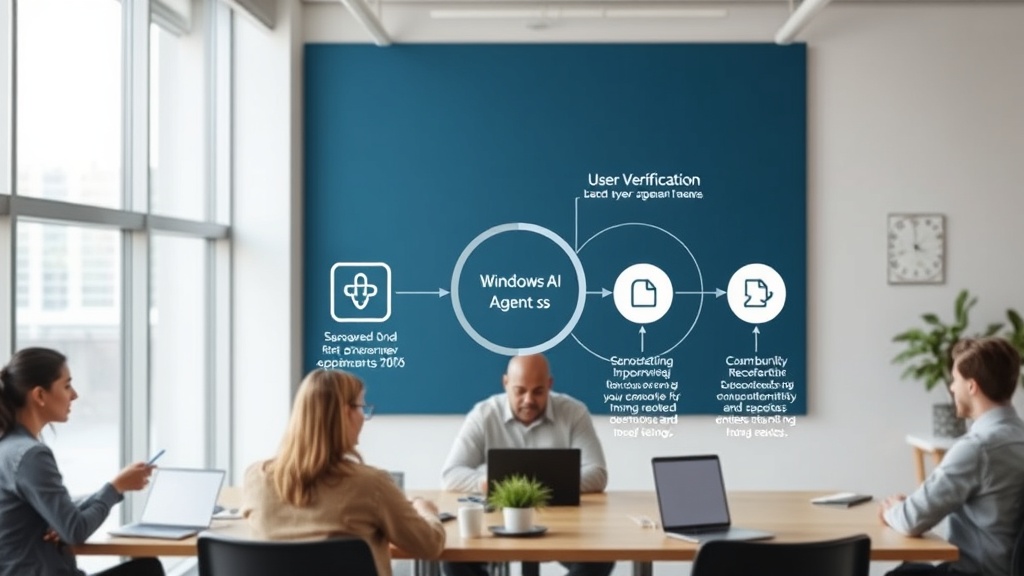
The Unaddressed Elephant in the Room: Identity
Amidst the excitement of AI agents becoming pervasive on Windows, a critical vulnerability emerged from the developer's perspective. Not a single announcement, demo, or feature showcased addressed a fundamental security and usability question: Who is actually talking to the AI agent? The presented vision showed agents executing commands, accessing files, and potentially handling sensitive information. However, these agents appeared oblivious to the identity of the user initiating the command. Any individual with physical access to the machine could potentially issue commands to these powerful AI agents, a scenario that is currently manageable given the limited capabilities of nascent AI agents, but one that poses significant risks as agents gain more power and access.
Consider a scenario where an AI agent is tasked with managing financial accounts, drafting sensitive legal documents, or accessing proprietary code repositories. If these agents cannot distinguish between the authorized user and an unauthorized individual at the keyboard, the potential for misuse, data breaches, and financial fraud is immense. This lack of inherent user verification within the AI agent framework is not a minor oversight; it represents a foundational security flaw that could undermine the entire premise of a personalized, secure AI-powered operating system. The ease with which these agents will touch personal and professional files necessitates a robust authentication mechanism tied directly to the AI's interaction layer, not just the operating system's login screen.
The Pivot: From Voiceprint to Contextual AI
The developer's initial project, while commercially unviable as a standalone product, provided a crucial insight into the emerging needs of an AI-centric OS. The realization that Windows Hello solved the *unlocking* problem, but not the *interacting* problem, was the key pivot. The real need isn't just verifying a user at the lock screen; it's about the AI agent understanding and verifying *who* is interacting with *it* during its operational lifespan. This shifts the focus from a static, system-level biometric unlock to a dynamic, context-aware identity verification layer integrated directly into the AI agent's command pipeline.
This new direction involves building a system that can determine, with high confidence, whether the person issuing commands to an AI agent is the legitimate user. This could involve a combination of continuous authentication methods, such as subtle behavioral biometrics (typing patterns, mouse movements), contextual awareness (time of day, location, typical user activity), and potentially even secondary, less intrusive verification steps for high-stakes commands. The goal is to create an AI agent that is not just intelligent, but also accountable to a specific user, much like a trusted personal assistant would be.
The Path Forward: Securing the AI Agent Ecosystem
The implications for developers and Microsoft are substantial. For Microsoft, it means re-architecting the AI agent framework to incorporate robust, multi-layered identity verification. This isn't merely an add-on; it's a core requirement for building trust and security into the next generation of Windows. The current approach, where agents execute commands indiscriminately, is a ticking time bomb as agent capabilities expand.
For developers like the one who built the voice lock screen, this presents a new frontier. The focus shifts from replacing existing OS features to building the critical infrastructure that makes AI agents safe and personalized. This could involve developing middleware that intercepts AI agent commands, performs contextual verification, and logs interactions. It’s about building the guardrails for an AI-powered future. The market for solutions that provide granular user-to-AI interaction verification is likely to be significant, turning a failed product idea into the genesis of a vital security component for the evolving OS landscape.
The lesson is clear: the future of operating systems is deeply intertwined with AI, but the human element—identity and trust—must be at the forefront of this evolution. The silence from Microsoft Build on this matter is not just an omission; it's an invitation for innovation and a stark warning about the potential pitfalls ahead.