Why SLOs Break in Microservices
A Service Level Objective (SLO) that works for a monolithic application often collapses when its logic is distributed across dozens of microservices. The fundamental issue lies in the mathematics of availability and the compounding effect of dependencies. If a service relies on just five other services, each aiming for 99.9% availability, the theoretical maximum availability for your service plummets to 0.999^5 = 99.5%. This means a 0.4% gap in availability can be consumed by the dependencies alone, before your own service even introduces its own latency or errors.
This mathematical reality means that simply copying SLO targets from one service to another, especially in a distributed system, is a recipe for failure. A 99.9% SLO for a critical payment processing service, where even a few minutes of downtime can mean significant revenue loss, is not comparable to the same target for a batch analytics service. The latter might degrade user experience or delay reporting, but it doesn't directly impact revenue streams in the same immediate way. Setting the same target for both ignores the distinct business impact and user experience each service provides.
The Three Mistakes Teams Make
Teams frequently stumble when implementing SLOs in microservice environments, often due to three common errors:
1. Copying SLOs Across Services
As mentioned, a blanket 99.9% availability SLO for every service is a flawed approach. Each microservice serves a different purpose and has a different impact on the end-user experience and business operations. A service responsible for user authentication might require a much higher availability target than a background job that processes user-uploaded images. The former is directly tied to user access and engagement, while the latter might tolerate occasional delays without significant user impact. Teams must tailor SLOs to the specific function and criticality of each service.
Consider the user journey. If a user cannot log in because the authentication service is down, that's a critical failure. If image processing is slow, users might experience a slight delay in seeing their profile picture update, which is less severe. SLOs should reflect these tiered levels of criticality.
2. Measuring Uptime Instead of User Experience
A common, but ultimately useless, practice is to measure the availability of a /health endpoint. While a healthy /health endpoint is a prerequisite for a functional service, it does not reflect the actual experience of the end-user. Users do not interact with /health checks. They log in, add items to a cart, complete transactions, or view content. True SLOs must be tied to these user-facing actions and workflows. This means instrumenting your application to measure the success rate and latency of critical user operations, not just the operational status of internal endpoints.
For example, a user's ability to complete a purchase involves multiple services: product catalog, shopping cart, payment processing, and order fulfillment. If the /health endpoint for the payment service returns 200, but the payment API itself is timing out due to downstream issues, the user still cannot complete their purchase. The SLO should reflect the success rate of the actual checkout process, which might involve aggregating outcomes from several underlying services.
3. Ignoring Fan-Out and Dependencies
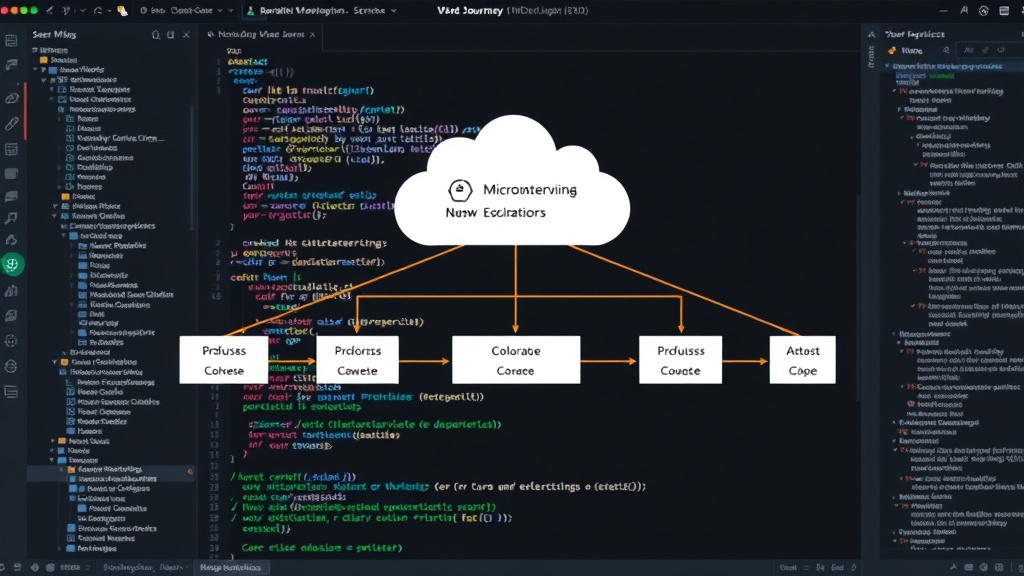
The most insidious trap is overlooking the impact of dependent services, often referred to as fan-out. In a microservice architecture, a single user request can trigger a cascade of calls to numerous other services. If a user request fans out to eight downstream calls, and even one of those calls has a 99% Service Level Agreement (SLA), the overall success rate of the original request is drastically reduced. The availability of your service is not just about your own code; it's a product of the availability of all its dependencies.
The formula for calculating the availability of a system with dependent services is multiplicative. If Service A depends on Service B (99.9% available) and Service C (99.9% available), then Service A's availability is 0.999 * 0.999 = 0.998001, or 99.8%. As the number of dependencies grows, this multiplicative effect quickly erodes availability targets. A system with 10 services, each at 99.9% availability, would realistically only achieve 0.999^10 = 99.004% availability. This is a significant drop from the individual service targets and highlights the critical need to monitor and manage the performance of the entire dependency chain.
Effective SLOs for Complex Microservices
To build robust SLOs for microservices, teams should adopt a more nuanced approach:
- Focus on User Journeys: Define SLOs around end-to-end user actions that span multiple services. Measure success rate, latency, and error rate for these critical user journeys.
- Tiered SLOs: Implement different SLO targets based on the criticality of the service. High-priority services (e.g., payments, authentication) should have stricter SLOs than lower-priority services (e.g., reporting, background tasks).
- Account for Dependencies: Actively model and monitor the availability of upstream dependencies. Understand how downstream failures impact your service and incorporate this into your error budget calculations. Consider implementing strategies like circuit breakers and retries with exponential backoff to gracefully handle transient downstream failures.
- Error Budgets as Governance: Treat the error budget not just as a metric, but as a governance tool. When an error budget is depleted, it should trigger actions such as halting new feature deployments and focusing engineering resources on reliability improvements.
By shifting focus from simple uptime metrics to user-centric, dependency-aware SLOs, organizations can build more resilient and reliable microservice architectures. This requires a deep understanding of how services interact and a commitment to measuring what truly matters to the end-user.